The Transfăgărășan, from Sibiu to Curtea de Argeș
A mountain road built by the army in the 1970s, crossing the Făgăraș Mountains at 2,042 metres. A four-day loop from Sibiu, by Bâlea Lake, Vidraru Lake, Poenari Citadel and the Olt valley.
A road across the Carpathians
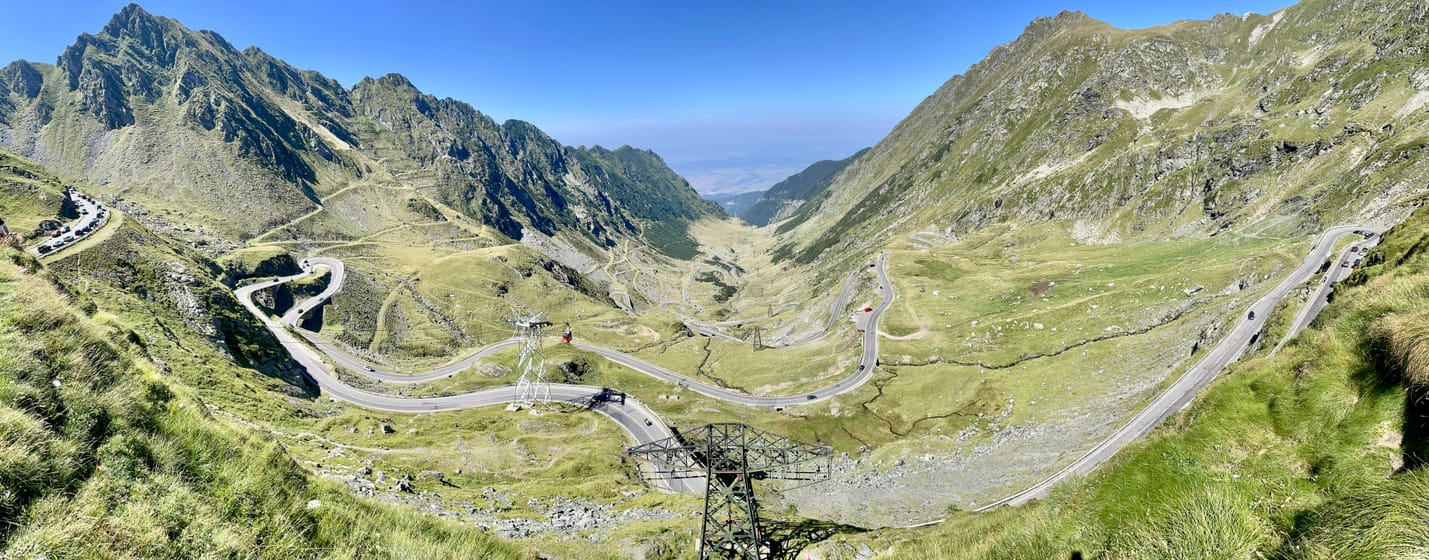
The Transfăgărășan crosses the Făgăraș Mountains, the highest range in Romania, from north to south. On the north side, it leaves the plain at Cârțișoara and runs straight towards the mountains. Past Bâlea Cascadă, it climbs in tight hairpins up a glacial valley. At the top, near Bâlea Lake, you look back down the road you came up. The pass is at 2,042 metres.
A tunnel runs under the ridge. You go in in Transylvania and come out in Wallachia. The south side is longer and goes down through forest over many viaducts. The road then runs along Vidraru Lake, crosses the dam and passes below Poenari Citadel.
The loop starts from Sibiu, a Saxon town whose roofs are dotted with small dormer windows, and returns there by the Olt valley, another great passage through the Carpathians.
A Cold War military road
In August 1968, the Warsaw Pact armies invaded Czechoslovakia. Nicolae Ceaușescu refused to take part and feared he would be next. He had a way cut through the Făgăraș. The road was meant to let the army cross the Carpathians in case of a Soviet invasion. The work was given to soldiers, from 1970 to 1974. It opened on 20 September 1974, but the surfacing was not finished until 1980.
Officially, 40 soldiers died building it; the workers spoke of hundreds. The Bâlea Tunnel, 884 metres long, was for a long time the longest road tunnel in Romania.
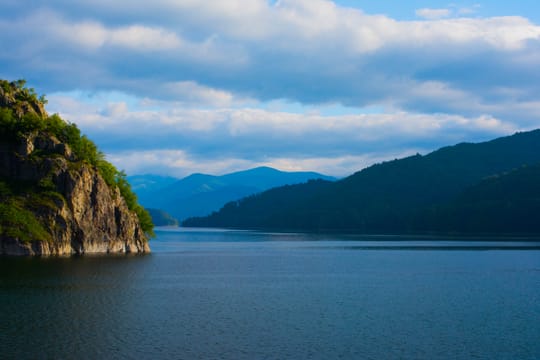
The Vidraru Dam is a little older. This 166-metre arch dam, brought into service in 1966, holds back a lake ten kilometres long. In 2009, on the British programme Top Gear, Jeremy Clarkson called the Transfăgărășan “the best road in the world”.
The road was meant to let the army cross the Carpathians in case of a Soviet invasion.
The Argeș valley, legends and kings
Above the Argeș, Poenari Citadel sits on a rocky spur. You climb up by 1,480 steps. Vlad III, known as the Impaler, restored it in the 15th century. According to tradition, he sentenced boyars to work on it. It is also said that his wife threw herself from the ramparts into the river to escape the Turks. Bran is presented as Dracula’s castle, but Vlad’s fortress is Poenari.
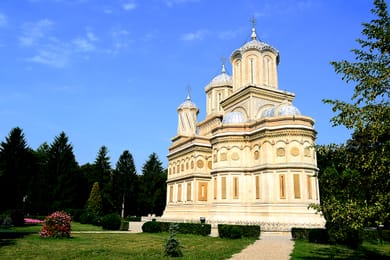
Further down the valley, Curtea de Argeș Monastery was built from 1512 to 1517. According to the ballad, its walls fell down every night, and the master builder Manole is said to have had to wall up his own wife alive. So that he would never build anything more beautiful elsewhere, the prince is said to have had the scaffolding taken down. Stranded on the roof, Manole is said to have tried to fly away on wooden wings. Restored by the Frenchman André Lecomte du Noüy, the church is the resting place of Kings Carol I and Ferdinand I. Michael I, who died in 2017, lies in the new cathedral next door.
Horezu Monastery
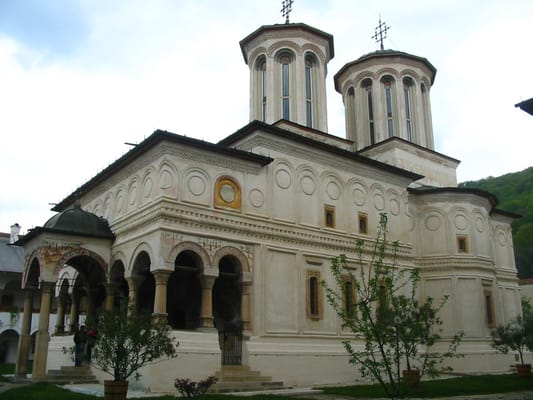
Founded in 1690 by Prince Constantin Brâncoveanu, it has been a UNESCO World Heritage Site since 1993. It is the model of the Brâncovenesc style: porches with carved columns, frescoes and galleries. In the town, the potters make ceramics listed as UNESCO intangible heritage.
Practical notes
- When to go
- July to September. The mountain section, between Piscu Negru and Bâlea Cascadă, is closed in winter: it usually reopens at the end of June (as early as 12 June in 2026) and can close as early as 20 October, depending on the snow.
- Getting there
- Sibiu has an international airport, west of the town. You pick up the car there and return it there.
- Access
- Everything is tarmac. In 2026, the mountain section is only open from 7 am to 9 pm. It also closes on some days for races: check CNAIR before you set off.
- Sleeping in a van
- A few campsites on the south side, around Vidraru Lake. The car park at Bâlea Lac is small and full in summer.
- Worth knowing
- The rovinietă, the electronic vignette, is required on national roads. Feeding the bears is forbidden. Poenari sometimes closes because of bears.
- Allow
- Four days for the loop, half a day more for Horezu Monastery.
What not to miss
- 1SibiuThe Large Square, the Brukenthal Museum, opened in 1817, and the cast-iron Bridge of Lies.
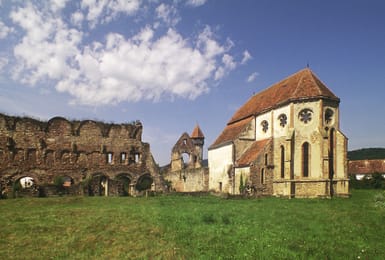
- 2Cârța AbbeyA Cistercian abbey in the line of Pontigny, in Burgundy; its choir serves as the Saxons’ church.
- 3Bâlea WaterfallA waterfall in the forest, a 40- to 50-minute walk from the Bâlea Cascadă chalet.
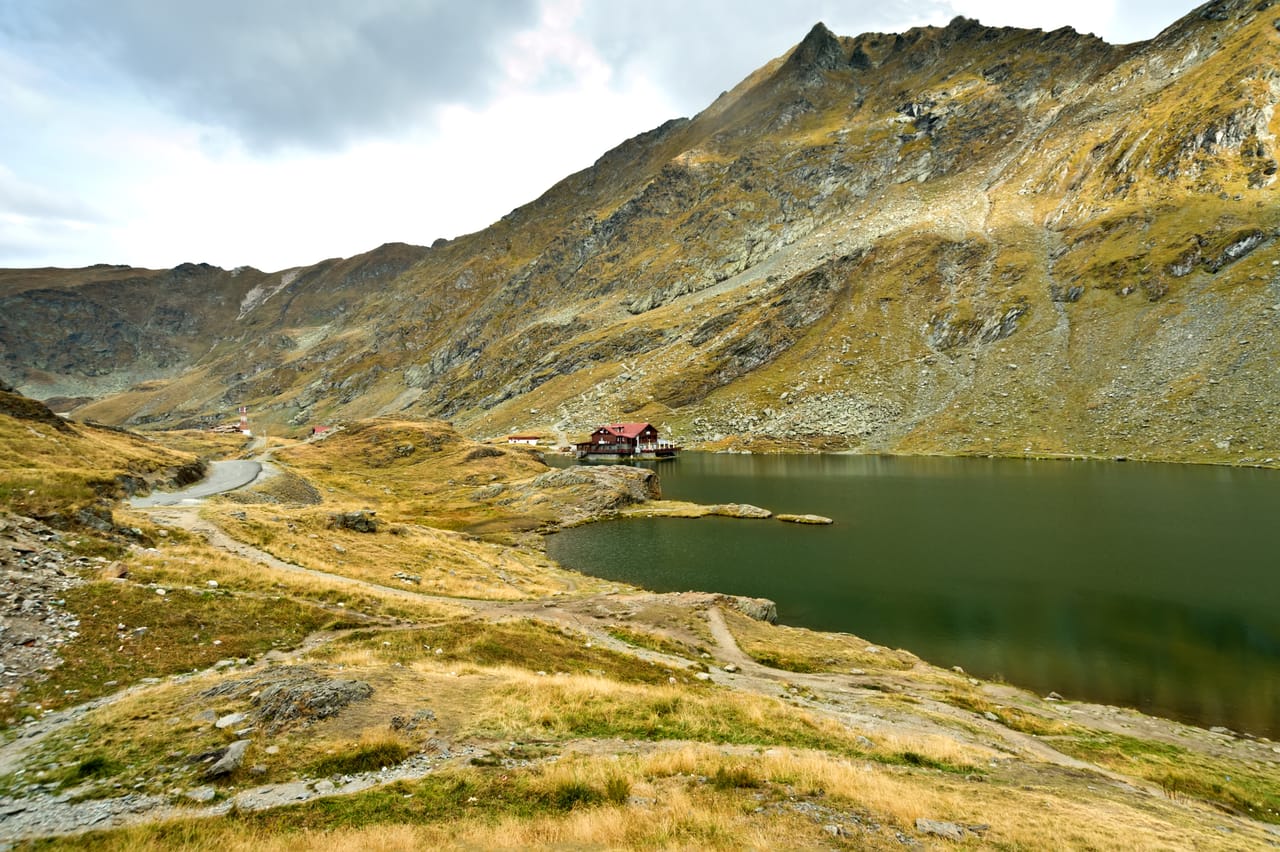
- 4Bâlea LakeA glacial lake at 2,034 metres, with its chalet; in winter, you go up by cable car.
- 5The Vidraru DamA dam 166 metres high, which you drive across along its crest.
- 6Cozia MonasteryFounded in the 14th century on the banks of the Olt by Mircea the Elder, who is buried there.
The Transfăgărășan in pictures
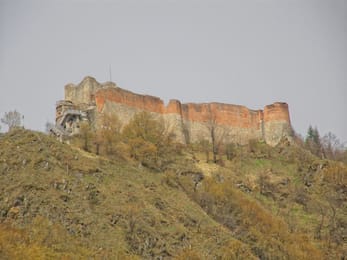
The ramparts of Poenari stretched along the ridge, above the Argeș valley.
Food of the Carpathians
You start with a ciorbă, a sour soup, then come sarmale, stuffed cabbage leaves, and mici, small grilled sausages. For dessert, papanași are fresh-cheese doughnuts, served with cream and jam.
By the roadside, shepherds sell their sheep’s cheeses, fresh or smoked. The inns of the Argeș valley serve trout. Sibiu salami, a dry-cured sausage, has held a European geographical indication since 2016. Țuică is a plum brandy.
Loop from Sibiu


 +12stops
- 1Muzeul Național Brukenthal · Catedrala Evanghelică din Sibiu · Podul Minciunilor din Sibiu · Muzeul Civilizației Populare Tradiționale „ASTRA” din Sibiu
- 2Mănăstirea Cârța · Cascada Bâlea · Lacul Bâlea · Transfăgărășan
- 3Lacul Vidraru · Barrage Vidraru · Cetatea Poenari · Mănăstirea Curtea de Argeș
Free, no account needed — start from its places and make it yours.
Also worth reading
Mountains and passes
Maramureș and Bukovina
In the north of Romania, two mountain regions keep wooden churches and monasteries with frescoes on their outside walls. This trip crosses them in eight days, from Baia Mare to the Bicaz Gorge and Lacul Roșu.
Mountains and passes
The Transalpina, from Novaci to Alba Iulia
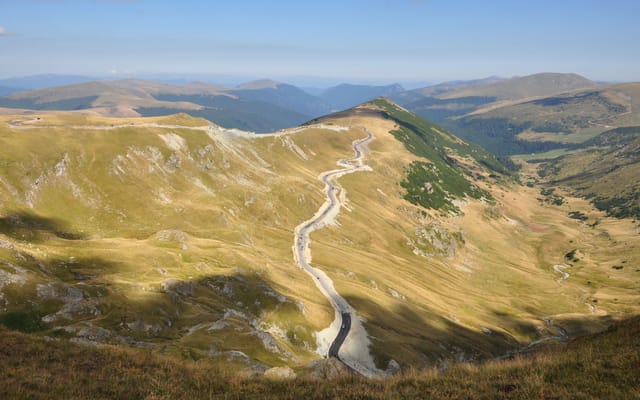
The Transalpina is the highest road in Romania: it crosses the Carpathians at 2,145 metres, at the Urdele Pass. This four-day trip follows it from Oltenia to the citadels of Transylvania.
Wide open spaces
Yellowstone, Grand Teton and Glacier: the great Rockies road trip
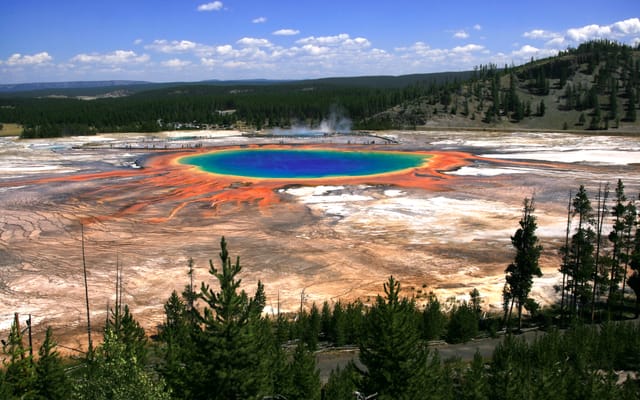
Three national parks on one road, from the Tetons to the glaciers of Montana, by way of the geysers of Yellowstone. Twelve days from Jackson to Kalispell, with bison by the roadside and two great mountain roads.
A starting point, a few wishes — ViaLooma builds the trip day by day, map, stops and roadbook included.