The Baltic states along the Via Baltica, from Tallinn to Vilnius
From Tallinn to Vilnius, the Via Baltica crosses Estonia, Latvia and Lithuania, through forests, beaches and old merchant towns. Nine days on the road heading south, by way of Riga, the Hill of Crosses and Trakai Castle.
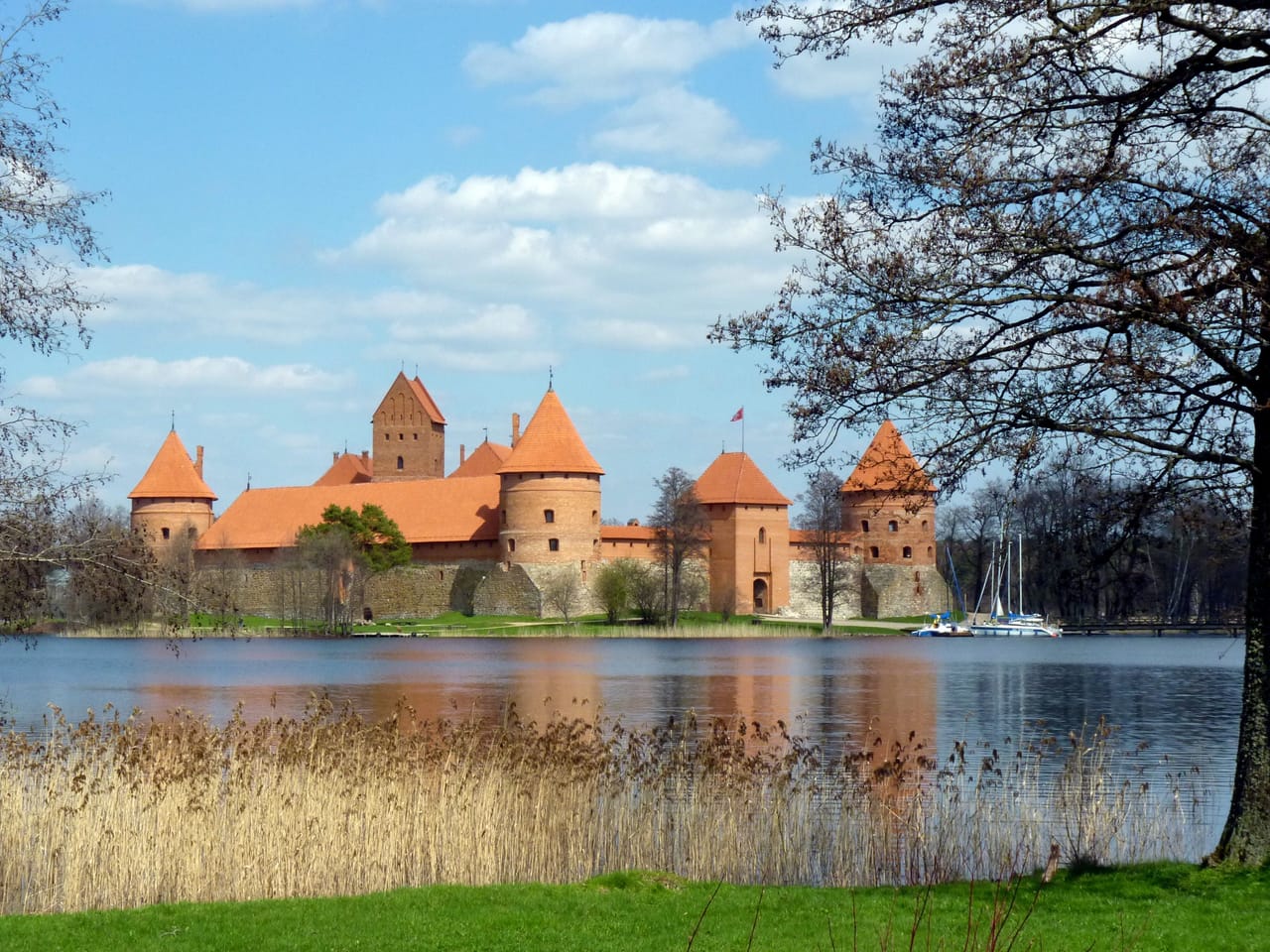
Three countries from north to south
The route crosses Estonia, Latvia and Lithuania over nearly 900 kilometres. The Via Baltica, the European route E67, links Tallinn to Poland. The journey follows it from Pärnu to Riga, then leaves it towards Šiauliai. The landscape is flat, covered with pines and birches. From one country to the next, the language changes: Estonian is close to Finnish, while Latvian and Lithuanian are the last two Baltic languages still spoken.
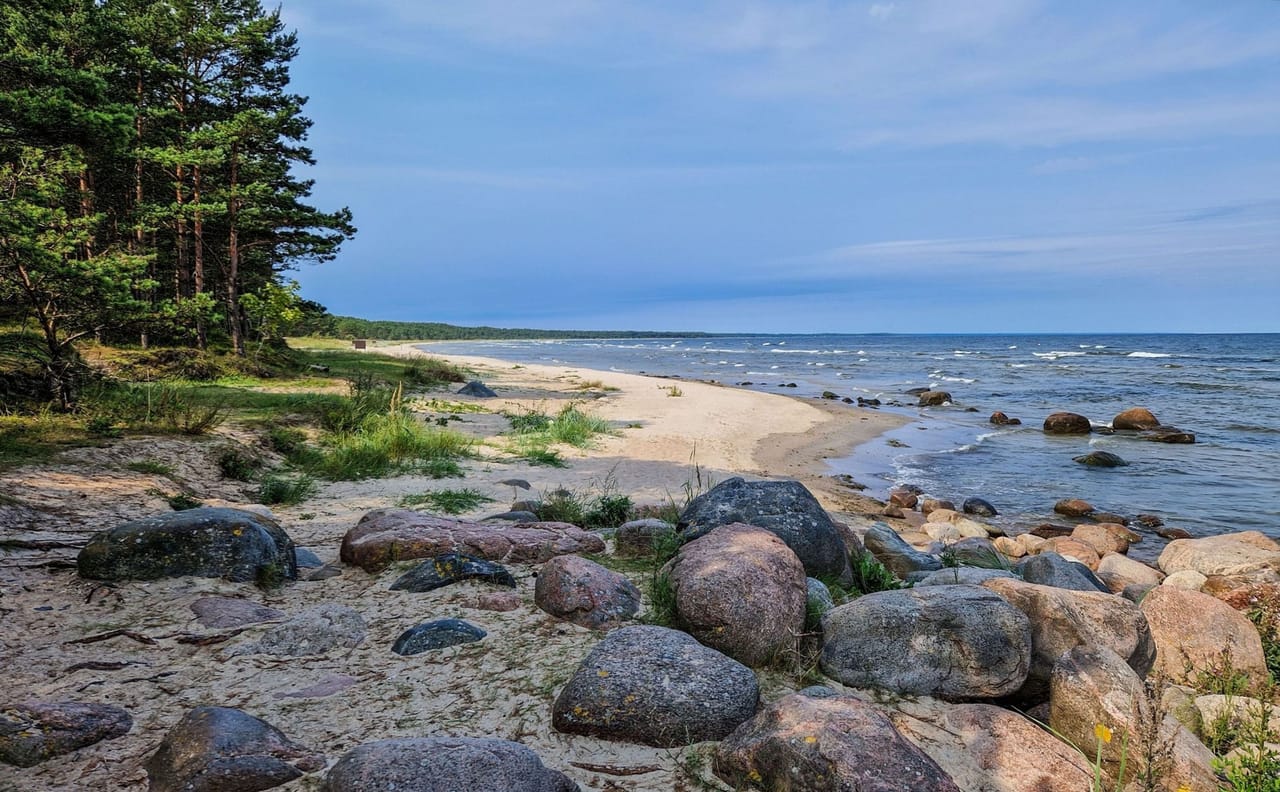
Between Pärnu and Riga, the road runs along the Baltic: the long beach at Pärnu, then the low red sandstone cliffs of Veczemju, on the Latvian coast. At Saulkrasti, the White Dune looks out over the Gulf of Riga.
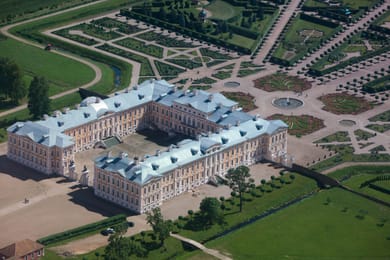
On the way, you visit the Baroque palace of Rundāle. It is the work of Rastrelli, the architect of the Winter Palace in St Petersburg. In Lithuania, Trakai Castle appears on its island, in the middle of a lake.
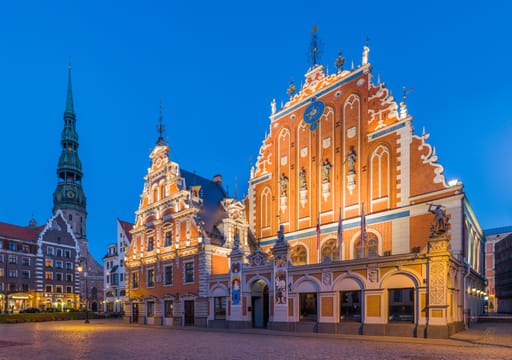
Tallinn and Riga, two Hanseatic towns
For centuries, Tallinn and Riga, dominated by German merchants, were members of the Hanseatic League, the league of trading towns of northern Europe. Their old towns have been World Heritage Sites since 1997. In Riga, the House of the Blackheads belonged to a brotherhood of unmarried merchants, shipowners and foreigners. Destroyed in 1941, then razed by the Soviets in 1948, it was rebuilt from the old plans and opened in 1999.
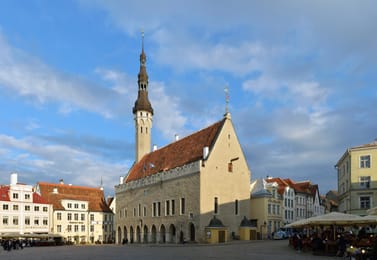
In Tallinn, the old town has two levels. At the top is Toompea hill, the nobles’ hill; its castle houses the Estonian Parliament. Below lies the merchants’ town, around the Gothic town hall and St Olaf’s Church, 124 metres high. To the east, Peter the Great had Kadriorg Palace built for his wife Catherine, from 1718.
In Riga, about a third of the buildings in the centre are Art Nouveau, especially along Alberta iela. The Central Market fills old zeppelin hangars.
Each time, crosses were planted again.
The Baltic Way and the Hill of Crosses
On 23 August 1989, nearly two million people joined hands over more than 600 kilometres, from Tallinn to Vilnius by way of Riga. This was the Baltic Way. It denounced the Nazi–Soviet Pact of 1939, which had handed the three countries to the USSR. The human chain ran mostly inland. This journey crosses its route in Tallinn, Riga, Bauska and Vilnius.
North of Šiauliai, the Hill of Crosses (Kryžių kalnas) stands on an old hill fort, the one at Jurgaičiai. Crosses are thought to have been planted here since the uprisings against the Russian Empire, in 1831 and then 1863. Under the USSR, the crosses were bulldozed three times. Each time, crosses were planted again. John Paul II came here in 1993. In 2006, there were more than 100,000 crosses.
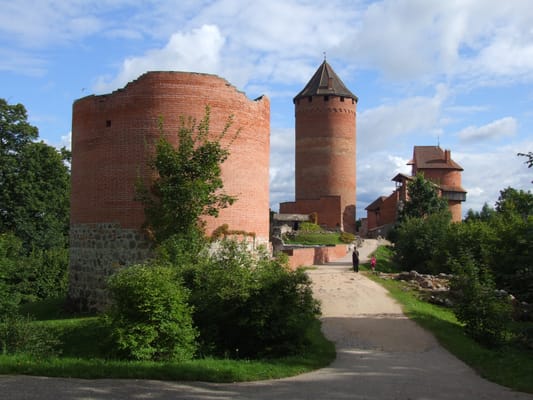
Turaida Castle
In Gauja National Park, the river has cut a wooded valley into the red sandstone. The brick castle, begun in 1214 for Albert, Bishop of Riga, looks down on it from its keep.
Practical notes
- When to go
- June to August, for the sea and the long days: nearly 19 hours in Tallinn in June. Midsummer is celebrated on 23 and 24 June. May and September are quieter.
- Getting there
- International airports in Tallinn and Vilnius. Ferries between Helsinki and Tallinn, in about two hours.
- Access
- Everything is tarmac and flat. Dipped headlights on during the day. Winter tyres are compulsory from 1 December to 1 March in Estonia and Latvia, and from 10 November to 1 April in Lithuania.
- Sleeping in a van
- Campsites on the coast, from Pärnu to Saulkrasti, and around Trakai. The old towns are pedestrianised or have restricted access: park on the edge.
- Worth knowing
- No tolls for cars and motorhomes. A commercial van pays for a vignette in Lithuania; in Latvia, only above 3 tonnes. In Lithuania, the Via Toll toll will replace the vignette on 1 January 2027. Vehicles pay a fee to enter Jūrmala.
- Allow
- Nine days from Tallinn to Vilnius, one more for the Gauja valley.
What not to miss
- 1Tallinn’s old townThe walls, the red roofs and the town hall, seen from the viewpoints on Toompea.
- 2Riga’s Art NouveauThe carved facades of Alberta iela, many of them designed by Mikhail Eisenstein.
- 3Rundāle PalaceRastrelli’s Baroque palace, begun in 1736, and its formal French gardens.
- 4KaunasThe temporary capital from 1920 to 1939, a modernist city on the World Heritage List since 2023, with the Ninth Fort, a Holocaust memorial.
- 5TrakaiThe red brick castle, reached on foot by a bridge, and the Karaim kenesa.
- 6VilniusThe Gate of Dawn, the university, St Anne’s Church, Užupis and Gediminas Hill at the end of the day.
The Baltic states in pictures
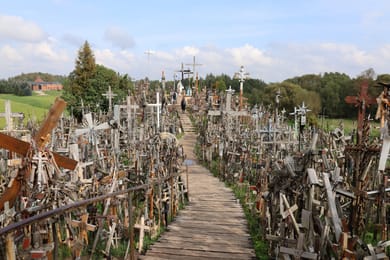
The Hill of Crosses and the boardwalk that crosses it.
The Baltic table
Everywhere, people eat black rye bread. In Estonia, kama, a flour of roasted grains, is mixed with kefir. At Riga’s Central Market, you will find smoked fish, sauerkraut and honey, and Riga Black Balsam, a bitter herbal liqueur.
In Lithuania, cepelinai are large potato dumplings filled with meat. Šaltibarščiai is a cold soup of beetroot and kefir, bright pink. In Trakai, the Karaim, settled there by Grand Duke Vytautas according to tradition, make kibinai, filled pastries.
Tallinn → Vilnius


 +29stops
- 1Toompea · Tallinna raekoda · Oleviste kirik · Kadrioru loss
- 2Keila juga · Padise klooster · Tallinna värav
- 3Pärnu rand · Veczemju klintis · Baltā kāpa · Muzejs "Rīgas Jūgendstila centrs"
Free, no account needed — start from its places and make it yours.
Also worth reading
Wide open spaces
The Curonian Spit, from Klaipėda to the dunes of Nida
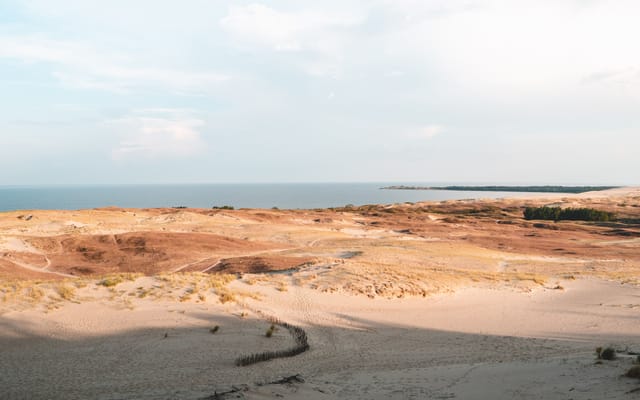
A 98-kilometre strip of sand between the Baltic and a lagoon, covered in pine forest and great dunes. This three-day trip starts in Palanga and Klaipėda, takes the ferry and runs down the spit to Nida.
Wide open spaces
Tallinn and Lahemaa National Park
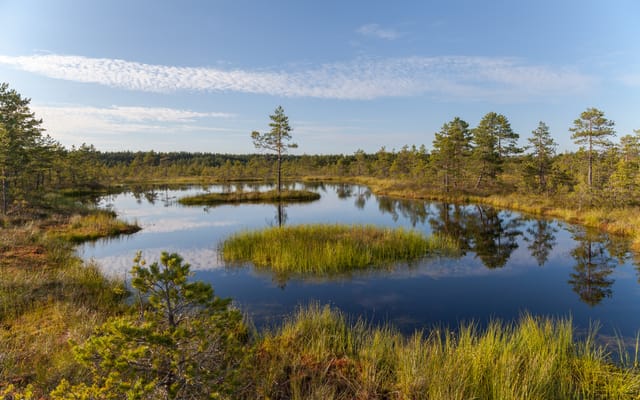
A Hanseatic old town on the Unesco list, then a coast of forests, bogs and fishing villages. A four-day loop from Tallinn, out to the manor houses of Lahemaa National Park.
Wide open spaces
The Pacific Northwest, from the Olympic Peninsula to the Cascade volcanoes
Rainforests, a coast of headlands and lighthouses, redwoods and two active volcanoes. A two-week loop from Seattle, by way of the Olympic Peninsula, the Oregon coast and Mount Rainier.
A starting point, a few wishes — ViaLooma builds the trip day by day, map, stops and roadbook included.