Tuscany, from Florence to the Val d’Orcia
Florence and its dome, the Chianti that two republics fought over, Siena and its Campo, then the Val d’Orcia, a countryside composed like a painting. A week-long loop from Florence, along ridge roads lined with cypresses.
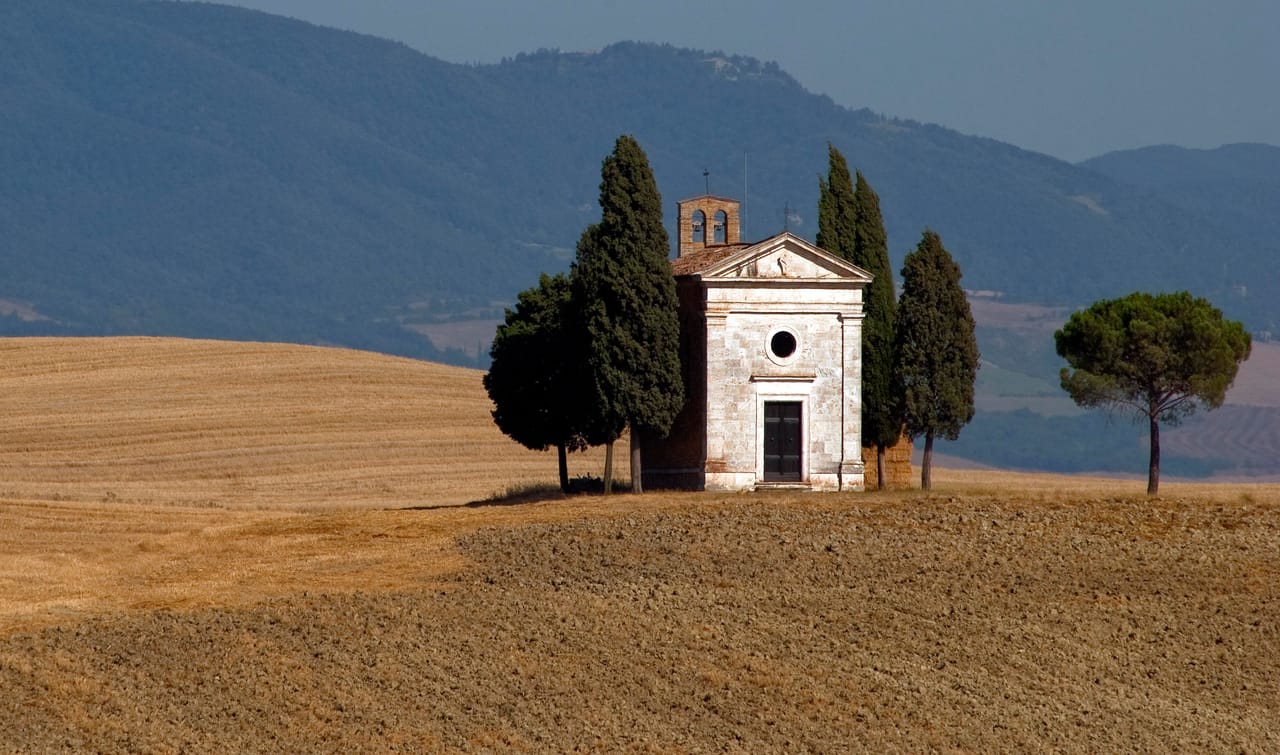
Ridge roads and hilltop villages
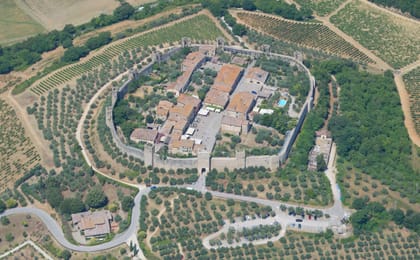
South of Florence, a ridge road crosses Chianti, with its vineyards, its olive groves and its hilltop villages: Castellina, Radda, Gaiole. A detour leads to the towers of San Gimignano. Before Siena, you pass below the walls of Monteriggioni.
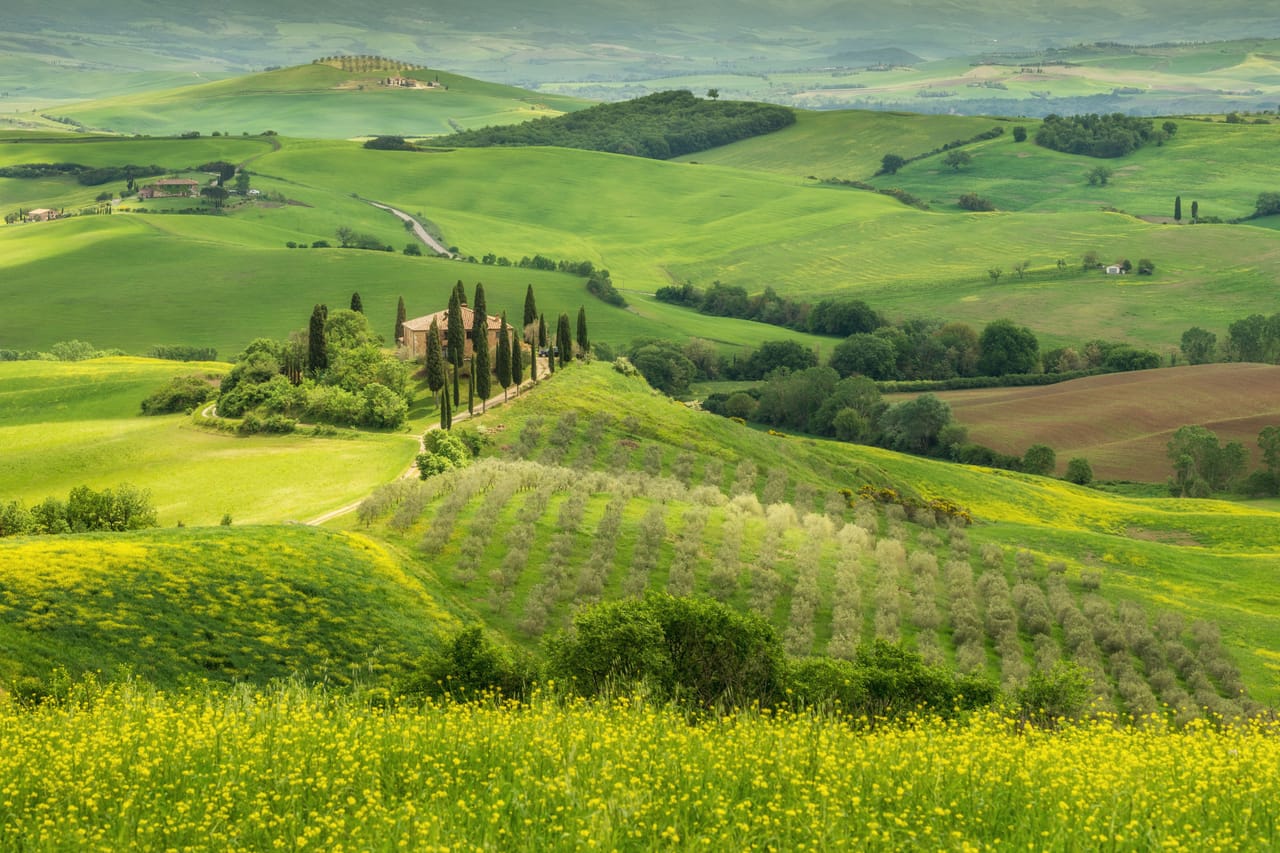
South-east of Siena, the Crete Senesi are hills of marine clay, almost treeless, ploughed and sown with wheat. Further on begins the Val d’Orcia, listed by Unesco in 2004. It is a countryside redrawn by Siena in the 14th and 15th centuries, to an ideal of good government. Pope Pius II turned his native village into an ideal town, Pienza.
There is nothing wild about this landscape. Centuries of farming have shaped it. The cypresses of San Quirico and the Vitaleta chapel stand on private land: you admire them from the road.
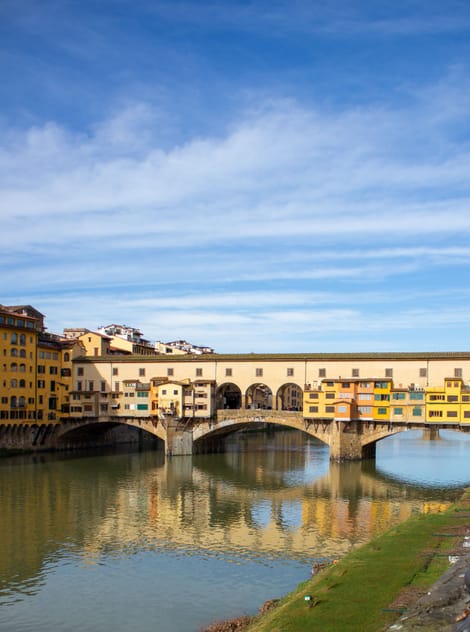
Florence and the Ponte Vecchio
In Florence, the shops of the Ponte Vecchio hang out over the Arno. At first, they housed butchers and tanners. In 1593, Ferdinando I de’ Medici, bothered by the smell, so they say, replaced them with goldsmiths. Above the shops runs the Vasari Corridor, built in 1565 to link the Palazzo Vecchio to the Pitti Palace. It reopened in December 2024. In August 1944, the retreating Germans blew up the bridges of Florence. Only the Ponte Vecchio was left standing.
The dome of the Duomo towers over the city. From 1420 to 1436, Brunelleschi raised it with no wooden centring, with bricks laid in a herringbone pattern. It is the largest masonry dome ever built.
Florence also gave the country its language. The Tuscan of Dante, Petrarch and Boccaccio became Italian. In the 19th century, Manzoni came to Florence to ‘rinse his linen in the Arno’: he corrected the language of his novel The Betrothed to match Florentine.
Siena lost the war and kept its Middle Ages.
Siena, Florence’s rival
Florence and Siena fought over Chianti for a long time. Legend has it that the two cities drew their border with a race: each sent out a horseman at first cockcrow. The black Florentine rooster, which had been kept hungry, crowed before dawn, and its rider got much further. The gallo nero became the emblem of the Chianti League. Yet in 1260, at Montaperti, Siena crushed Florence’s army. In 1555, after a long siege, Siena surrendered to the Spanish, then passed to the Medici.
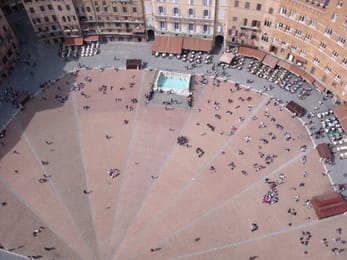
Siena lost the war and kept its Middle Ages. The Campo, a shell-shaped square, is paved in brick and divided into nine sections, in memory, it is said, of the government of the Nine. The Palio is run here on 2 July and 16 August. In the Palazzo Pubblico, Ambrogio Lorenzetti painted the effects of Good Government in 1338–1339: vineyards, harvests, safe roads.
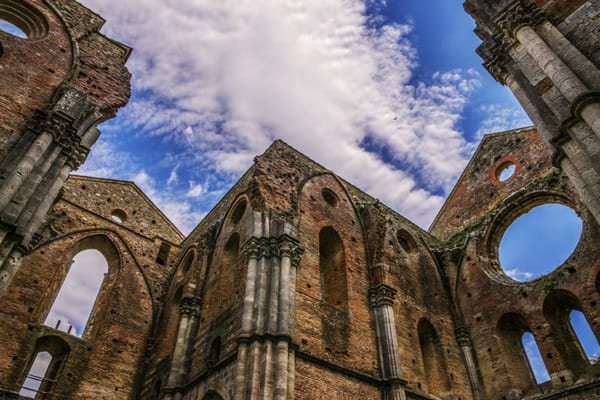
San Galgano Abbey
A 13th-century Cistercian abbey whose last vaults fell in 1781: its Gothic nave now holds up nothing but the sky. On the neighbouring hill, the rotunda of Montesiepi keeps a sword set fast in the rock, the one Galgano is said to have driven into it around 1180 when he renounced arms.
Practical notes
- When to go
- April and May for the green wheat, September and October for the grape harvest. Summer is hot and packed.
- Getting there
- Florence is on the A1, the Milan–Naples motorway. Airports at Florence and Pisa.
- Access
- Narrow tarmac roads; in a large van, steer clear of the strade bianche, the gravel tracks the satnav likes to suggest. For Florence, use the Villa Costanza park-and-ride on the A1, then the tram (motorhomes: check first).
- Sleeping in a van
- Motorhome aires at the foot of several hill towns, Monteriggioni among them, and campsites near Florence and Siena. Away from the aires, park without camping: no levelling blocks and no awning; near villages, motorhomes are often banned.
- Worth knowing
- Historic centres are ZTLs, limited-traffic zones watched by cameras: park outside the walls. The marble floor of Siena’s Duomo is uncovered only from late June to late October, except around the August Palio.
- Allow
- A week, plus two days for Pisa and Lucca.
What not to miss
- 1The UffiziBotticelli’s Birth of Venus and, if you book ahead, the Vasari Corridor.
- 2San GimignanoSeventy-two towers in the Middle Ages, fourteen today; you can climb the Torre Grossa.
- 3The Porta all’Arco in VolterraAn Etruscan gate that the townspeople blocked up with paving stones in June 1944 so that the Germans would not blow it up.
- 4Monte Oliveto MaggioreIn the heart of the Crete, a cloister where Signorelli and then Sodoma painted the life of Saint Benedict.
- 5Bagno VignoniA pool of hot spring water in place of a village square, where Tarkovsky filmed Nostalghia; no bathing.
- 6MontepulcianoVino Nobile in the cellars beneath the palaces, then San Biagio, all in travertine, at the foot of the town.
Tuscany in pictures
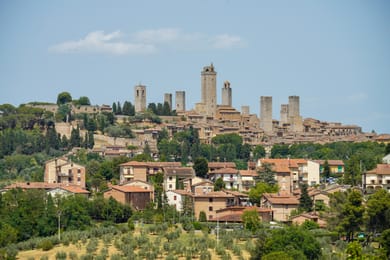
San Gimignano and its towers, rising above the houses and the olive trees.
The Tuscan table
In Florence, you eat bistecca alla fiorentina, barely seared. There is also ribollita, a soup of bread and cavolo nero, and lampredotto, tripe from the fourth stomach of the cow, served in a bread roll. Siena has its panforte and ricciarelli; the Val d’Orcia, its hand-rolled pici and the pecorino of Pienza.
As for wine, three names. Chianti Classico, marked with the black rooster. Brunello di Montalcino, pure sangiovese, created in the 19th century by Clemente Santi and his grandson Ferruccio Biondi-Santi. And Vino Nobile di Montepulciano, which the poet Francesco Redi crowned king of all wines in 1685.
Loop from Florence


 +21stops
- 1Galleria dell'Accademia · Cattedrale di Santa Maria del Fiore · Palazzo degli Uffizi · Ponte Vecchio
- 2Piazzale Michelangelo · Abbazia di San Michele Arcangelo a Passignano · Greve in Chianti · Castellina in Chianti
- 3Museo d'arte sacra del Chianti · Castello di Brolio · Abbazia dei Santi Salvatore e Cirino · San Gimignano
Free, no account needed — start from its places and make it yours.
Also worth reading
Mountains and passes
The Grand Tour of Switzerland
From the Rhine Falls to Lake Geneva, from the Alpine passes to the lakes of Ticino, Switzerland in a single loop. Twelve days from Zurich, through the country’s four language regions.
Mountains and passes
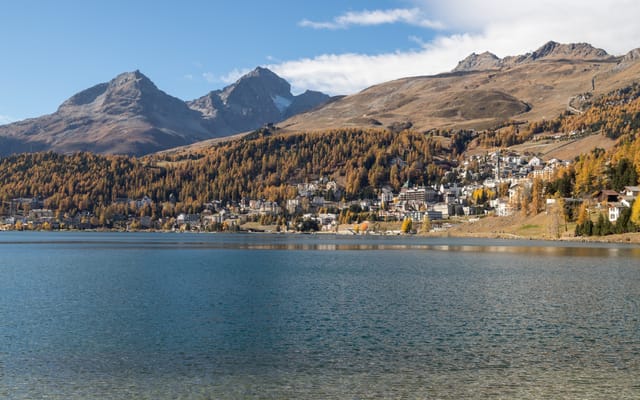
Graubünden and the Engadine, a loop over the passes
Seven passes, lakes at 1,800 metres and villages with decorated façades, in the only Swiss canton with three official languages. A week on a loop from Chur, with a stretch through Italy, from Tirano to the Stelvio Pass.
Heritage and culture
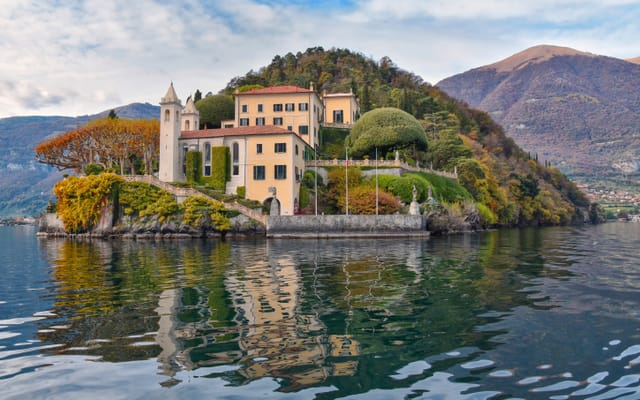
The Italian Lakes, from Lake Maggiore to Lake Garda
Lake Maggiore and its Borromeos, Lake Lugano on the Swiss side, Como and its villas, Lake Garda and its Scaliger castles: four lakes gouged out by glaciers at the foot of the Alps. A week from Milan to Verona, from shore to shore, with a stop in Venetian Bergamo.
A starting point, a few wishes — ViaLooma builds the trip day by day, map, stops and roadbook included.