The Romantic Rhine and the Moselle, from Mainz to Trier
Nearly forty castles above the Rhine, the Lorelei rock, then the loops of the Moselle and its wine villages. Six days on the road, from Mainz to Trier.
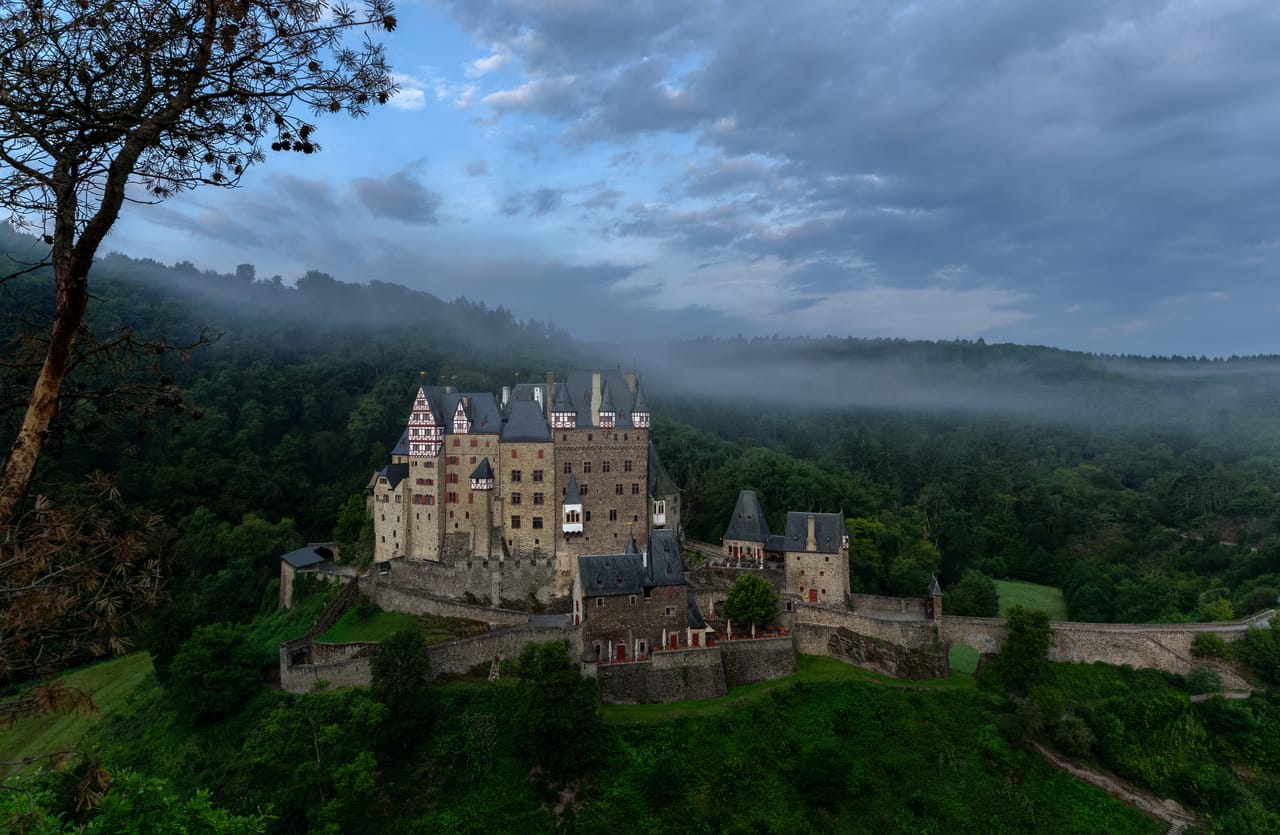
Two valleys of vineyards and castles
Between Bingen and Koblenz, the Rhine runs for 65 kilometres along the bottom of a narrow valley, between vineyards and forests. A road follows the water on each bank, and nearly forty castles and ruins line the heights, one after another. No bridge crosses the river between Mainz and Koblenz: you go down one bank and come back up the other, and see each castle close up and from across the water. Ferries cross in a few minutes.
The high point is the Lorelei, a slate rock 132 metres above the river. The Rhine narrows here, and boatmen long feared the passage. Go up to the plateau at the end of the day to watch the boats take the bend. In Boppard, a chairlift climbs to the Vierseenblick, where the river looks cut into four lakes.
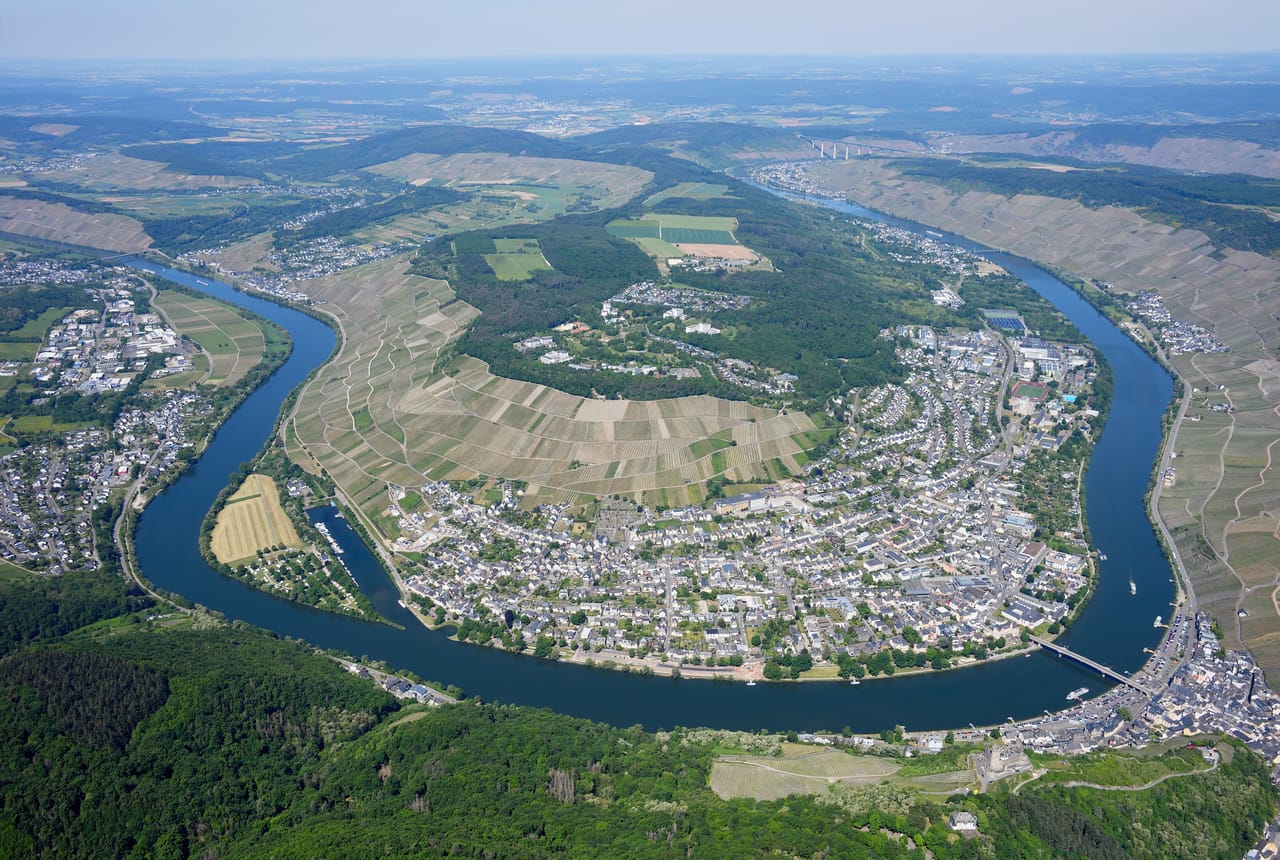
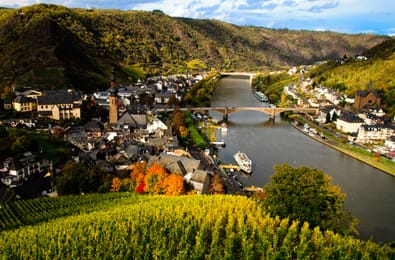
On the other side of the Hunsrück, the Moselle makes wide loops, and the road follows them from one wine village to the next. You reach Burg Eltz on foot, through the forest. Cochem, Beilstein, Traben-Trarbach and Bernkastel-Kues line the water’s edge. At Bremm, the Calmont is said to be the steepest vineyard in Europe; it is still worked by hand. The trip ends in Trier, among the Roman monuments.
The castles of the Rhine
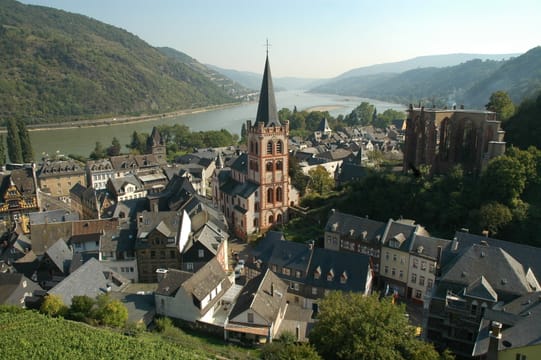
For centuries, the lords of the Rhine made the boats passing below their castles pay a toll. In 1326–1327, Louis the Bavarian had Pfalzgrafenstein, a tower on an island, built off Kaub to watch over this toll. In 1689, during the Nine Years’ War, the troops of Louis XIV destroyed many castles on the Rhine and the Moselle, among them Burg Stahleck, above Bacharach. The Marksburg, in Braubach, is said to be the only hilltop castle in the valley never to have been destroyed.
In the 19th century, the ruins drew writers. In 1801, Clemens Brentano wrote a ballad about Lore Lay. In 1824, Heinrich Heine had her sing on the rock, and the boatmen forgot the reefs. Victor Hugo passed through Bacharach in 1840 and told the story of his journey in ‘The Rhine’.
The princes of Prussia then rebuilt ruins in the medieval style, such as Stolzenfels, from 1836 to 1842. Since 2002, the valley has been a World Heritage Site.
Trier claims to be the oldest town in Germany.
Trier, the Roman town
The Romans founded the town around 16 BC, under the name Augusta Treverorum. Trier claims to be the oldest town in Germany. In the 4th century, it was a residence of the emperors. Constantine had his audience hall built here, the Basilica of Constantine, 67 metres long under a single roof and now a Protestant church.
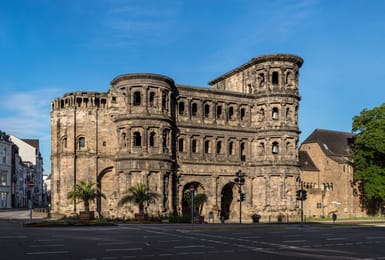
The Porta Nigra, the old north gate, was begun in AD 170. Its name comes from its blackened stone. In the 11th century, it became a church, which saved it from being taken apart for its stone. The cathedral next door is the oldest in Germany. With the Imperial Baths and the amphitheatre, these monuments have been on the World Heritage List since 1986.
Geierlay
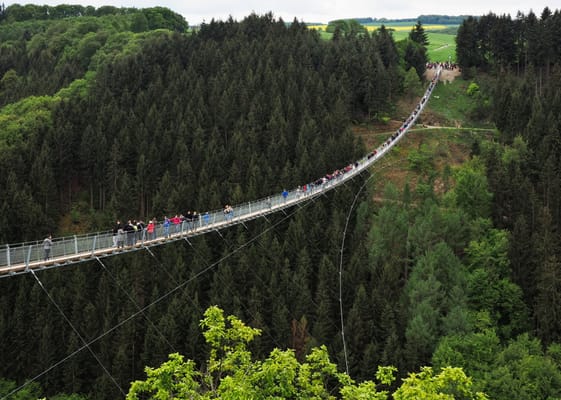
On the Hunsrück plateau, a 360-metre suspension footbridge spans a wooded valley, nearly 100 metres up. Opened in 2015, it is free, and you reach it on foot from Mörsdorf, along a 1.8-kilometre path.
Practical notes
- When to go
- May–June, and September–October for the grape harvest. On the evenings of the ‘Rhein in Flammen’ fireworks, from July to September, the valley is packed.
- Getting there
- Mainz is half an hour from Frankfurt Airport. From Trier, you get back to Mainz in two hours on the motorway.
- Access
- Everything is tarmac. When the water is low, the ferries limit the weight of vehicles, or stop running. The old centres of Bacharach, Beilstein, Cochem and Bernkastel are narrow: park by the water.
- Sleeping in a van
- Campsites by the water and many motorhome aires in the wine villages.
- Worth knowing
- No tolls for cars or motorhomes. The green low-emission sticker is still required in Wiesbaden, but no longer in Mainz since October 2025. Burg Eltz is open from late March to 1 November.
- Allow
- Six days, plus half a day for the Geierlay.
What not to miss
- 1Burg EltzThe castle has belonged to the same family since the 12th century; it was on the 500-mark note.
- 2The NiederwalddenkmalA monument from 1883 above the vineyards of Rüdesheim, with a view over Bingen.
- 3The Deutsches EckIn Koblenz, the point where the Moselle joins the Rhine, facing the fortress of Ehrenbreitstein.
- 4BeilsteinA village of 132 people below a ruined castle, the setting for several German films.
- 5Traben-TrarbachA former centre of the wine trade, rich in Art Nouveau houses built around 1900.
- 6Bernkastel-KuesA market square lined with half-timbered houses, and the birthplace of Nicholas of Cusa.
The Romantic Rhine and the Moselle in pictures
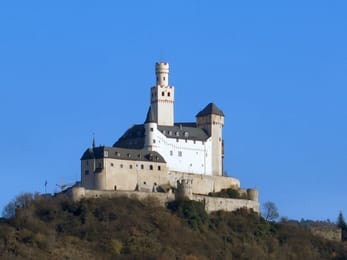
The Marksburg on its hill, above Braubach.
Food and wine of the Rhine and the Moselle
The Rhine and the Moselle are Riesling country, a white grape grown on slate slopes. You drink it in a Weinstube, a wine bar, or in a grower’s Straußwirtschaft, open for a few weeks a year. In autumn, they serve Federweißer, a new wine, with onion tart.
In Rüdesheim, Rüdesheimer Kaffee is flambéed with Asbach brandy and served with cream. Rhineland cooking serves Sauerbraten, marinated beef, in a raisin sauce. In Trier, people drink Viez, a local cider.
Mainz → Trier


 +20stops
- 1Mainzer Dom · Niederwalddenkmal · Loreley
- 2Marksburg · Festung Ehrenbreitstein · Deutsches Eck
- 3Schloss Stolzenfels · Sesselbahn Boppard · Burg Rheinfels · Oberwesel
Free, no account needed — start from its places and make it yours.
Also worth reading
Heritage and culture
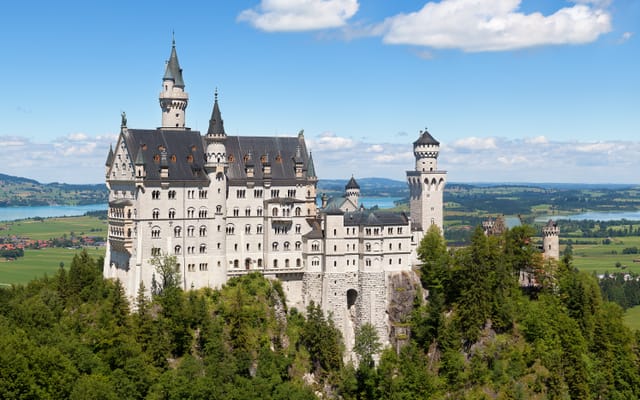
The Romantic Road, from Würzburg to Neuschwanstein
The Romantic Road crosses southern Germany, from the vineyards of the Main to the foot of the Alps. It passes through walled towns and baroque churches, and ends at the castles of Ludwig II.
Experiences
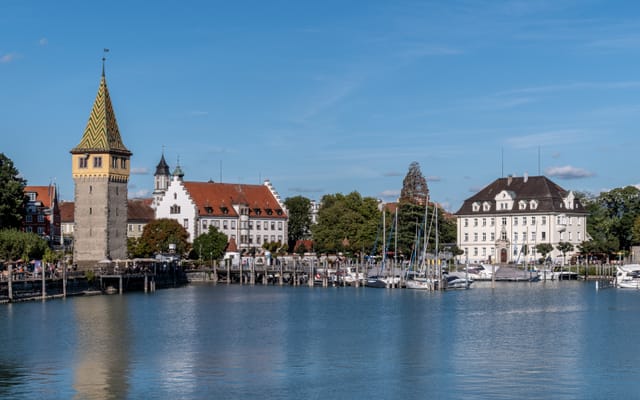
Lake Constance, a tour of three countries
Lake Constance is shared between Germany, Austria and Switzerland. This trip goes all the way round it in five days from Konstanz, from the islands of Reichenau and Mainau to the Rhine Falls.
Wide open spaces
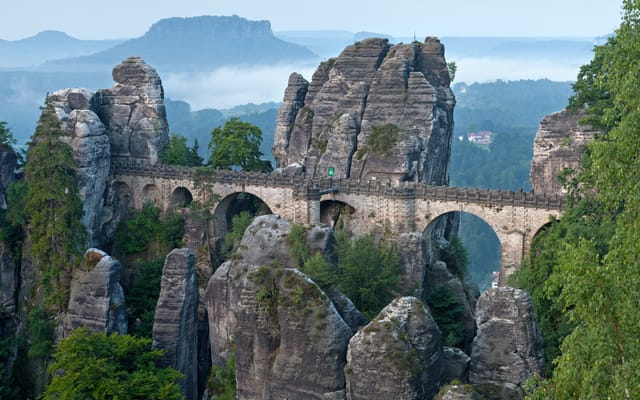
Saxon Switzerland, from Dresden to the rocks of the Elbe
Half an hour from Dresden, the Elbe flows between sandstone towers, beech forests and fortresses on the heights. This trip takes four days to go round the region, from the Bastei to the Schrammsteine and on to Königstein.
A starting point, a few wishes — ViaLooma builds the trip day by day, map, stops and roadbook included.