Tyrol, from Innsbruck to the Ötztal
High mountain roads that climb up to the glaciers, mountain lakes and a Habsburg city at the foot of the peaks. Eight days on a loop from Innsbruck, by way of the Achensee, the Zillertal, the Kaunertal and the Ötztal.
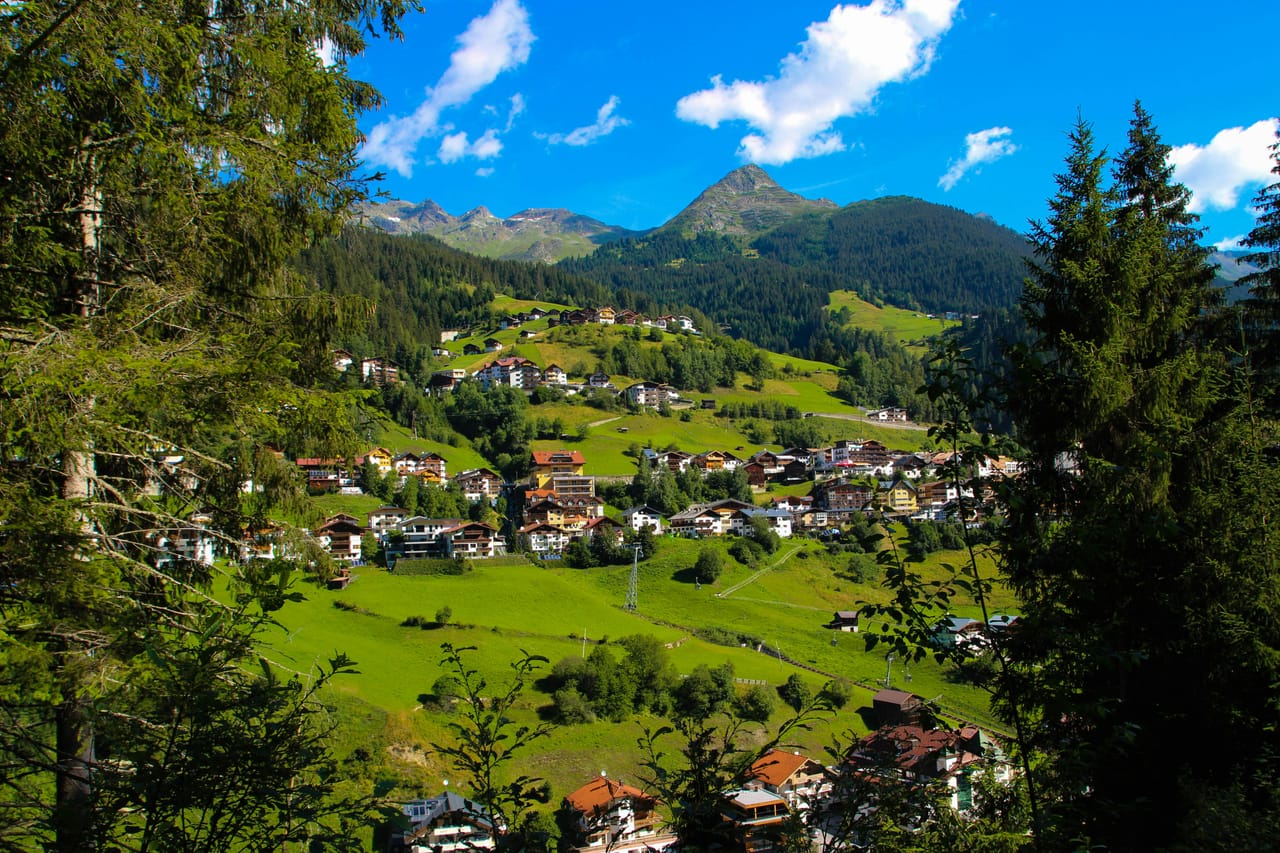
Valleys, high mountain roads and lakes
Tyrol has two kinds of valley. The Inn valley, wide and busy, crosses the region from west to east, with Innsbruck in the middle. Narrow valleys run off it to the south: the Stubai, the Zillertal, the Kaunertal, the Ötztal. They all end at the foot of the glaciers.
In these valleys, five toll roads climb high. The Zillertaler Höhenstraße rises above 2,000 metres, over the farms of the Zillertal. The Schlegeis road runs through single-lane tunnels to a turquoise reservoir. In the Kaunertal, the road follows the Gepatsch reservoir. Above Sölden, the Ötztal Glacier Road reaches 2,829 metres, the highest point in the Alps you can reach on a tarmac road. The Timmelsjoch climbs to the Italian border, then drops down towards Merano.
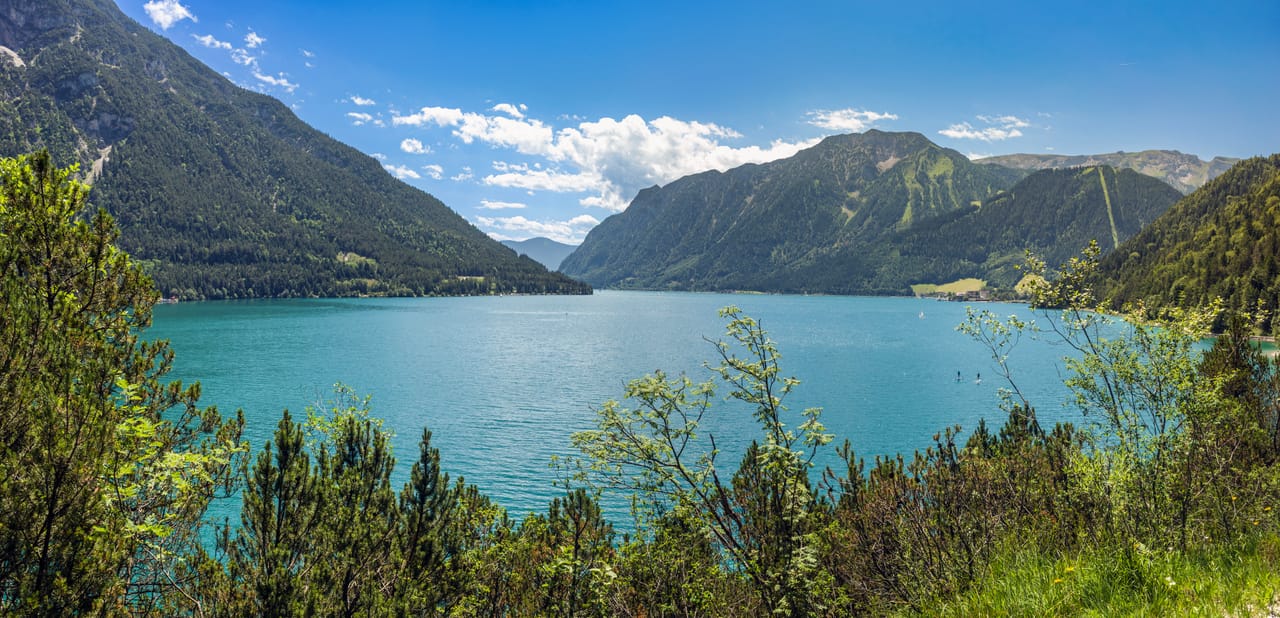
You also stop by the water. The Achensee, the largest lake in Tyrol, stretches for more than 8 kilometres between wooded slopes. Above Oetz, the Piburger See, a small lake in the forest, reaches 23 to 25 °C in summer. Alpbach has kept its wooden chalets, and Kitzbühel its colourful old town.
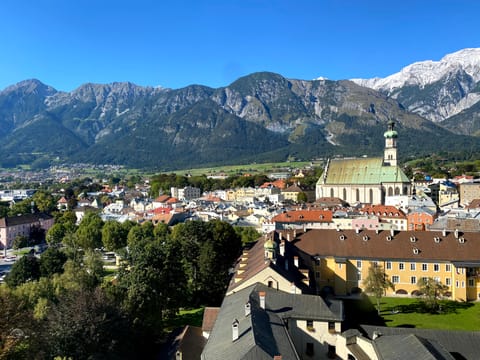
Hall and Schwaz, the towns of salt and silver
Ten kilometres from Innsbruck, Hall in Tirol lived on salt. From the 13th century until 1967, it came from the mines of the Halltal, above the town. Hall was granted town rights in 1303. It has kept the largest medieval old town in North Tyrol: sloping streets, tightly packed roofs and the parish church, at the foot of the Karwendel. You see it on foot, in half a day.
In 1477, the Tyrolean mint moved from Merano to Hall, closer to the silver mines. In 1486, it struck the Guldiner, a large silver coin that was the forerunner of the thaler. The word ‘thaler’ gave us ‘dollar’. In 1567, the mint moved into Hasegg Castle, now a museum.
The silver came from Schwaz, about twenty kilometres away. In the 16th century, it was one of the great mining towns of Europe. In the silver mine, a small train takes you 800 metres into the mountain.
The word ‘thaler’ gave us ‘dollar’.
Innsbruck, the city of Maximilian and Andreas Hofer
Innsbruck owes a great deal to Maximilian I. Around 1500, he had a loggia added to a residence in the old town, covered with 2,657 gilded copper tiles: the Golden Roof. In the Hofkirche, his tomb is surrounded by 28 larger-than-life bronze statues. Yet it is empty: the emperor is buried in Wiener Neustadt.
The city’s other hero is Andreas Hofer. In 1809, he led the Tyrolean uprising against Bavaria, Napoleon’s ally, and won several battles at the Bergisel before he was defeated. Shot by firing squad in Mantua in 1810, he lies in the Hofkirche. On the Bergisel, the Tirol Panorama shows the battle of 13 August 1809 on a circular painting of about 1,000 square metres.
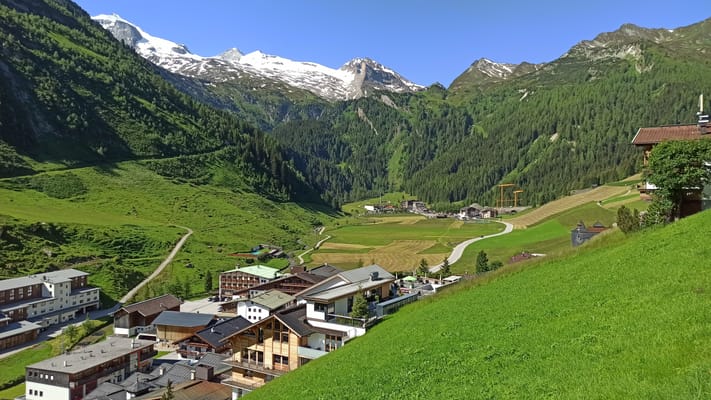
Hintertux
The Tuxertal ends at Hintertux, at 1,500 metres, at the foot of the glacier of the same name. Gondolas climb up to the glacier. Near the top station, you go down into the Natur Eis Palast, a natural cave in the ice that you can visit even in summer.
Practical notes
- When to go
- Late June to late September, when all the high mountain roads are open. The Timmelsjoch usually opens from early June to late October.
- Getting there
- Innsbruck is about two hours from Munich. The Austrian motorway vignette is compulsory; from 2027, it will only exist in digital form.
- Access
- Everything is tarmac. All five high mountain roads are toll roads. The Zirler Berg, towards Seefeld, is closed to trailers over 750 kg going uphill.
- Sleeping in a van
- Campsites in every valley. Camping outside authorised sites is forbidden in Tyrol.
- Worth knowing
- At weekends and on public holidays, from May to early November and in winter, some motorway exits are closed to through traffic, except for drivers stopping in the area.
- Allow
- Eight days for the loop, one more for Hintertux.
What not to miss
- 1The StuibenfallThe highest waterfall in Tyrol, a 159-metre drop, with a staircase of 728 steps alongside it.
- 2RattenbergThe smallest town in Austria, known for its glassmakers, at the foot of its castle hill.
- 3Kufstein FortressTaken by Maximilian in 1504; every day at noon, the open-air organ in its tower plays for the dead of the wars.
- 4Stams AbbeyFounded in 1273 as a burial place for the princes of Tyrol; its church was remodelled in the baroque style in the 18th century.
- 5The NordketteA funicular, then two cable cars, climb from the centre of Innsbruck to the Hafelekar, at 2,256 metres.
- 6Ötzi DorfA reconstructed Neolithic village built around Ötzi, the Iceman found in 1991 above the Ötztal, on the Italian side.
Tyrol in pictures
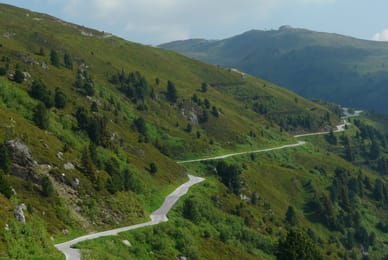
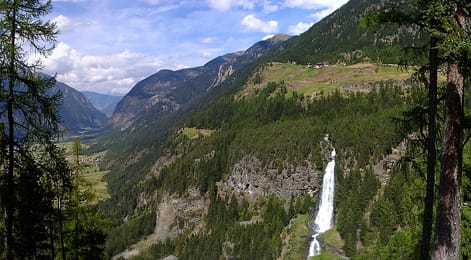
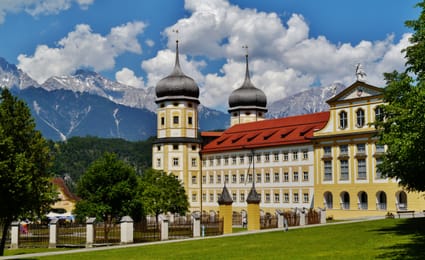
The Zillertaler Höhenstraße through the alpine pastures, above the Zillertal.
Tyrolean food
Tyrolean cooking is mountain cooking. Tiroler Gröstl is potatoes, onions and meat fried in a pan, with a fried egg on top. Kaspressknödel, flat dumplings of bread and cheese, are served in a broth. In the mountain huts, you finish with Kaiserschmarrn, a thick pancake cut into pieces.
Tyrolean speck, pork that is smoked and then air-dried, has protected geographical indication status. The Zillertal produces Graukäse, a very low-fat cheese with a grey curd, protected by a designation of origin. Zell am Ziller has been brewing beer since 1500.
Loop from Innsbruck


 +24stops
- 1Goldenes Dachl · Hofkirche · Neustift im Stubaital · Grawa-Wasserfall
- 2Schloss Ambras · Hall in Tirol · Swarovski Kristallwelten · Pertisau
- 3Rattenberg · Alpbach · Festung Kufstein · Kitzbühel
Free, no account needed — start from its places and make it yours.
Also worth reading
Wide open spaces
The Salzkammergut, from Salzburg to Hallstatt
Green and turquoise lakes at the foot of the mountains, villages on the water’s edge and salt mines worked since prehistory. A five-day loop from Salzburg, through Bad Ischl, Hallstatt, the Dachstein and the Traunsee.
Wide open spaces
The Grossglockner Road, from Salzburg to the Krimml Falls
The Grossglockner Road crosses the Hohe Tauern at the foot of Austria’s highest mountain. Five days on a loop from Salzburg, with gorges, an ice cave and the Krimml Falls.
Mountains and passes
The Bavarian Alps, from the Zugspitze to the Königssee
The castles of Ludwig II, about ten lakes and the highest peak in Germany. A nine-day loop from Munich, from Neuschwanstein to the Königssee, with two short stretches through Tyrol.
A starting point, a few wishes — ViaLooma builds the trip day by day, map, stops and roadbook included.