Ticino: Verzasca, Maggia and the castles of Bellinzona
Ticino is the Switzerland south of the Alps: people speak Italian there and palm trees grow on the lakeshores. This trip starts in Lugano and takes in Bellinzona, Locarno and the Verzasca and Maggia valleys.
Two lakes and two valleys
In Ticino, the mountain valleys begin a few kilometres from the lakes. The trip starts in Lugano, climbs Monte Brè for the view, then goes through Gandria and Morcote, on the shore of Lake Lugano. To the west, Locarno and Ascona sit on Lake Maggiore.
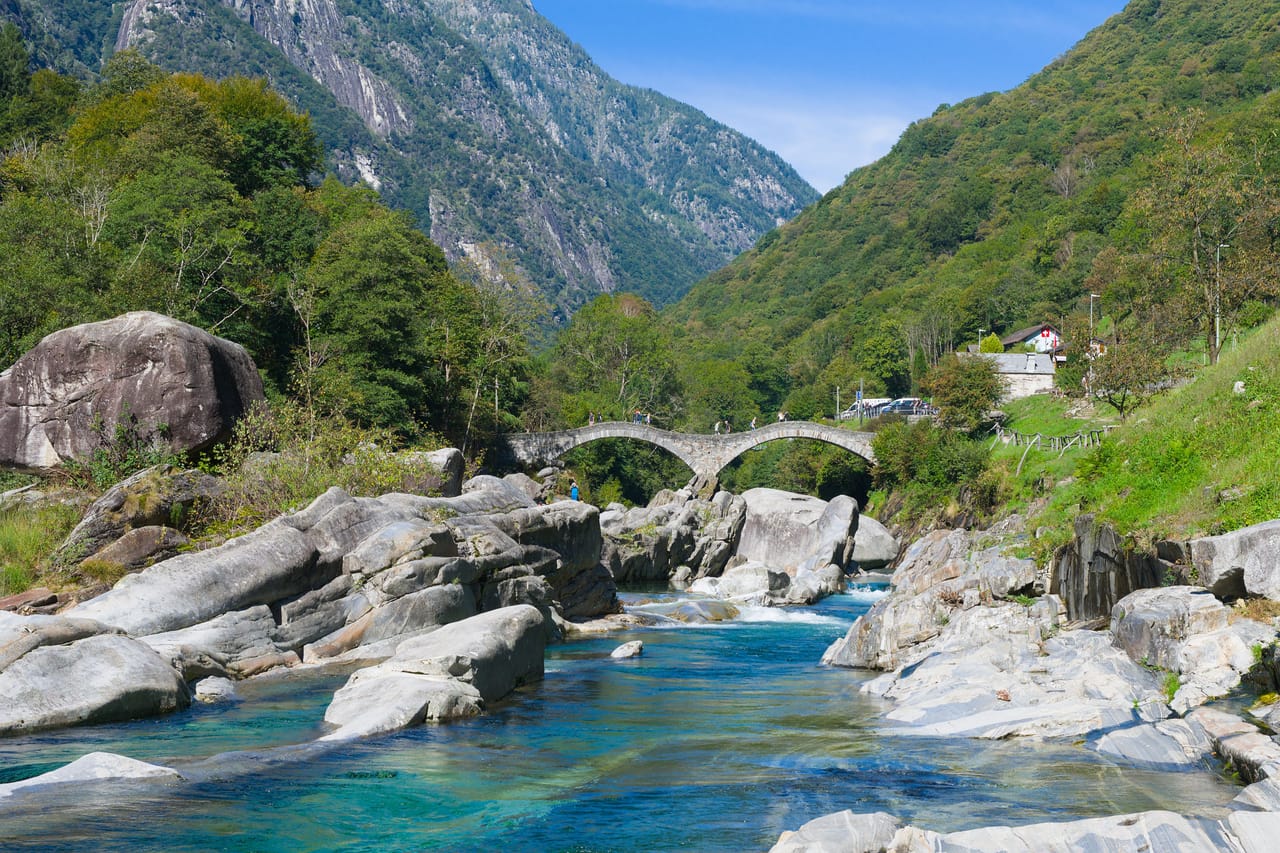
The road up the Verzasca valley runs past a 220-metre-high dam, famous for the bungee jump in the film GoldenEye. It then follows a very clear river, which flows over smooth slabs of gneiss, as far as Sonogno, at the head of the valley. At Lavertezzo, the Ponte dei Salti crosses the river in two arches. Swimming there is dangerous: the water is cold, the current strong, and the level rises fast after a storm.
The Maggia valley begins at the Ponte Brolla gorge. At Bignasco, two roads split off: one climbs towards Mogno, the other enters Val Bavona. This valley is not connected to the power grid, except for the hamlet of San Carlo. Its stone hamlets huddle at the foot of huge rocks.
Bellinzona and its three castles
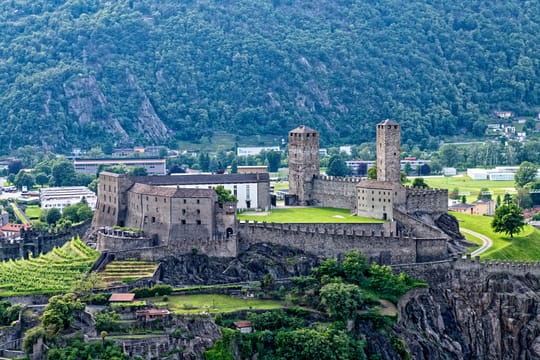
Bellinzona closes off the Ticino valley, below the Gotthard, Lukmanier and San Bernardino passes. The Dukes of Milan held three castles here. Castelgrande stands on the rock above the old town. A wall links it to Montebello, which clings to the slope. Another wall, the Murata, once blocked the valley. Sasso Corbaro, higher up, was built in six months at the end of the 15th century. Together they have been a UNESCO World Heritage Site since 2000.
In 1500, the townspeople drove out the French troops and placed themselves under the protection of Uri, Schwyz and Unterwalden. For nearly three centuries, Ticino was ruled by the Swiss Confederates. It became a Swiss canton in 1803. Today it is the only one where Italian is the sole official language.
Castelgrande was restored in the 1980s by the architect Aurelio Galfetti. A lift cut into the rock takes you up from the lower town.
For nearly three centuries, Ticino was ruled by the Swiss Confederates.
Locarno, Ascona and Monte Verità
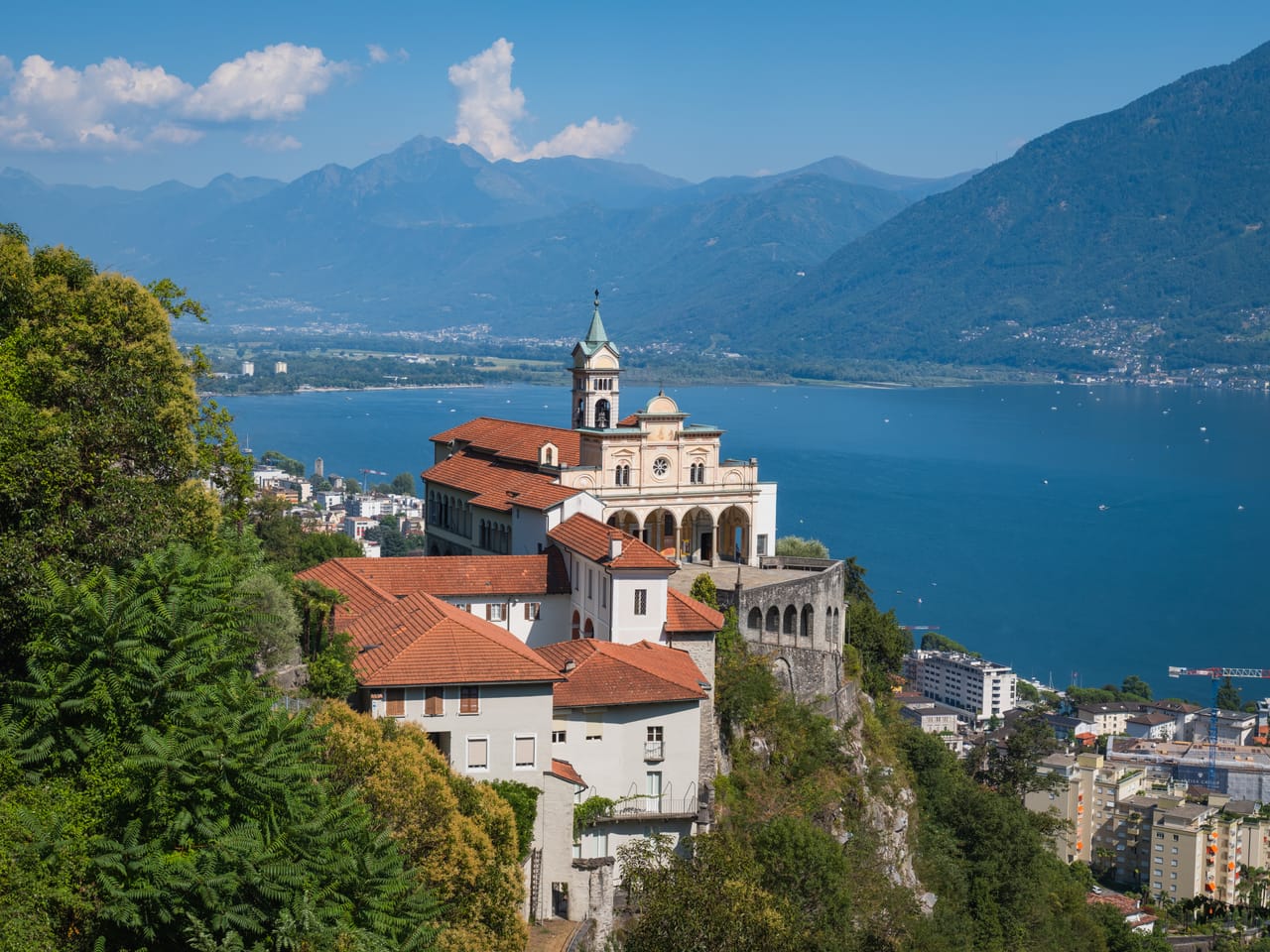
Above Locarno, the sanctuary of the Madonna del Sasso is built on a rock. According to tradition, a Franciscan friar saw the Virgin there in 1480. You walk up by a Way of the Cross or take the funicular. Down below, the Piazza Grande hosts the Locarno Film Festival every August. Founded in 1946, it has 8,000 open-air seats.
In Ascona, in 1900, a small group led by Henri Oedenkoven and Ida Hofmann settled on a hill above the town. They named it Monte Verità, the ‘mountain of truth’. Life there was vegetarian, and nudism was practised. Hermann Hesse and Carl Gustav Jung both spent time there. A museum now tells the story. From Ascona, a boat takes a quarter of an hour to reach the Brissago Islands and their botanical garden.
Bosco/Gurin
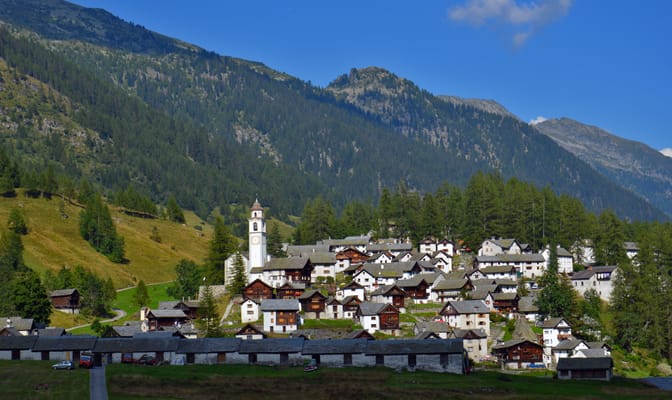
The highest village in Ticino, at over 1,500 metres, and the only one with a German-speaking tradition. Walser settlers from Val Formazza made their home here in the 13th century. Wooden houses on stone bases and a small Walser museum.
Practical notes
- When to go
- May–June and September–October. In summer, the valleys are packed at weekends. In winter, Montebello and Sasso Corbaro open only their courtyards.
- Getting there
- Lugano is an hour from Milan and two and a half hours from Zurich via the Gotthard.
- Access
- Everything is tarmac, but the valley roads are narrow. The road to Corippo is not suitable for motorhomes. In Gandria and Morcote, you finish on foot.
- Sleeping in a van
- No wild camping. Plenty of campsites in Tenero. In the Verzasca valley, motorhomes stay overnight at the aires in Sonogno and Brione, charged per 24-hour period.
- Worth knowing
- A motorway vignette is compulsory up to 3.5 tonnes. Above that, a heavy-vehicle charge replaces it, due for each day spent in Switzerland. Locarno is packed during the festival, from early to mid-August.
- Allow
- Five days for the loop from Lugano, one more for the detour to Bosco/Gurin.
What not to miss
- 1Monte BrèAt 925 metres, said to be one of the sunniest summits in Switzerland; a funicular has run up it since 1912.
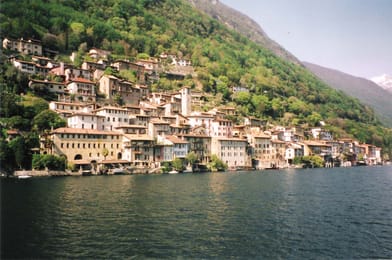
- 2GandriaA car-free village above the lake; across the water, the Swiss Customs Museum tells the story of smuggling.
- 3MorcoteArcades by the water and a long flight of steps up to the church of Santa Maria del Sasso.
- 4CorippoLong the smallest municipality in Switzerland; several of its empty houses now form a hotel spread through the village.
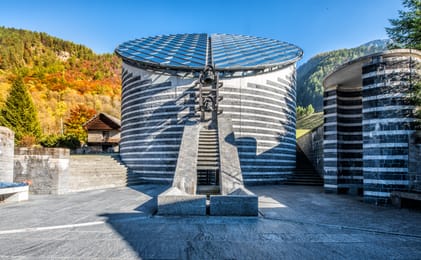
- 5The church at MognoDestroyed by an avalanche in 1986, the church was rebuilt by Mario Botta in white marble and grey gneiss.
- 6The Foroglio waterfallIt drops about 110 metres, just behind the stone houses of the hamlet.
Ticino in pictures
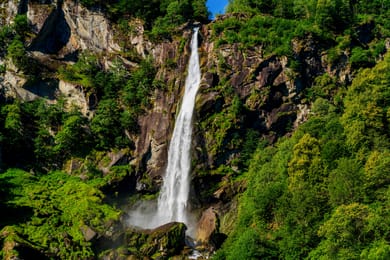
The Foroglio waterfall, in Val Bavona.
The Ticino table
In Ticino, you eat at a grotto. Grotti were originally cool cellars set against the rock, where wine and cheese were kept. Many have become small restaurants, with granite tables under the chestnut trees. They serve polenta, risotto, cured meats and formaggini, small fresh cheeses.
The canton’s red wine is Merlot, chosen in 1906 after phylloxera had destroyed most of the vines. It is drunk from a boccalino, a small ceramic jug. In autumn, the chestnut is everywhere: as flour, in cakes or roasted.
Loop from Lugano


 +16stops
- 1Ciani Park · Monte Brè · Gandria
- 2Castelgrande · Castello di Montebello · Castello di Sasso Corbaro · Madonna del Sasso
- 3Sonogno · Ponte dei Salti · Corippo · Diga della Verzasca
Free, no account needed — start from its places and make it yours.
Also worth reading
Mountains and passes
The Grand Tour of Switzerland
From the Rhine Falls to Lake Geneva, from the Alpine passes to the lakes of Ticino, Switzerland in a single loop. Twelve days from Zurich, through the country’s four language regions.
Wide open spaces
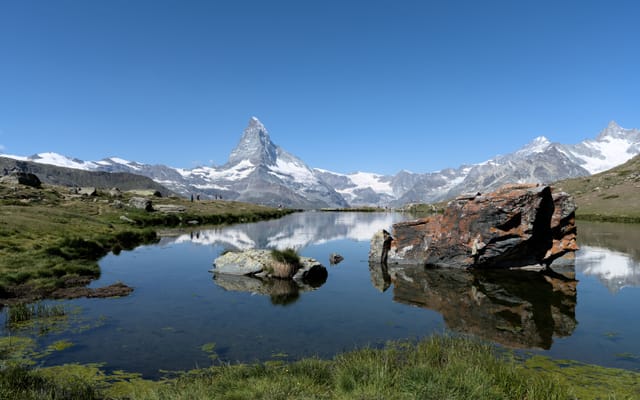
Valais, from the passes to the Matterhorn
Six days on the road across Valais, from the Grimsel and Furka passes to the abbey of Saint-Maurice. On the way, the Aletsch Glacier, Zermatt and the Matterhorn, and valleys where the road zigzags up to the dams.
Mountains and passes
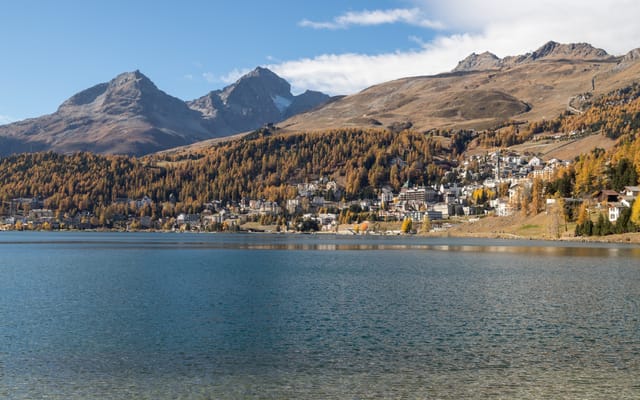
Graubünden and the Engadine, a loop over the passes
Seven passes, lakes at 1,800 metres and villages with decorated façades, in the only Swiss canton with three official languages. A week on a loop from Chur, with a stretch through Italy, from Tirano to the Stelvio Pass.
A starting point, a few wishes — ViaLooma builds the trip day by day, map, stops and roadbook included.