Dobruja and the Danube Delta
Between the Danube and the Black Sea, Dobruja brings together Greek cities, Roman forts, mosques and fishing villages on the edge of the lagoons. A five-day loop from Constanța, as far as the gateway to the delta.
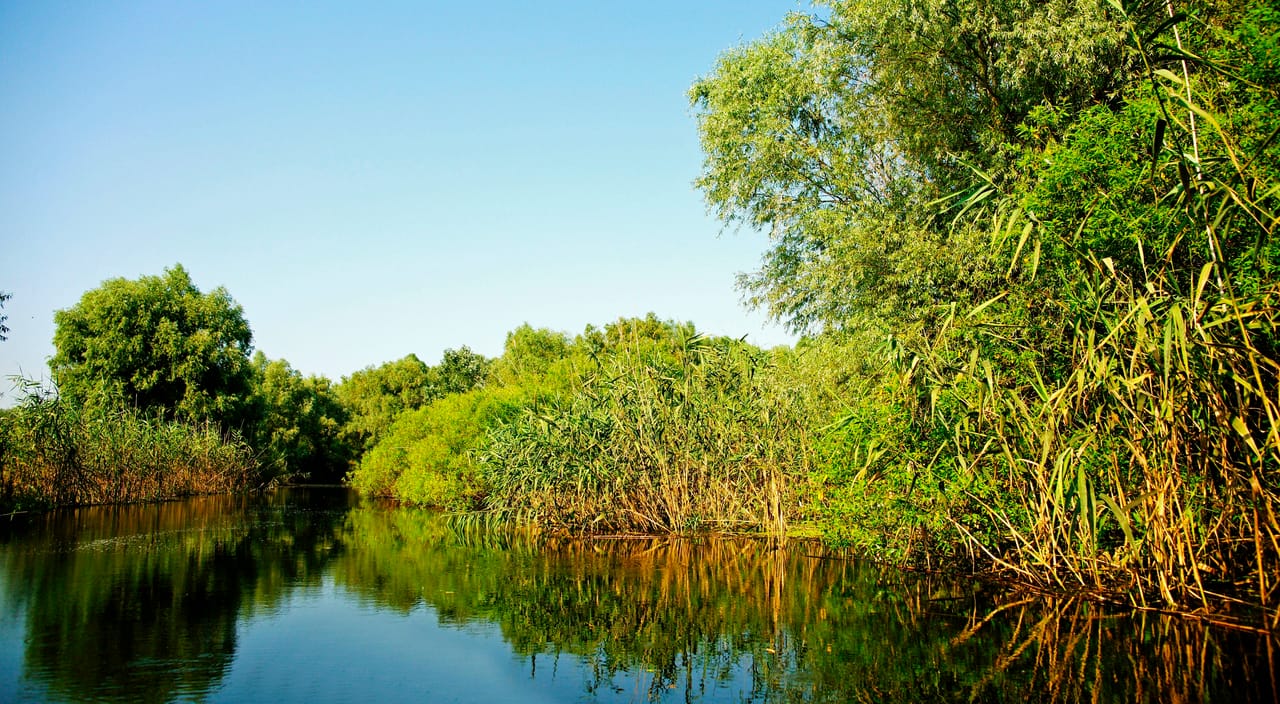
Between the Black Sea and the Danube
The loop starts from Constanța, runs down the coast to Mangalia, crosses the plateau to the river, then heads north towards the delta. You go from fields of wheat and sunflowers to the cliffs of the Danube, then to lagoons lined with reeds. North of Constanța, the road runs through the Fântânele-Cogealac wind farm and its 240 wind turbines.
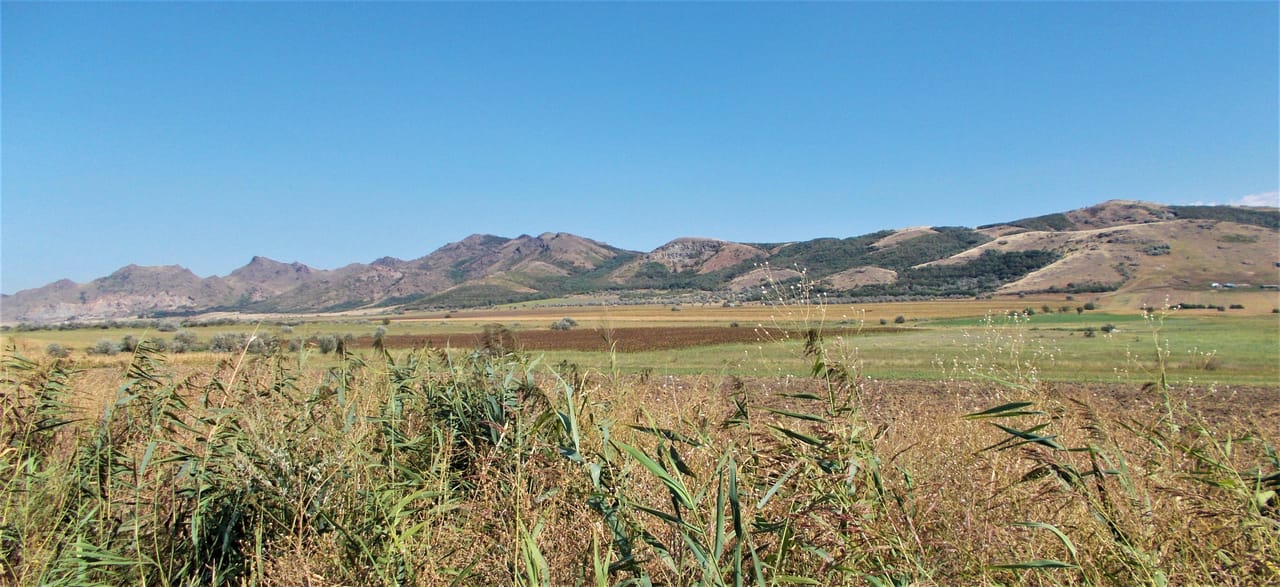
Further north, the road crosses the Măcin Mountains, small, bare granite mountains that rise out of the plain. From the village of Greci, a path climbs Țuțuiatu, their highest point, at 467 metres.
The heart of the delta has almost no roads. You explore it by boat, from Tulcea or Murighiol, along channels where pelicans live. Navrom scheduled boats run from Tulcea to Sulina, with the old Danube Commission lighthouse, or to the fishing village of Sfântu Gheorghe. Allow at least one night there. Further south, the car stays at the port of Jurilovca and a boat crosses the lagoon to Gura Portiței, a tongue of sand facing the sea.
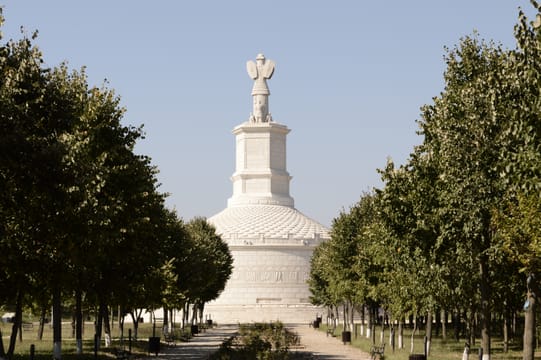
Greeks and Romans in Dobruja
At Adamclisi, in the middle of the fields, Trajan’s Trophy celebrates Rome’s victory over the Dacians. It was dedicated in AD 109 to Mars Ultor, the avenging god. The monument you see today is a reconstruction from 1977. The museum nearby keeps the original pieces, including 48 of the 54 carved metopes from the monument. Further north, on the Danube, the forts of Capidava and Halmyris guarded the frontier of the Empire.
The Greeks had arrived long before. Settlers from Miletus founded Histria in the 7th century BC: it is the first known town on the territory of present-day Romania. Sand slowly closed off its bay, which became Lake Sinoe. Other Greek cities lined this coast: Tomis, today Constanța; Callatis, today Mangalia; Orgame, above Lake Razim.
Exiled to Tomis by Augustus in AD 8, the poet Ovid spent his last years there, far from Rome. His statue has stood since 1887 in the square that bears his name. Right next to it, the Roman Mosaic Edifice holds a mosaic floor that originally covered nearly 2,000 m². It reopened in November 2025, after three years of work.
Exiled to Tomis by Augustus in AD 8, the poet Ovid spent his last years there, far from Rome.
Tatars, Turks and Lipovans
Dobruja remained Ottoman from the early 15th century until 1878, and Tatars and Turks still live here. In Mangalia, the Esmahan Sultan Mosque, built in 1575, is often described as the oldest in Romania. In Constanța, the Carol I Great Mosque, opened in 1913, has a 47-metre minaret: you climb its 140 steps for a view over the city and the port.
Around the lagoons live the Lipovans, Old Believer Russians. Their ancestors refused the reform of the Russian Church in 1652 and fled their country. They founded Jurilovca at the beginning of the 19th century. The village still lives from fishing.
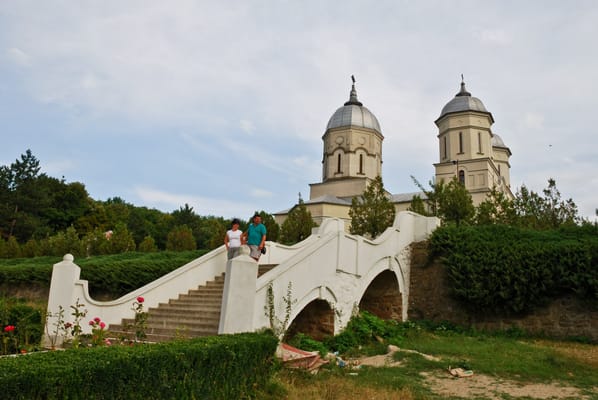
Celic-Dere Monastery
An Orthodox convent, in a valley of woods and vineyards. Its large stone church, begun in 1901, was consecrated in 1932. A small museum keeps an icon of the Virgin dated 1600.
Practical notes
- When to go
- May–June and September. Boats in the delta and to Gura Portiței mostly run from April–May to September–October. Mosquitoes in summer.
- Getting there
- Constanța is about two and a half hours from Bucharest on the A2 motorway, with a toll bridge over the Danube.
- Access
- Everything is tarmac, except a six-kilometre track to Orgame, slippery after rain.
- Sleeping in a van
- Wild camping is banned in the delta reserve and in the Măcin Mountains park: campsites and designated areas only.
- Worth knowing
- Buy the road vignette (rovinietă) online. Access permit for the delta reserve, lagoons included, at permise.ddbra.ro. The Constanța Casino is closed on Tuesdays; tickets online at bilet.cazinoul.com.
- Allow
- Five days, plus one or two to spend nights in the delta.
What not to miss
- 1The Constanța CasinoAn Art Nouveau building from 1910 on the cliff, reopened in 2025.
- 2Trajan’s TrophyThe monument to the victory over the Dacians, and its metopes in the museum.
- 3CapidavaA Roman fort on a rock above the Danube.
- 4The delta by boatA morning on the channels from Tulcea or Murighiol.
- 5EnisalaA medieval citadel attributed to the Genoese, above Lake Razim.
- 6HistriaThe ruins of the oldest known town on Romanian territory, on the shore of Lake Sinoe.
Dobruja and the Danube Delta in pictures
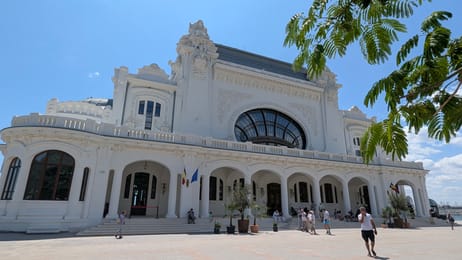
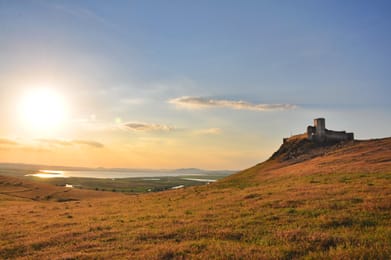
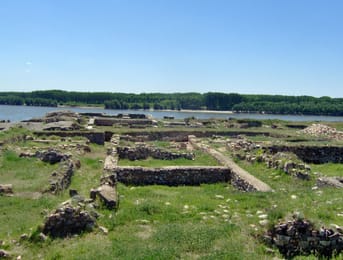
The restored Constanța Casino, on the seafront promenade.
The Dobruja table
Around the delta, people mostly eat fish: ciorbă de pește, a slightly sour soup, saramură, carp grilled in brine with garlic, or plachie, stewed with onions and tomato.
Tatar cooking has left suberek, a fried meat pasty. As for wine, the region has two well-known vineyards: Murfatlar, near Constanța, and Sarica-Niculițel, near Tulcea.
Loop from Constanța


 +12stops
- 1Cazinoul din Constanța · Edificiul Roman cu Mozaic · Marea Moschee din Constanța · Moscheea Esmahan Sultan
- 2Tropaeum Traiani · Capidava
- 3Pasul Priopcea · Monumentul Eroilor din Razboiul pentru Independenta
Free, no account needed — start from its places and make it yours.
Also worth reading
Wide open spaces
The Pacific Northwest, from the Olympic Peninsula to the Cascade volcanoes
Rainforests, a coast of headlands and lighthouses, redwoods and two active volcanoes. A two-week loop from Seattle, by way of the Olympic Peninsula, the Oregon coast and Mount Rainier.
Wide open spaces
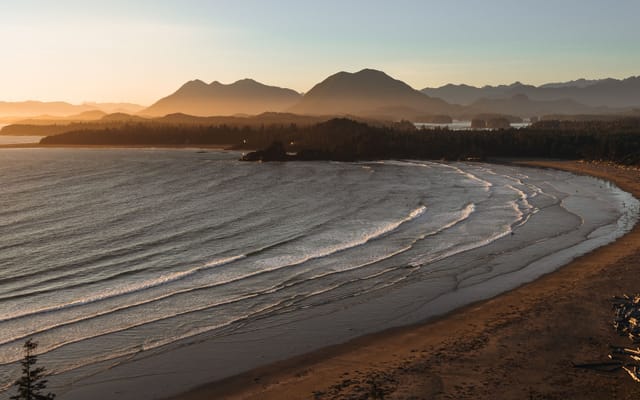
Vancouver Island, from Victoria to the beaches of Tofino
An island of giant forests, beaches pounded by the Pacific and small harbours where boats leave to see orcas. Nine days on a loop from Victoria, from Port Renfrew to Tofino and up to Telegraph Cove.
Wide open spaces
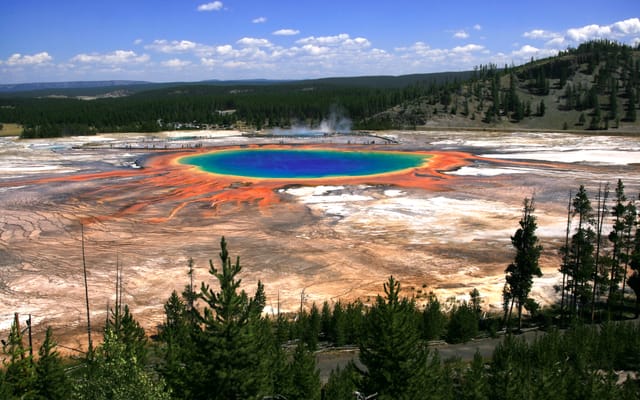
Yellowstone, Grand Teton and Glacier: the great Rockies road trip
Three national parks on one road, from the Tetons to the glaciers of Montana, by way of the geysers of Yellowstone. Twelve days from Jackson to Kalispell, with bison by the roadside and two great mountain roads.
A starting point, a few wishes — ViaLooma builds the trip day by day, map, stops and roadbook included.