The Sognefjord and Jotunheimen, from Oslo to Bergen
Three mountain roads closed in winter, stave churches and the fjords of western Norway, listed by Unesco. Six days from Oslo to Bergen, from the Jotunheimen plateau to the inner reaches of the Sognefjord.
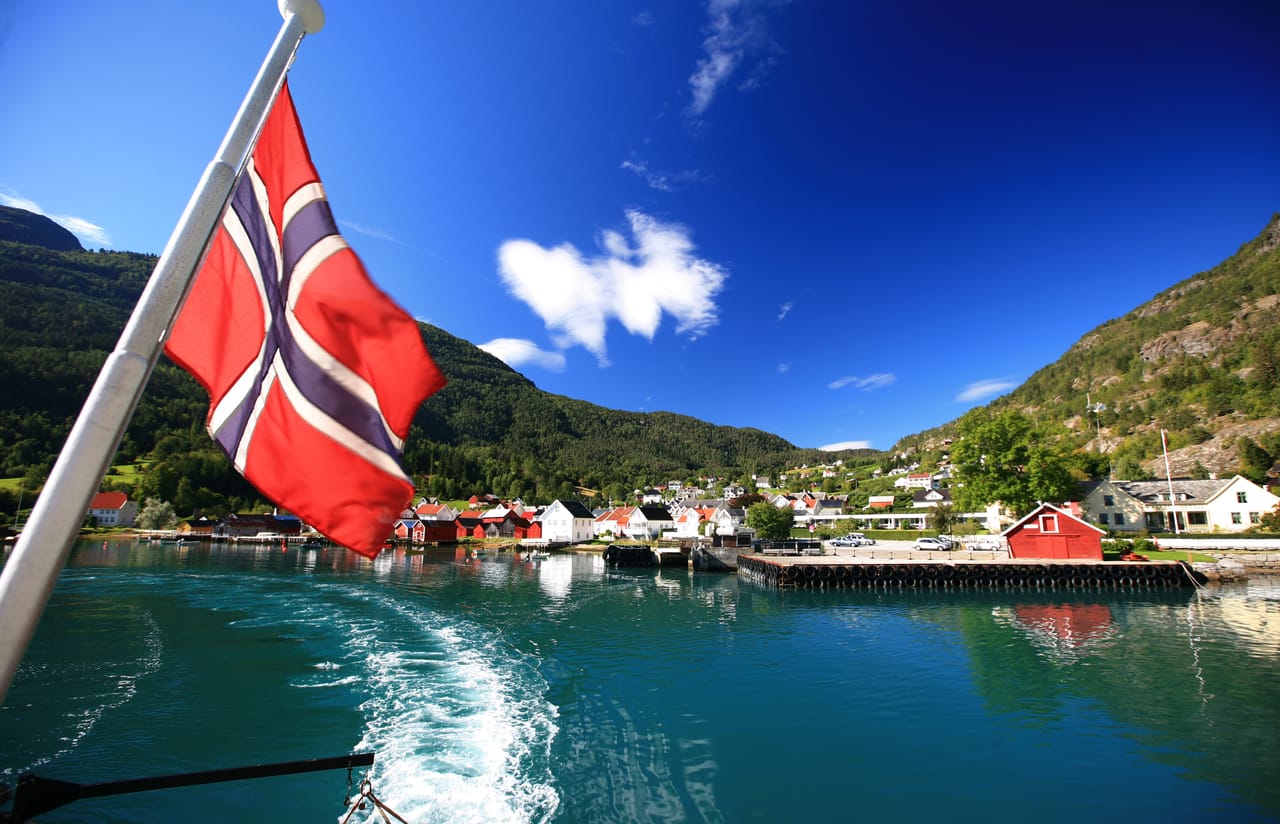
From the mountains to the fjords
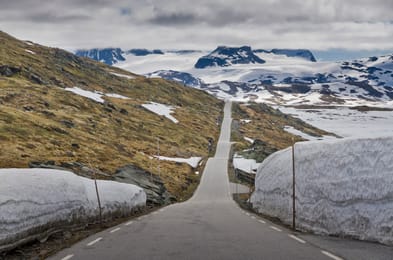
Between Oslo and Bergen, you take three mountain roads, all closed in winter. The Valdresflye plateau climbs to 1,389 metres, on the edge of Jotunheimen. The Sognefjellet road reaches 1,434 metres: it is the highest mountain pass road in Northern Europe. In June, you still drive between walls of snow. Then it winds down in hairpins to the Lustrafjord. You go from tundra to fjord in a single day.
The third, Aurlandsfjellet, is nicknamed the Snow Road. It goes down to the Aurlandsfjord by way of the Stegastein viewpoint: a platform of wood and steel that juts 30 metres out into the void, 650 metres above the water. Lower down, the Lærdal Tunnel runs for 24.5 kilometres under the same mountain, with three caves lit in blue and yellow.
Between the roads, there are the boats. A small ferry that takes about ten cars crosses the Lustrafjord from Ornes to Solvorn. From Gudvangen, boats follow the Nærøyfjord, about 250 metres wide in places, to Flåm. There, the Flåm Railway climbs 866 metres in 20 kilometres.
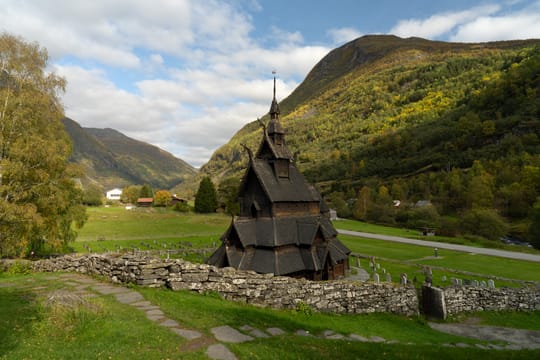
The stave churches
The stavkirker, or stave churches, stand on tall vertical posts set on wooden beams, which in turn rest on stones. At least a thousand were built in Norway in the Middle Ages; 28 remain. You pass Hegge, Lom, Urnes, Kaupanger, Borgund and Fantoft. Borgund, built around 1200 in the Lærdal valley, has kept its tiered roofs, its four dragon heads and an almost intact medieval interior. You visit it like a museum.
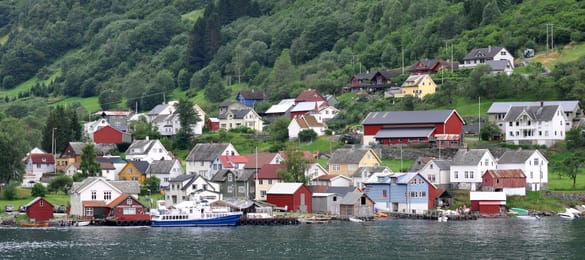
Urnes, built around 1130 on the shore of the Lustrafjord, is one of the oldest. It has been on the World Heritage List since 1979. Its north portal, carved with intertwined snakes and animals, comes from an 11th-century church. It gave its name to the Urnes style, one of the last styles of Viking art. In Undredal, the church has only 40 seats: it is the smallest stave church in use in Scandinavia.
The old stave church at Fortun, at the foot of Sognefjellet, has travelled. Threatened with demolition, it was bought in 1883 by a consul, taken down and rebuilt at Fantoft, near Bergen. An arson attack destroyed it in 1992. It was rebuilt exactly as it was.
In Peer Gynt, Ibsen’s hero tells how he galloped along Besseggen on the back of a reindeer.
Jotunheimen and the Sognefjord
The name Jotunheimen, taken from Norse mythology, means “the home of the giants”. It has been a national park since 1980. Galdhøpiggen rises to 2,469 metres there: it is the highest peak in Norway and in Northern Europe. At Gjendesheim, the Besseggen ridge separates two lakes. Gjende is green, because of the fine rock dust carried down by the glaciers; Bessvatnet, almost 400 metres higher, is blue. In Peer Gynt, Ibsen’s hero tells how he galloped along Besseggen on the back of a reindeer.
Further west, the Sognefjord is the longest and deepest fjord in Norway: 205 kilometres long and 1,308 metres deep. Its arms are old valleys carved out by glaciers, then flooded by the sea. The Nærøyfjord has been a Unesco World Heritage Site since 2005, together with the Geirangerfjord.
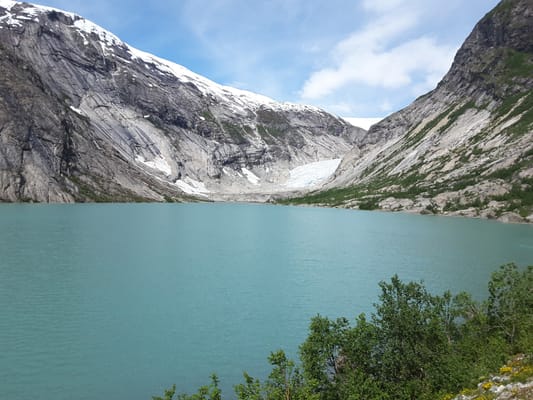
Nigardsbreen
It is an arm of Jostedalsbreen, the largest glacier in continental Europe. In summer, a small boat crosses the meltwater lake to the foot of the ice. Guides take visitors walking on the glacier.
Practical notes
- When to go
- Mid-June to mid-September. Aurlandsfjellet usually opens in early June and closes around mid-October. The passes can close at night or in bad weather.
- Getting there
- Start in Oslo, finish in Bergen. A hire car returned in another city often comes with a one-way fee.
- Access
- Everything is tarmac; Aurlandsfjellet is narrow and steep. From late 2026 and for at least two years, the Lærdal Tunnel will be closed from 6 pm to 6 am for roadworks.
- Sleeping in a van
- Campsites at Lom, around the Lustrafjord, at Flåm and at Gudvangen. No waste disposal at the rest areas on the National Tourist Routes.
- Worth knowing
- Automatic AutoPASS tolls around Oslo and Bergen. Ferry fares depend on the length of the vehicle. Roadworks on the E16 east of Bergen.
- Allow
- Six days, one more to hike Besseggen or see Nigardsbreen.
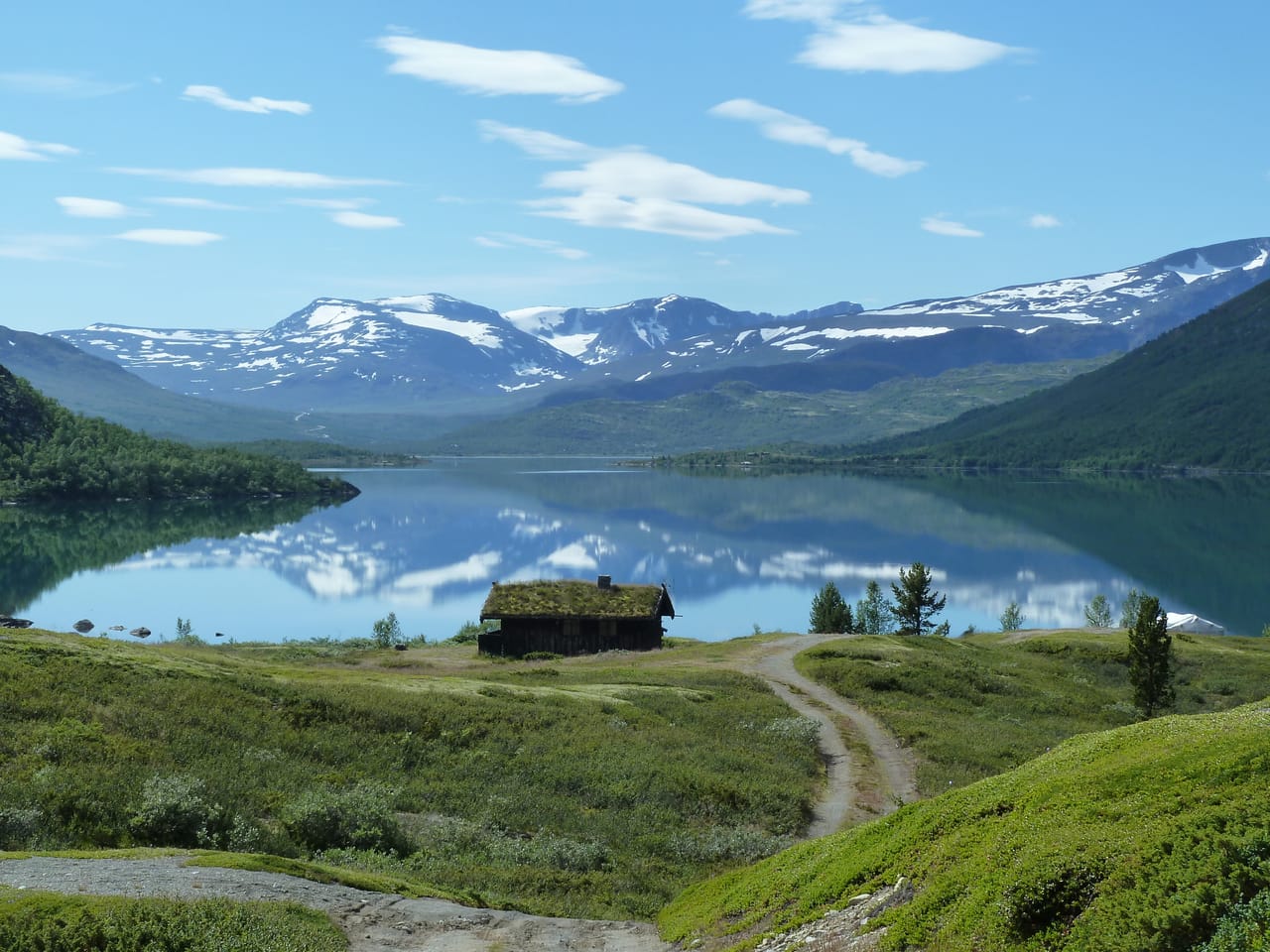
What not to miss
- 1StegasteinThe viewpoint above the Aurlandsfjord, reachable all year from below, from Aurland.
- 2SognefjelletWalls of snow in June, then the hairpin descent towards Skjolden.
- 3Urnes and its ferryTwenty minutes by ferry between Ornes and Solvorn, at the foot of one of the oldest stave churches.
- 4The Flåm RailwayA mountain railway with gradients of up to 5.5%, past waterfalls and through tunnels.
- 5The NærøyfjordA very narrow arm of the fjord, to follow by boat from Gudvangen to Flåm.
- 6BryggenThe wooden houses of Bergen’s Hanseatic harbour, a Unesco World Heritage Site.
The Sognefjord and Jotunheimen in pictures
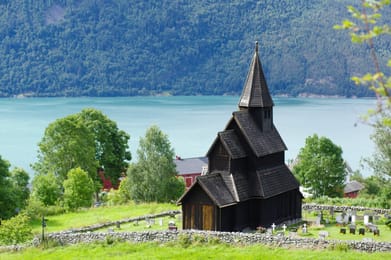
Urnes stave church above the turquoise Lustrafjord.
The table, from Valdres to Bergen
Valdres is known for rakfisk, a fermented trout served in autumn with flatbread. In the valleys, people eat spekemat, cured meat, and rømmegrøt, a sour cream porridge. The Lærdalselva is a renowned salmon river.
In Undredal, they make goat’s cheese, white or brown. In Flåm, the Ægir brewery serves its own beers. In Bergen, the fish market on the harbour ends the trip.
Oslo → Bergen


 +19stops
- 1Kistefos-Museet · Valdres Folkemuseum
- 2Hegge stavkirke · Bitihorn · Øvre Sjodalsvatnet · Lom stavkirke
- 3Sognefjellsvegen · Fortun kirke · Urnes stavkirke · Solvorn
Free, no account needed — start from its places and make it yours.
Also worth reading
Wide open spaces
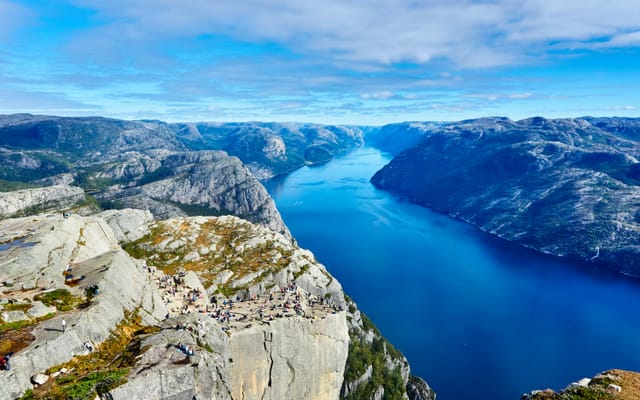
The Lysefjord, from Preikestolen to Kjerag
A narrow fjord between granite cliffs, two hikes to rocks on the edge of a sheer drop, and a road with 27 hairpin bends. Five days on a loop from Stavanger, to the head of the fjord and then to the beaches of Jæren.
Wide open spaces
The Hardangerfjord, from Bergen to Trolltunga
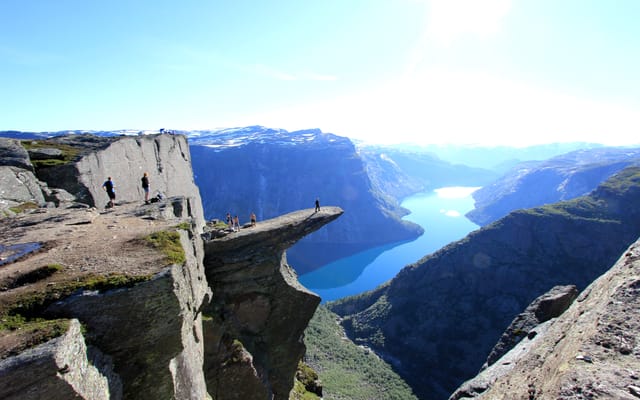
Waterfalls by the roadside, orchards above the water and a glacier above the orchards. Six days on a loop from Bergen, around the second-longest fjord in Norway.
Wide open spaces
The fjords of western Norway: Geiranger, Trollstigen and the Atlantic Road
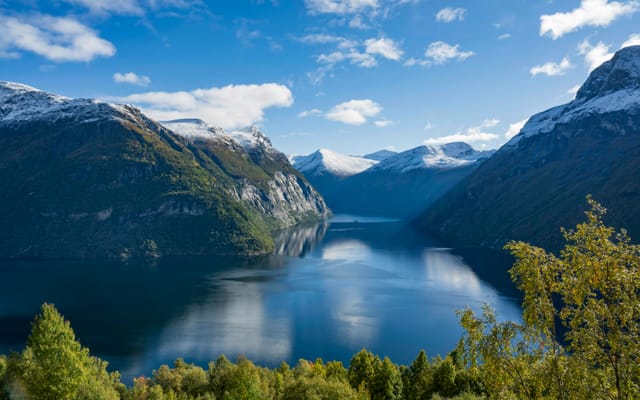
Fjords listed by Unesco, winding mountain roads and a road laid on the sea. Six days on the west coast of Norway, from Ålesund to Kristiansund.
A starting point, a few wishes — ViaLooma builds the trip day by day, map, stops and roadbook included.