Sella and Pordoi, the Dolomites by the passes
Four passes in a loop around the Sella massif: some fifty kilometres of hairpins, three provinces and four valleys that speak Ladin. And one rule: leave early, before the coaches take the road.
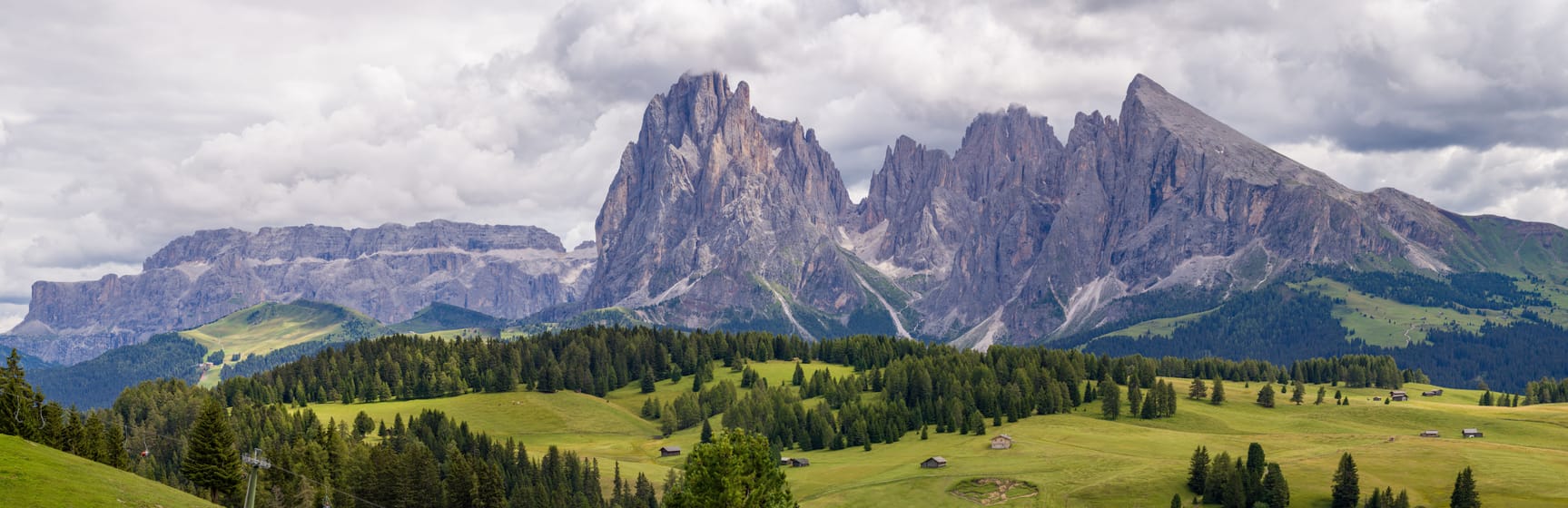
Around the Sella by its four passes
The loop goes around the Sella massif by four passes: Sella, Pordoi, Campolongo and Gardena, over some fifty kilometres. Short on the map, long in practice: the hairpins follow one another, and you stop almost every kilometre.
In July and August coaches and motorbikes saturate the passes from ten in the morning. At seven the road is clear, and the low light on the rock is worth the alarm. Autumn rewards early risers too: in October, a sea of cloud sometimes covers the valleys below the Pordoi.
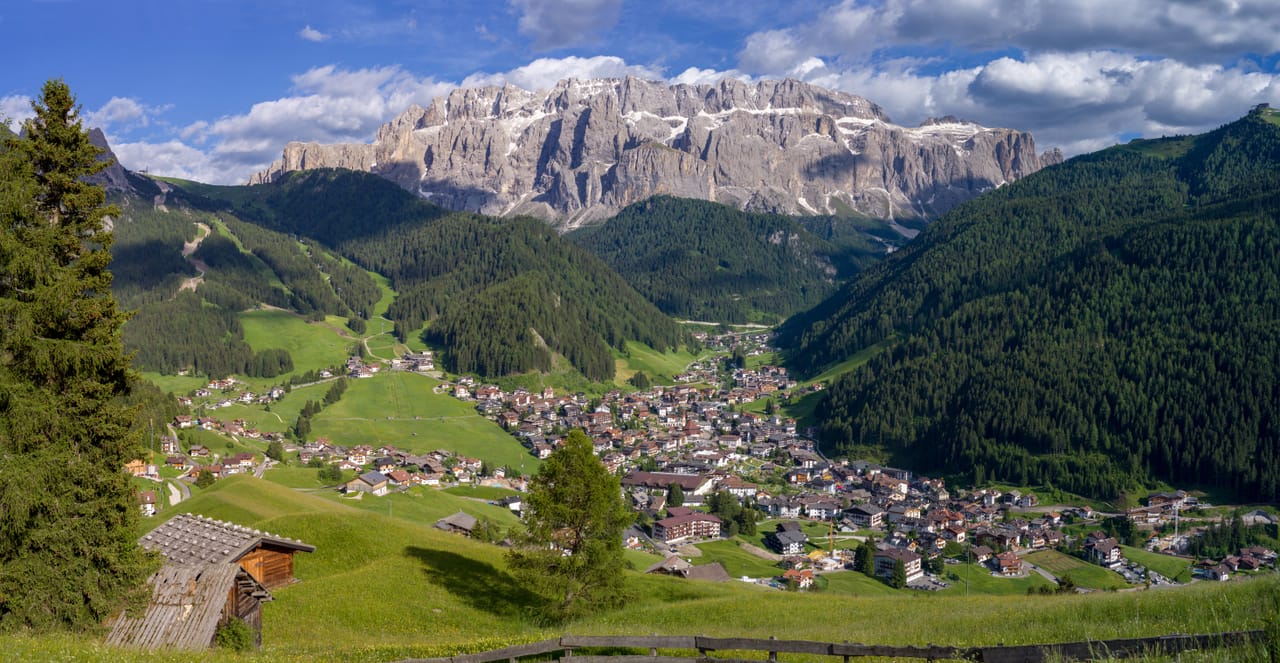
Below the Sella and Gardena passes, Selva is the last village in Val Gardena. At the mouth of the Vallunga, the ruins of Wolkenstein castle cling to the rock face. The castle, built in the 13th century, gave the village its German name. Over the Gardena pass, Corvara is the highest municipality in Val Badia, below the Sassongher. It was here, in 1947, that one of Italy’s first chairlifts was built.
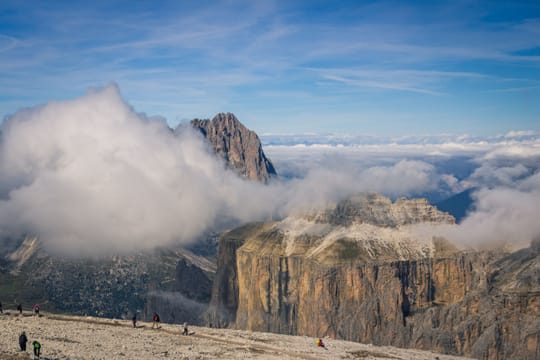
The Sella massif and the Ladin valleys
Seen from the air, the Sella looks like a table: a crown of sheer walls, then a plateau of rock at around 2,900 metres. Above it rises Piz Boè, its highest point, at 3,152 metres. The Sella’s rock gave its name to the whole region: dolomite, described at the end of the 18th century by the French geologist Déodat de Dolomieu. Nine areas of the Dolomites have been a Unesco World Heritage Site since 2009. The Sella itself lies outside the listed area.
Around the massif, four valleys share a language. Val Gardena, Val Badia, Val di Fassa and Livinallongo speak Ladin, a Romance language that has survived in these high valleys. Many signs are in three languages.
A single village often goes by two or three names. Selva is also called Sëlva in Ladin, and Wolkenstein in German.
A single village often goes by two or three names.
The Pordoi, the road and the Great War
The Pordoi road is part of the Great Dolomite Road, completed in 1909. Towards Arabba, it drops in thirty-three hairpins. The Giro d’Italia has made the Pordoi its highest point more than ten times, and a monument to Fausto Coppi stands on the pass.
In 1915 the front line ran close to the pass. From Arabba you can see the Col di Lana, nicknamed ‘Col di Sangue’, the hill of blood. On 17 April 1916 an Italian mine blew part of it away. Near the Passo Pordoi, an ossuary holds more than 8,500 Austro-Hungarian and German soldiers of the Great War.
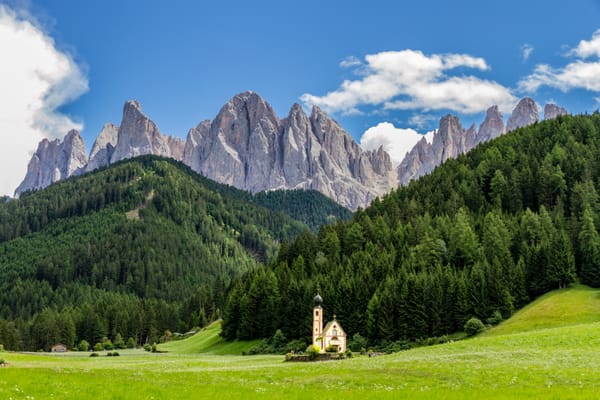
San Giovanni in Ranui
A Baroque chapel from 1744, alone in its meadow at the foot of the Odle spires, which Unesco listed together with the Puez. It was in this Val di Funes that Reinhold Messner grew up, and at five he climbed his first summit, the Sass Rigais. Chapel and meadow are private: the postcard shot is taken from the road.
Practical notes
- When to go
- Late June to mid-October. In winter the passes stay open except in heavy snow; winter tyres or chains are compulsory from 15 November to 15 April.
- Getting there
- Bolzano just over an hour away, Venice three hours, Innsbruck two and a quarter.
- Access
- Tarmac all the way. Tight hairpins, heavy traffic: engine braking is essential on the descents.
- Sleeping in a van
- Campsites at Canazei, Campitello and Colfosco, a motorhome aire at Arabba. Wild camping is forbidden in South Tyrol and Trentino, discouraged elsewhere.
- Worth knowing
- All four passes close to traffic a few days a year for cycling events, including the Sellaronda Bike Day, held in June and September. The Passo Gardena may close to non-residents in summer from 2027: check before you go.
- Allow
- Two days for the loop alone, three to add the Val di Funes.
What not to miss
- 1The Sassolungo from the Passo SellaThe most direct face-to-face on the loop, to extend on foot along the path that skirts its base.
- 2Sass PordoiA cable car climbs from the pass up to 2,950 metres, on the rim of the Sella plateau: the ‘terrace of the Dolomites’.
- 3The Viel dal PanThe ‘bread path’, an old trade route turned footpath, contours along the slope from the Passo Pordoi, facing the Marmolada glacier.
- 4Corvara and Val BadiaThe liveliest village on the loop, and the best base for the second day.
- 5Val GardenaIn Ortisei, the woodcarvers’ village, lifts run to the Seceda, facing the Odle spires, and to the Alpe di Siusi, Europe’s largest high-altitude alpine pasture.
- 6The enrosadiraAt sunset the dolomite turns pink: legend sees in it the rose garden of King Laurin, which twilight brings back into view.
Sella and Pordoi in pictures
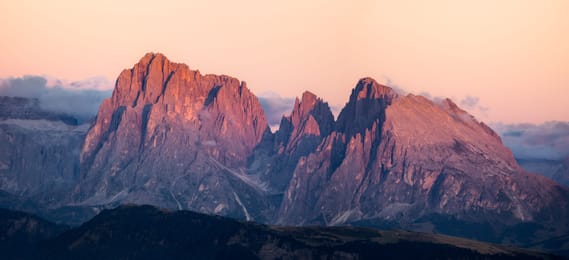
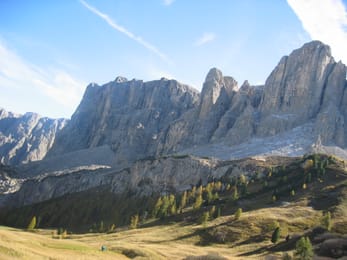
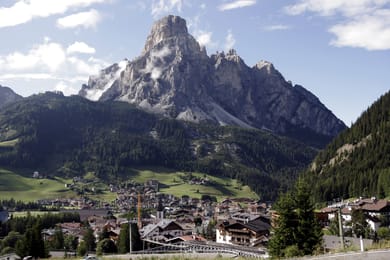
The Sassolungo turned red by the enrosadira at sunset.
At table, between Tyrol and Italy
The cooking of the Ladin valleys borrows from both sides of the Alps. Canederli, bread dumplings with speck, are eaten in broth; turtres, fritters filled with spinach or sauerkraut, go by the name of Tirtlan among their German-speaking neighbours.
Speck, a lightly smoked cured ham, is the speciality of South Tyrol, to which Corvara and Val Gardena belong. You will find it in grocers’ shops around the loop, alongside alpine cheeses. On the Fassa side, Puzzone di Moena, a washed-rind cheese, owes its name to its smell.
Loop from Canazei


 +3stops
- 1Passo Sella · Selva di Val Gardena · Passo Gardena · Corvara in Badia
- 2Passo di Campolongo · Passo Pordoi
Free, no account needed — start from its places and make it yours.
Also worth reading
Mountains and passes
The Grand Tour of Switzerland
From the Rhine Falls to Lake Geneva, from the Alpine passes to the lakes of Ticino, Switzerland in a single loop. Twelve days from Zurich, through the country’s four language regions.
Mountains and passes
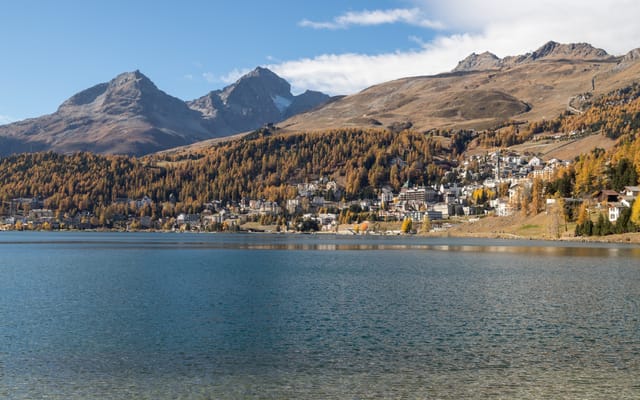
Graubünden and the Engadine, a loop over the passes
Seven passes, lakes at 1,800 metres and villages with decorated façades, in the only Swiss canton with three official languages. A week on a loop from Chur, with a stretch through Italy, from Tirano to the Stelvio Pass.
Wide open spaces
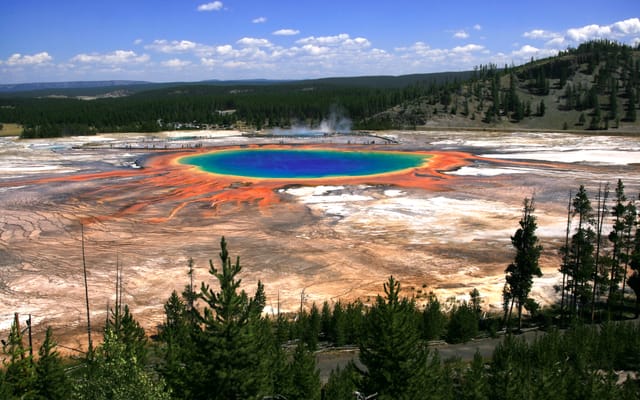
Yellowstone, Grand Teton and Glacier: the great Rockies road trip
Three national parks on one road, from the Tetons to the glaciers of Montana, by way of the geysers of Yellowstone. Twelve days from Jackson to Kalispell, with bison by the roadside and two great mountain roads.
A starting point, a few wishes — ViaLooma builds the trip day by day, map, stops and roadbook included.