The Basque Country from both sides
A loop that crosses the border twice. It links a coast beaten by the Atlantic to inland villages where the mountains begin at once.
From the coast to the mountain villages
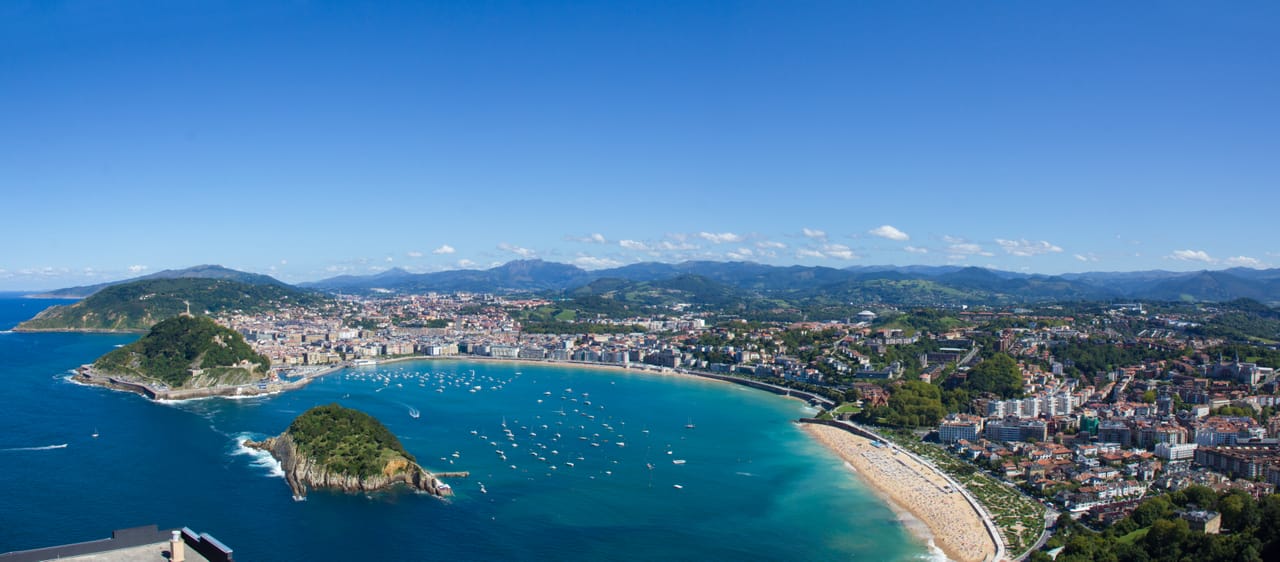
The loop starts at Saint-Jean-de-Luz and follows the corniche to Hendaye. There, the Château d’Abbadia stands above the sea. Then you cross the Bidasoa: on the other side, Hondarribia has kept its ramparts, its Charles V castle and its brightly coloured balconies. The road goes on to San Sebastián, its La Concha beach and Monte Urgull, at the end of the bay.
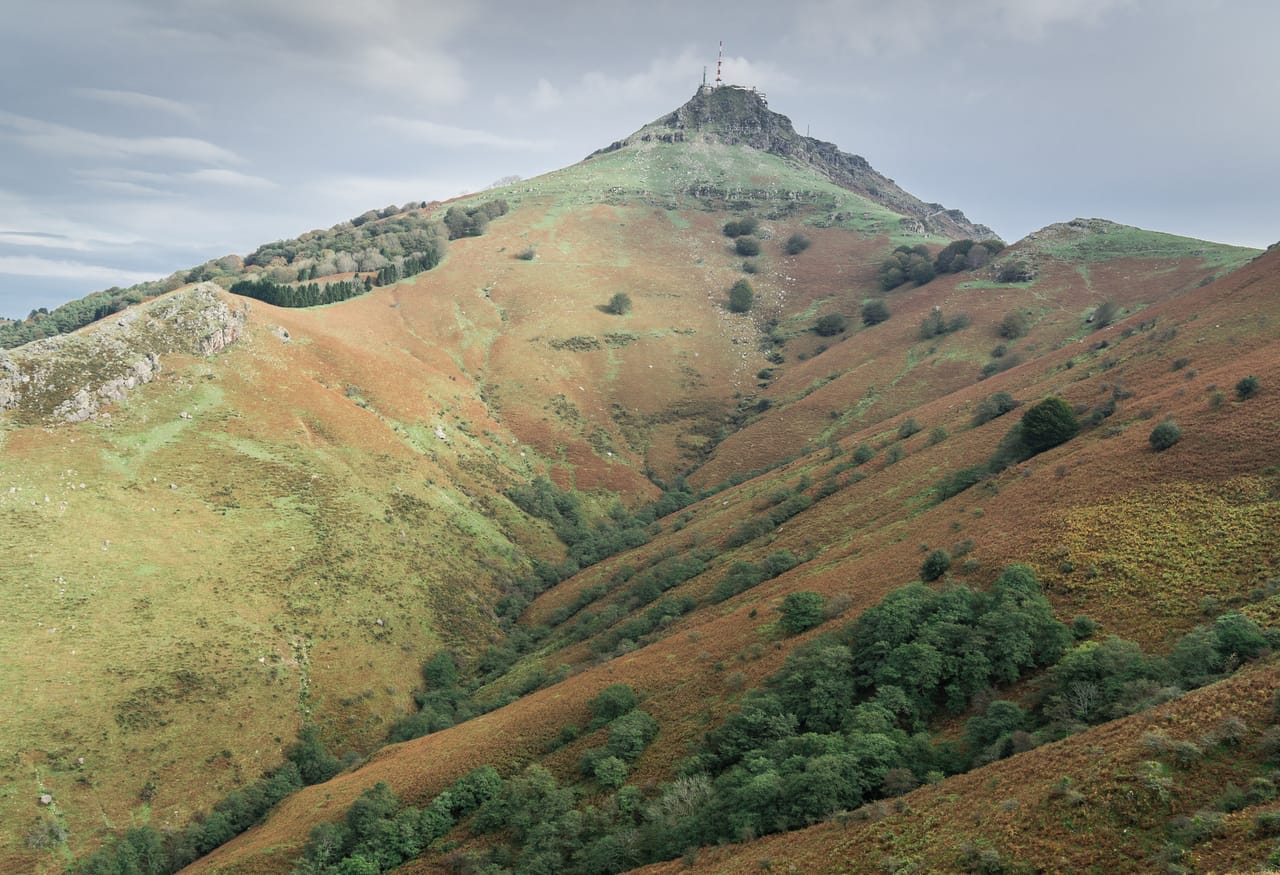
Then the road leaves the sea for the green hills of Navarre. The mountain villages are some twenty kilometres from the beaches. The roads become narrow and winding. They run through Lesaka and Zugarramurdi, then cross back into France at Ainhoa and Sare, at the foot of La Rhune.
You pass from one country to the other almost without noticing. The real contrast is between the coast and the interior. The loop leaves out Biarritz and Bayonne, less than half an hour north of Saint-Jean-de-Luz.
The inland Basque villages
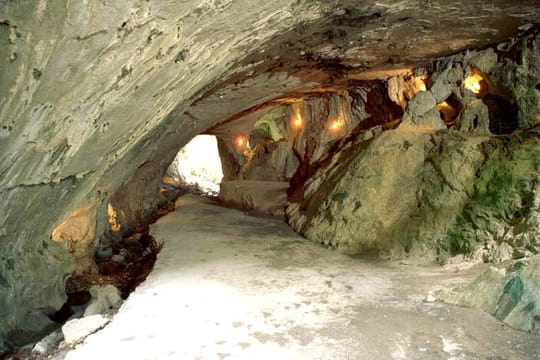
In 1610, the Inquisition of Logroño tried people from Zugarramurdi and the surrounding area for witchcraft. Eleven were condemned to the stake. Six were burnt alive; the other five, who had died in prison, were burnt in effigy. The cave where the sabbaths, the akelarre, were supposedly held can be visited just outside the village. A museum tells the story of the witch-hunt on both sides of the border. Neighbouring Labourd had had its own trial the year before, led by the judge Pierre de Lancre.
From one side of the border to the other, the villages look alike. Each has its fronton, often built against the church, and that is where the village gets together on Sundays. Pelota is played there bare-handed, with a pala or with a chistera, a wicker glove that sends the ball off at more than two hundred kilometres an hour. The houses have white walls, half-timbering and shutters in oxblood red or green. On the lintel, you can read the family name and the year the house was built. The house, the etxe, long counted for more than the people who lived in it: they went by its name.
On signs and menus, you also read Euskara, the Basque language. It has no known relative among the languages of Europe. It is spoken in seven provinces, three in France and four in Spain, gathered under one name, Euskal Herria. It is the language, more than the border, that defines the country. In the inland villages, it remains the language of everyday life.
It is the language, more than the border, that defines the country.
The border, from the Bidasoa to La Rhune
On 7 November 1659, France and Spain signed the Treaty of the Pyrenees on Pheasant Island, in the middle of the Bidasoa. The two countries administer it in turn, six months each. The treaty fixed the border in broad outline and provided for a marriage. In June 1660, Louis XIV married the Infanta Maria Theresa in the church of Saint-Jean-Baptiste at Saint-Jean-de-Luz. According to tradition, the door through which the newly-weds left was then walled up. You can still see it on the side of the church.
The border also runs over the summit of La Rhune, at 905 metres. A little rack railway, in service since 1924, climbs it in thirty-five minutes from the Col de Saint-Ignace. It runs through moorland where pottoks graze, the small semi-wild horses of the Basque Country. At the top, the view reaches from the coast of the Landes to the peaks of the Pyrenees. On the Spanish side, ventas, border inns and shops, serve food a stone’s throw from France.
Espelette
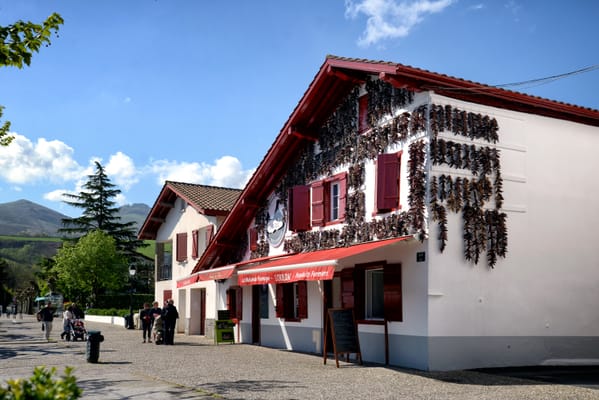
The village that gave the pepper its name: in autumn, the house fronts disappear behind red garlands hung out to dry. Espelette pepper has its own appellation of origin, and its own festival, on the last weekend of October.
Practical notes
- When to go
- May–June and September. July and August saturate the coast.
- Getting there
- Bayonne and San Sebastián half an hour from Saint-Jean-de-Luz, Bordeaux two and a half hours.
- Access
- All tarmac. The inland roads are narrow and very winding.
- Sleeping in a van
- Plenty of campsites on both sides. Overnight parking is tightly controlled on the coast in season.
- Worth knowing
- The little train up La Rhune runs from late March to early November and must be booked ahead in high season. The rest of the year, you walk up to the summit.
- Allow
- Four days for the loop, six pushing further into Navarre or on to Bilbao and its Guggenheim Museum.
What not to miss
- 1La RhuneThe border summit, reached on foot or by rack railway.
- 2The inland villagesAinhoa and Sare: red half-timbered houses and pelota courts.
- 3The Basque cornicheBetween Hendaye and Saint-Jean-de-Luz, the coast drops straight into the Atlantic.
- 4HondarribiaA walled old town with brightly coloured balconies, just across the Bidasoa from Hendaye.
- 5La ConchaSan Sebastián’s bay, one of the most famous city beaches in Europe.
- 6ZugarramurdiThe sabbath cave and the witches’ museum, a few minutes from the border.
The Basque Country in pictures
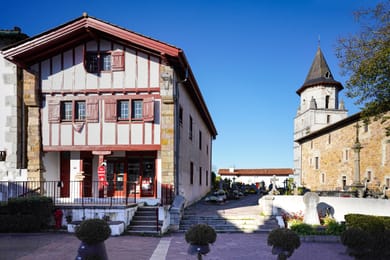
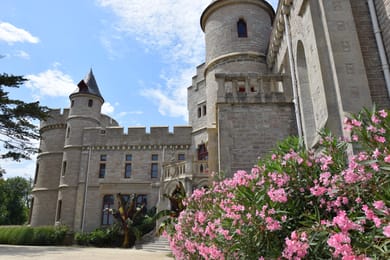
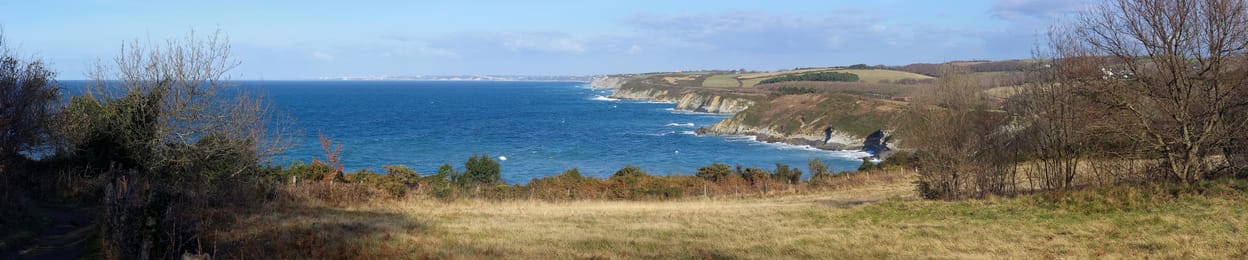
A Labourd house and the bell tower of Ainhoa.
Basque food
On the French side, Espelette pepper seasons many dishes, from veal axoa to Bayonne ham. Gâteau basque, filled with black cherry or with cream, is sold in every village.
On the Spanish side, San Sebastián is the city of pintxos: small bites lined up on bar counters. You have them with a glass of txakoli, the lightly sparkling white wine of the coast.
Loop from Saint-Jean-de-Luz


 +7stops
- 1Château d'Abbadia · Castillo de Carlos V · Santuario de Nuestra Señora de Guadalupe
- 2Monte Urgull · Kontxa hondartza
- 3Lesaca · Cuevas de Zugarramurdi · Ainhoa
Free, no account needed — start from its places and make it yours.
Also worth reading
Coast and islands
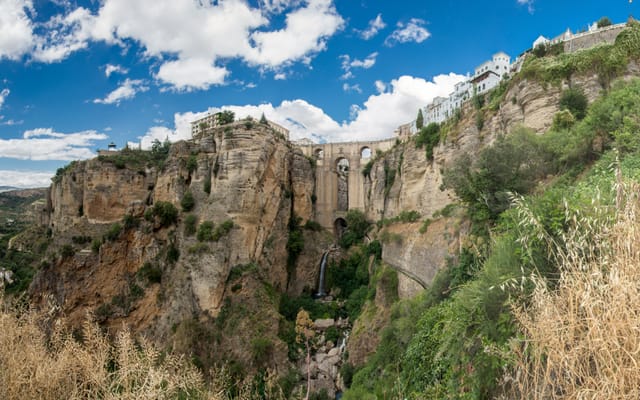
The white villages, Ronda and the Costa de la Luz
Whitewashed villages clinging to the sierras, a town split in two by a ravine, then the Atlantic, its dunes and the wind of Tarifa. Six days on a loop from Jerez, between the mountains of Cádiz and the wildest coast in Andalusia.
Coast and islands
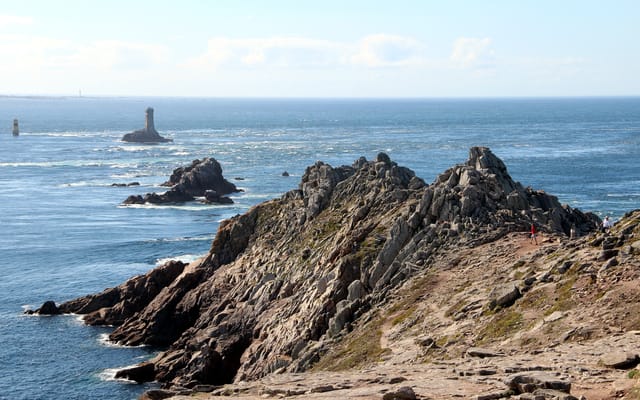
The coast of Brittany, from Saint-Malo to Vannes
The corsair city, the pink granite, the headlands of Finistère and the standing stones of Morbihan: nearly eight hundred kilometres along the coast, from the Channel to the Atlantic, in eight days.
Heritage and culture
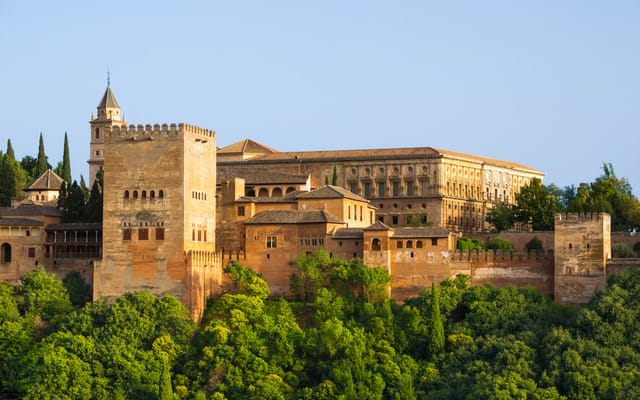
Andalusia, from Seville to Granada
Córdoba of the caliphs, Seville where the gold of the Americas came ashore, Granada of the Nasrids: three cities that were each, in turn, the heart of al-Andalus. A week from one to the next, through the olive groves, the Subbética and the dolmens of Antequera.
A starting point, a few wishes — ViaLooma builds the trip day by day, map, stops and roadbook included.