Dubrovnik, Mostar and Kotor: a loop through Croatia, Bosnia and Montenegro
A week on a loop from Dubrovnik, through three countries, two of them outside the European Union. The Croatian coast, the karst of Herzegovina and the Bay of Kotor, with three old towns on the UNESCO list.
Three countries in a week
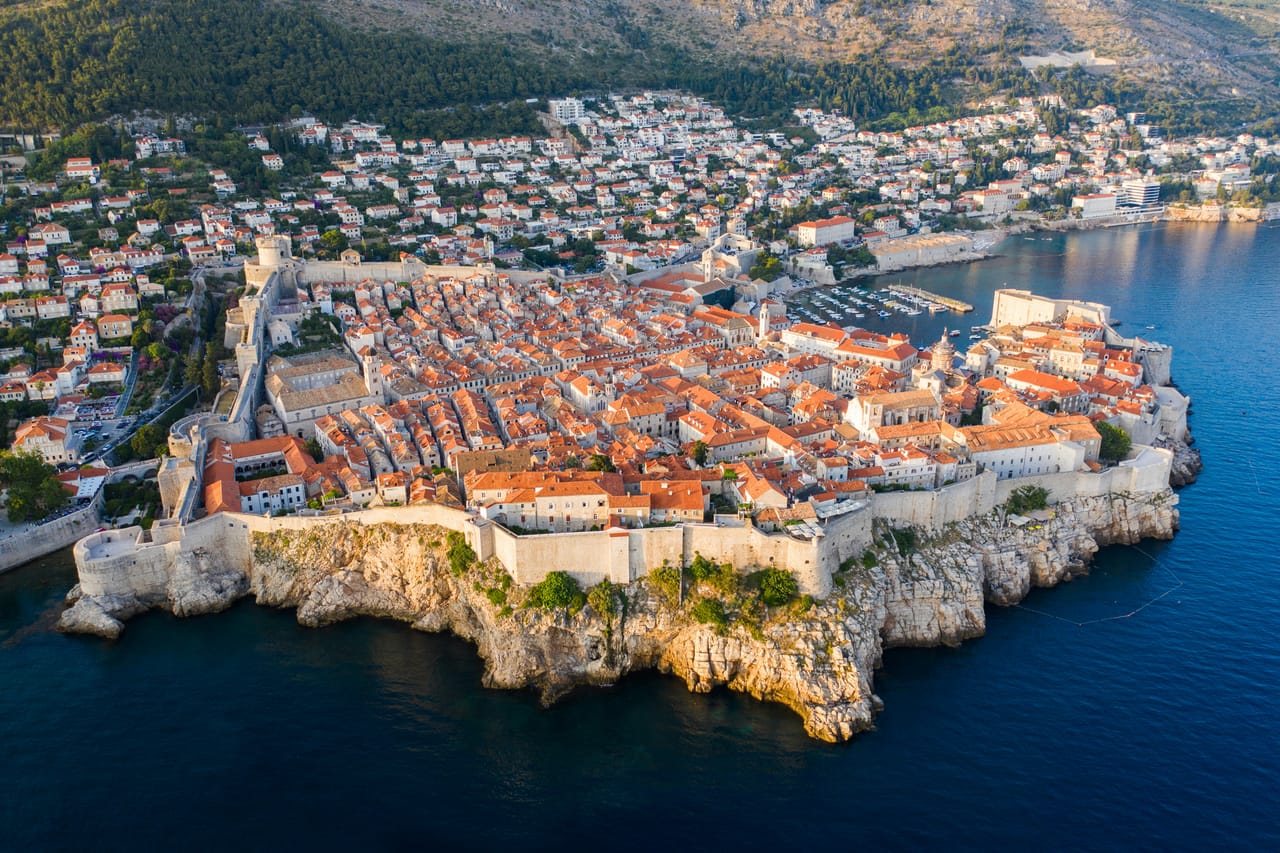
The loop starts and ends in Dubrovnik, and runs through Bosnia and Herzegovina and Montenegro. The landscape changes at every border. The road follows the Croatian coast, crosses the Neretva delta and its mandarin orchards, then climbs into the karst of Herzegovina, a land of stone and dry-stone walls. It ends on the shores of the Bay of Kotor, where the mountains drop straight into the sea.
At Kravica, the Trebižat falls about 25 metres into a pool where people swim in summer. Počitelj, an Ottoman village built in tiers, looks down on the Neretva. In Montenegro, the road goes round the bay at the water’s edge, through Perast, to Kotor, then on to Budva and Sveti Stefan.
You walk in Dubrovnik, Mostar and Kotor; from one town to the next, never more than three hours at the wheel, not counting the wait at the borders.
Mostar and Ottoman Herzegovina
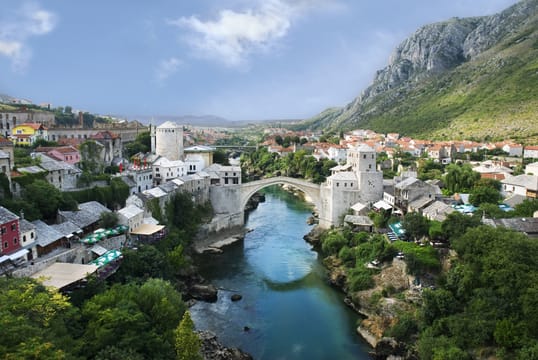
The Stari Most, Mostar’s Old Bridge, was completed in 1566 on the orders of Suleiman the Magnificent, by the architect Mimar Hayruddin. Its single arch crosses the Neretva about 24 metres above the water. On 9 November 1993, during the Bosnian War, it collapsed under fire from Bosnian Croat forces. Rebuilt exactly as it was, it reopened in July 2004 and has been a UNESCO World Heritage Site since 2005. The town takes its name from the mostari, the keepers of the bridge.
Young men dive from the bridge into the Neretva; a competition has been held every year at the end of July since 1968. To see the bridge from above, climb the minaret of the Koski Mehmed Pasha Mosque.
At Blagaj, a 16th-century dervish monastery (tekke) stands against a cliff where the Buna flows out, one of the most powerful springs in Europe. Near Stolac, the necropolis of Radimlja has 133 stećci, medieval tombstones carved with hunting scenes and men with a raised hand, listed by UNESCO in 2016.
Ragusa kept its independence by paying tribute to the Ottomans.
Ragusa and Venice on the Adriatic
Until 1808, Dubrovnik was the capital of a merchant republic, the Republic of Ragusa, whose motto was “Libertas”. Ragusa kept its independence by paying tribute to the Ottomans. To protect its salt pans, it built walls at Ston, of which about 5.5 kilometres remain. The earthquake of 1667 destroyed most of the city, but not its walls, about 1,940 metres long. During the siege of 1991–1992, more than two thirds of the buildings in the old town were hit.
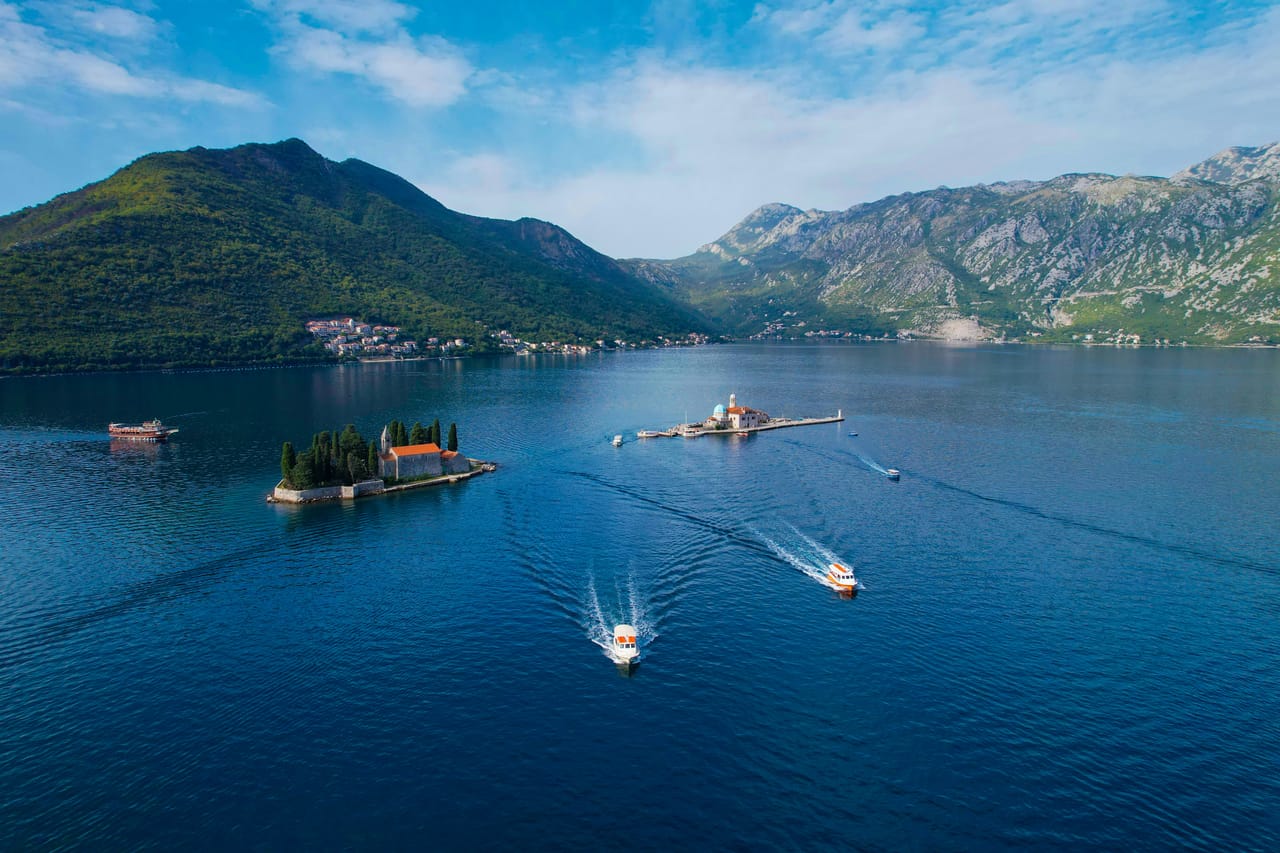
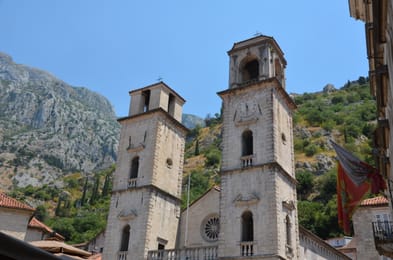
Kotor, for its part, belonged to Venice from 1420 to 1797. Its walls climb the mountain up to St John’s Fortress. Opposite Perast, the islet of Our Lady of the Rocks is man-made: according to tradition, sailors found an icon on a reef in 1452, then threw a stone there each time they came home. Every 22 July, the Fašinada keeps this custom alive.
Mount Lovćen and the Njegoš Mausoleum
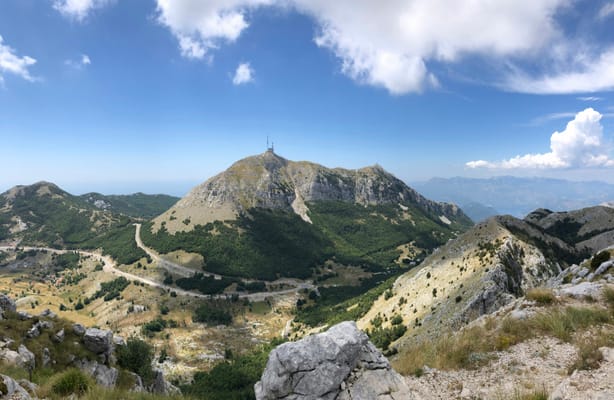
A road with 25 hairpin bends rises above the Bay of Kotor. On Jezerski vrh, at 1,657 metres, 461 steps lead to the mausoleum of the prince-bishop and poet Njegoš. Ivan Meštrović designed it. A narrow road, best avoided in a large motorhome.
Practical notes
- When to go
- May–June and September–October. In July and August, the coast is packed and so are the border crossings.
- Getting there
- Dubrovnik airport at Čilipi. By road, Dubrovnik is about three hours from Split.
- Access
- Everything is tarmac. A car registered in the EU or Switzerland is insured without a Green Card; with a hire car, you need the rental company’s written consent to cross into Bosnia and Montenegro. The Kamenari–Lepetane ferry saves you the drive round the Bay of Kotor, and so skips Perast.
- Sleeping in a van
- Wild camping is banned in Croatia and Montenegro. Campsites at Cavtat, around Mostar and Blagaj, and on the shores of the Bay of Kotor. The old towns are closed to cars.
- Worth knowing
- The euro in Croatia and Montenegro, the convertible mark in Bosnia. In summer, the wait between Croatia and Montenegro can last several hours: cross early in the morning.
- Allow
- A week for the loop, half a day more for Lovćen and Cetinje.
What not to miss
- 1The walls of DubrovnikA walk round the old town along the ramparts, as soon as they open.
- 2Mount SrđBy road or by cable car, the old town and the islands at sunset.
- 3PočiteljAn Ottoman village built in tiers above the Neretva.
- 4PerastSea captains’ palaces on the water’s edge, and a boat to Our Lady of the Rocks.
- 5The walls of KotorA long staircase up to St John’s Fortress, with the bay below.
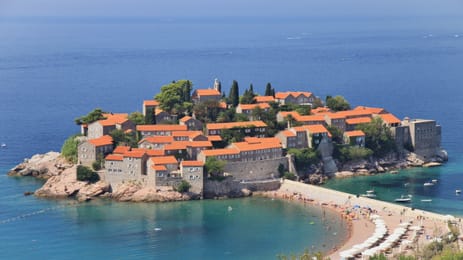
- 6Sveti StefanThe island hotel, reopened in 2026, is for its guests only; the beach next to it is public.
Dubrovnik, Mostar and Kotor in pictures
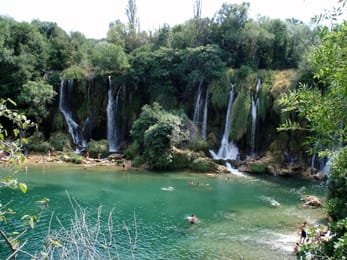
The Kravica waterfalls and their pool, in summer.
Food and wine, from Ston to Njeguši
In Mali Ston, at the end of the walls, you eat flat oysters by the harbour. On the Pelješac peninsula, the plavac mali grape makes powerful reds; Dingač is Croatia’s first protected wine region. In Dubrovnik, you finish with a rožata, a crème caramel.
In Herzegovina, you eat ćevapi, small grilled sausages, and burek; the vineyards of Mostar make a white wine, žilavka. The monastery of Tvrdoš, near Trebinje, makes its own wine. Njeguši is known for its smoked ham and its cheese.
Loop from Dubrovnik


 +21stops
- 1Dubrovačke gradske zidine · Stradun · Knežev dvor · Lovrijenac
- 2Stonske zidine · Kravica · Počitelj
- 3Stari most · Koski Mehmed-pašina džamija · Partizansko groblje u Mostaru · Tekija na Buni
Free, no account needed — start from its places and make it yours.
Also worth reading
Wide open spaces
Croatia, from Zagreb to Dubrovnik
From the Plitvice Lakes to the walls of Dubrovnik, this trip crosses Croatia in ten days. It takes in Zadar, Šibenik, Split and the Biokovo road.
Coast and islands
Dubrovnik and the Pelješac Peninsula
The walls of Dubrovnik, the great wall of Ston and the steep Dingač vineyards above the sea. Four days on a loop from Dubrovnik, from the Konavle valley to Orebić, across from the island of Korčula.
Wide open spaces
Northern Dalmatia, from Zadar to the Plitvice Lakes
Between the Adriatic and the Velebit mountains, Northern Dalmatia and Lika bring together Roman towns, limestone gorges and terraced lakes. This trip is a five-day loop from Zadar, by way of Paklenica, Lika and Plitvice.
A starting point, a few wishes — ViaLooma builds the trip day by day, map, stops and roadbook included.