The Bavarian Alps, from the Zugspitze to the Königssee
The castles of Ludwig II, about ten lakes and the highest peak in Germany. A nine-day loop from Munich, from Neuschwanstein to the Königssee, with two short stretches through Tyrol.
Lakes, peaks and painted villages
The trip follows the German Alpine Road, billed as the oldest tourist route in the country. Conceived in 1927, it links Lake Constance to the Königssee. The loop starts in Munich and follows most of it, from Füssen to Berchtesgaden. You drive along the foot of the mountains, from one lake to the next: the Eibsee, the small Geroldsee facing the Wetterstein, the Walchensee, the Tegernsee, then the Chiemsee, which Bavarians call “the Bavarian Sea”.
Between the lakes, the villages have onion-domed church towers and façades painted in trompe-l’œil. The best known are in Oberammergau and in Mittenwald. Goethe, passing through in 1786, called Mittenwald “a living picture book”.
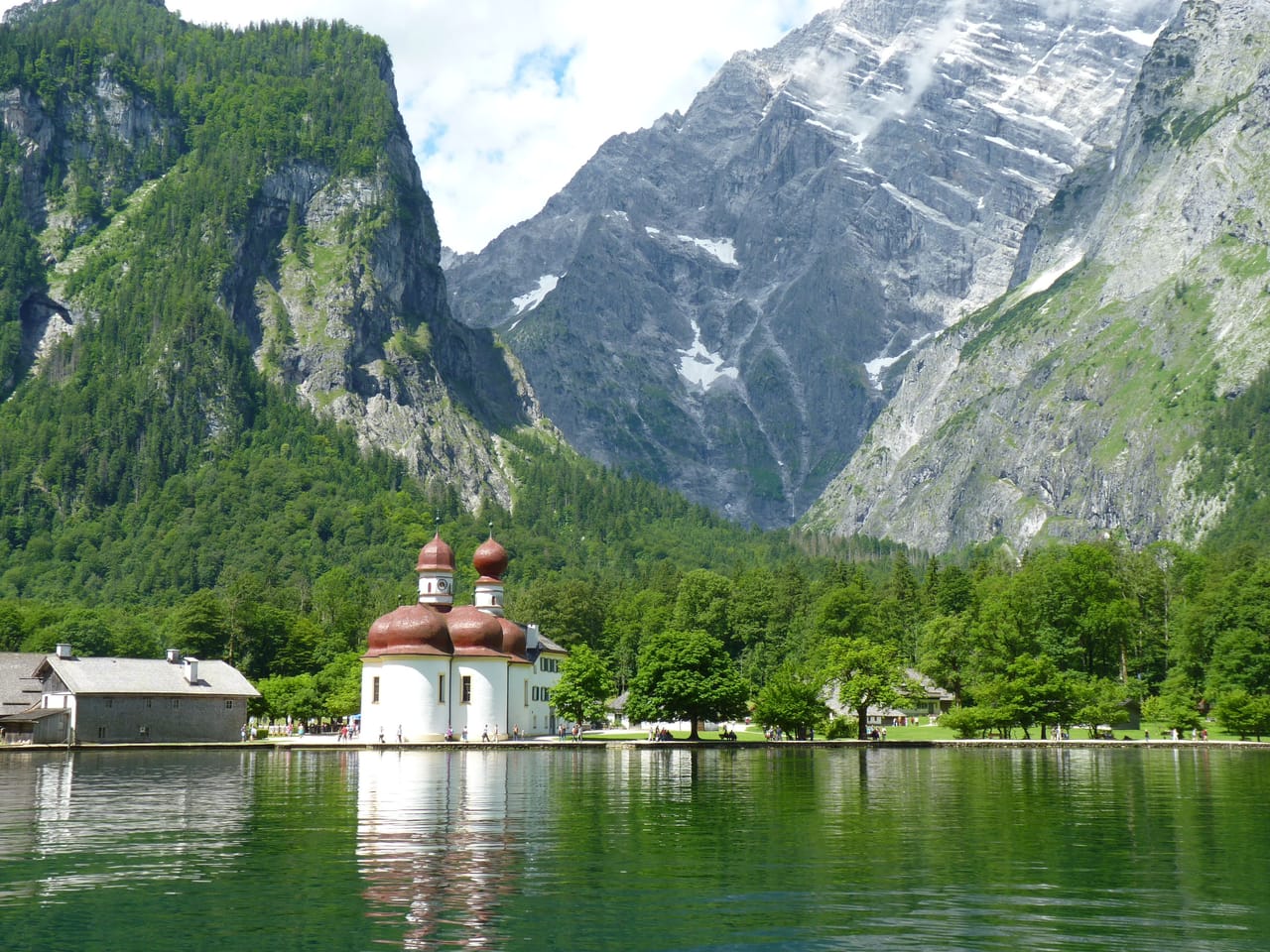
The Zugspitze, at 2,962 metres, is the highest point in Germany. From the Eibsee, a cable car opened in 2017 climbs almost 1,950 metres to the top; you come back down by the glacier cable car, then the rack railway. At the end of the trip, you discover the Königssee by electric boat, as far as St Bartholomew’s Church, at the foot of the Watzmann’s east face.
Ludwig II and his castles
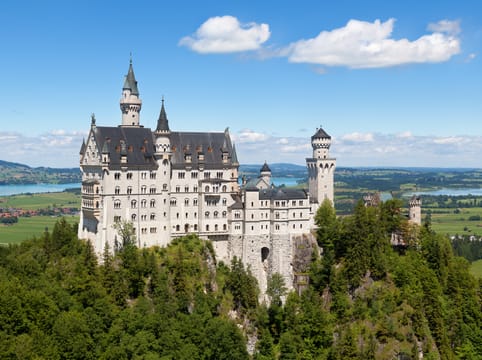
Ludwig II became King of Bavaria in 1864, at eighteen. He kept away from Munich and had castles built in the mountains. Neuschwanstein, begun in 1869, was never finished: the king lived there for 172 days in all. Across the valley, above the Alpsee, he had spent his childhood at Hohenschwangau Castle. He died on 13 June 1886 in Lake Starnberg, in circumstances that have never been explained. Seven weeks later, the castle opened to visitors. Since July 2025, his castles have been on the Unesco World Heritage List together.
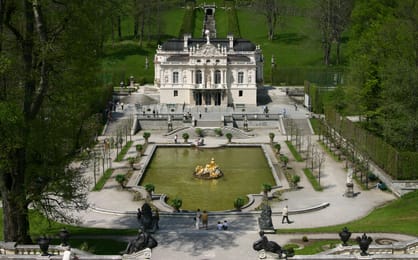
Linderhof, near Ettal, is the only one the king saw finished. It is a small palace in a large park, with a grotto inspired by a Wagner opera, Tannhäuser. Restored over ten years, the grotto reopened in April 2025.
The last one, Herrenchiemsee, stands on an island in the Chiemsee, fifteen minutes by boat from Prien. Ludwig II wanted to build Versailles again there. Herrenchiemsee’s Hall of Mirrors is 98 metres long, longer than the original. The king stayed there for only about ten days.
Herrenchiemsee’s Hall of Mirrors is 98 metres long, longer than the original.
Berchtesgaden, from salt to the Obersalzberg
Until 1803, Berchtesgaden was a small independent principality. Its wealth came from salt, which it fought over with its neighbour, Salzburg. The salt mine has been worked since 1517. You visit it dressed as a miner: a small train runs into the mountain, you go down a wooden slide and cross an underground lake on a raft. The brine still goes to the Bad Reichenhall saltworks, where the water wheels are still turning.
Above the town, Hitler had his residence on the Obersalzberg. Since 1999, the Documentation Obersalzberg has explained how the Nazi regime made use of the place. Higher up, the Kehlsteinhaus, or Eagle’s Nest, built for Hitler in the late 1930s, is closed to cars: you go up by bus, from May to October.
Hohensalzburg Fortress
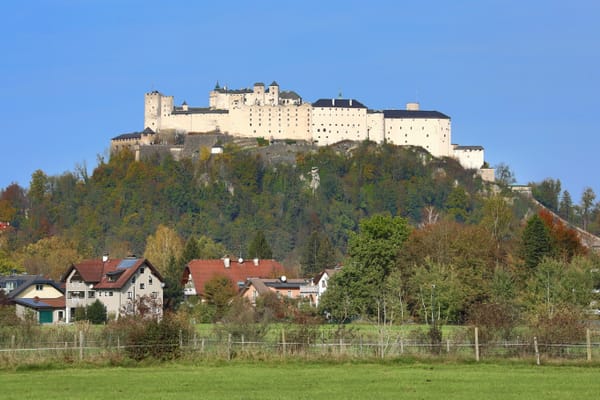
Begun in 1077, it is one of the largest fully preserved fortresses in Central Europe. A funicular climbs up to it from the old town where Mozart was born.
Practical notes
- When to go
- June to September. May and October are quieter, but snow can close the high trails.
- Getting there
- The loop starts and ends in Munich. The airport is about thirty kilometres from the city.
- Access
- Everything is tarmac. The stretches through Tyrol avoid the motorway, and so the Austrian vignette. Between Wallgau and Vorderriß, the Isar road is a toll road. Neuschwanstein is reached on foot, by shuttle bus or by horse-drawn carriage.
- Sleeping in a van
- Campsites and motorhome aires in most villages. Wild camping is banned in Bavaria. By the lakes, most car parks are also closed to vans at night.
- Worth knowing
- Timed tickets for Neuschwanstein are booked online. The Zugspitze cable car closes for maintenance in spring and in November. In Munich, Euro 4 and older diesels are banned from the green-sticker zone, Mittlerer Ring included.
- Allow
- Nine days for the loop, half a day more for Salzburg.
What not to miss
- 1The WieskircheA rococo church in the middle of meadows, completed in 1754 and listed by Unesco.
- 2OberammergauThe village has staged the Passion since 1634, after a vow against the plague; the next season is in 2030.
- 3MittenwaldThe violin-makers’ village since the 17th century, with its violin museum.
- 4The Partnach GorgeSeven hundred metres of gorge, up to 80 metres deep in places, on foot from the Olympic ski jump in Garmisch-Partenkirchen.
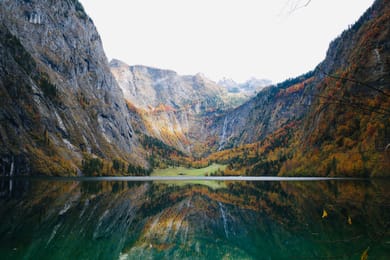
- 5The Königssee by boatElectric boats since 1909; halfway along, the boatman plays the trumpet for the echo.
- 6Ramsau and the HinterseeSt Sebastian’s Church, drawn by painters since the 19th century, then the mossy boulders of the Zauberwald, on the shore of the Hintersee.
The Bavarian Alps in pictures
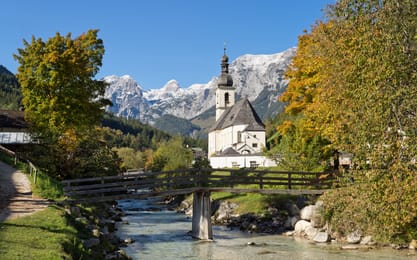
St Sebastian’s Church in Ramsau and the wooden bridge over the Ramsauer Ache, in autumn.
The Bavarian table
Weißwurst, a white veal sausage, is traditionally eaten before noon, with a pretzel and sweet mustard. In mountain huts, you order Kaiserschmarrn, a thick pancake cut into pieces, with plum compote.
The lakes supply the fish: whitefish from the Chiemsee and char from the Königssee, smoked at St Bartholomew’s. You drink beer at the Bräustüberl in Tegernsee, in the former abbey, or in Ettal, where the monks also distil a liqueur.
Loop from Munich


 +23stops
- 1Wieskirche · Schloss Neuschwanstein · Hohes Schloss Füssen · Schloss Hohenschwangau
- 2Schloss Linderhof · Oberammergau · Benediktinerkloster Ettal
- 3Seilbahn Zugspitze (gare de vallée de l'Eibsee) · Bayerische Zugspitzbahn · Große Olympiaschanze
Free, no account needed — start from its places and make it yours.
Also worth reading
Wide open spaces
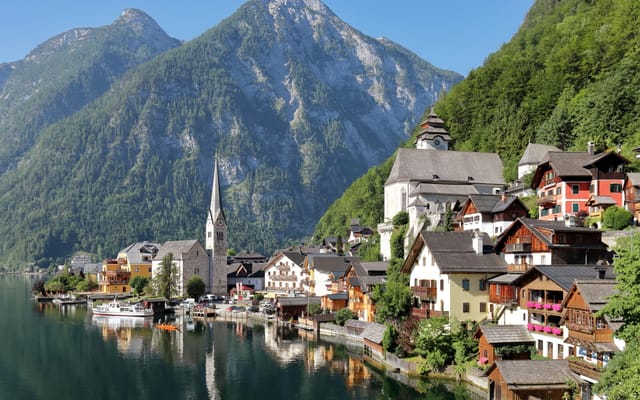
The Salzkammergut, from Salzburg to Hallstatt
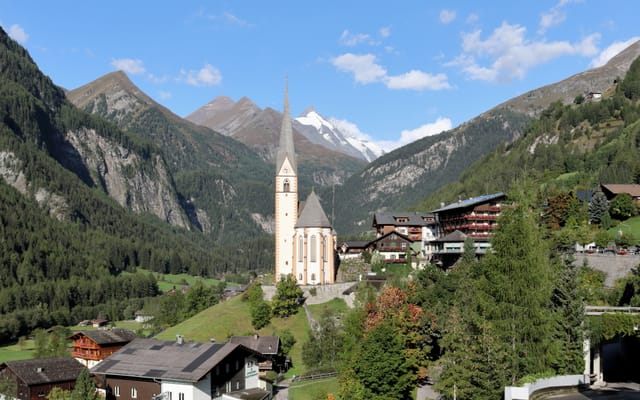
Green and turquoise lakes at the foot of the mountains, villages on the water’s edge and salt mines worked since prehistory. A five-day loop from Salzburg, through Bad Ischl, Hallstatt, the Dachstein and the Traunsee.
Wide open spaces
The Grossglockner Road, from Salzburg to the Krimml Falls
The Grossglockner Road crosses the Hohe Tauern at the foot of Austria’s highest mountain. Five days on a loop from Salzburg, with gorges, an ice cave and the Krimml Falls.
Experiences
Lake Constance, a tour of three countries
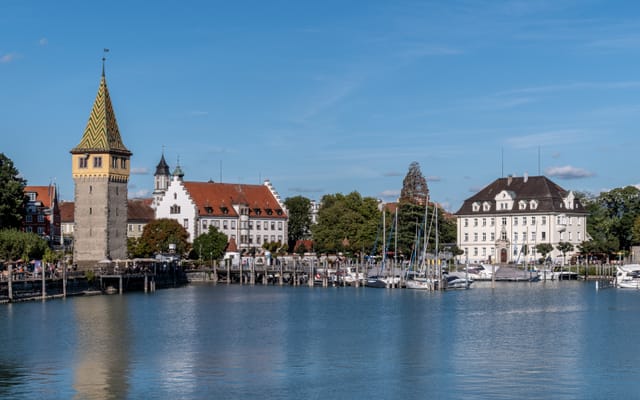
Lake Constance is shared between Germany, Austria and Switzerland. This trip goes all the way round it in five days from Konstanz, from the islands of Reichenau and Mainau to the Rhine Falls.
A starting point, a few wishes — ViaLooma builds the trip day by day, map, stops and roadbook included.