From the Danube Bend to Tokaj: Northern Hungary
Six days from Budapest to Tokaj, by way of the Danube Bend, the Mátra Mountains and Eger. Royal citadels, a listed village, cellars dug into the rock and the sweet wines of Tokaj.
From the Danube to the vineyards of Tokaj
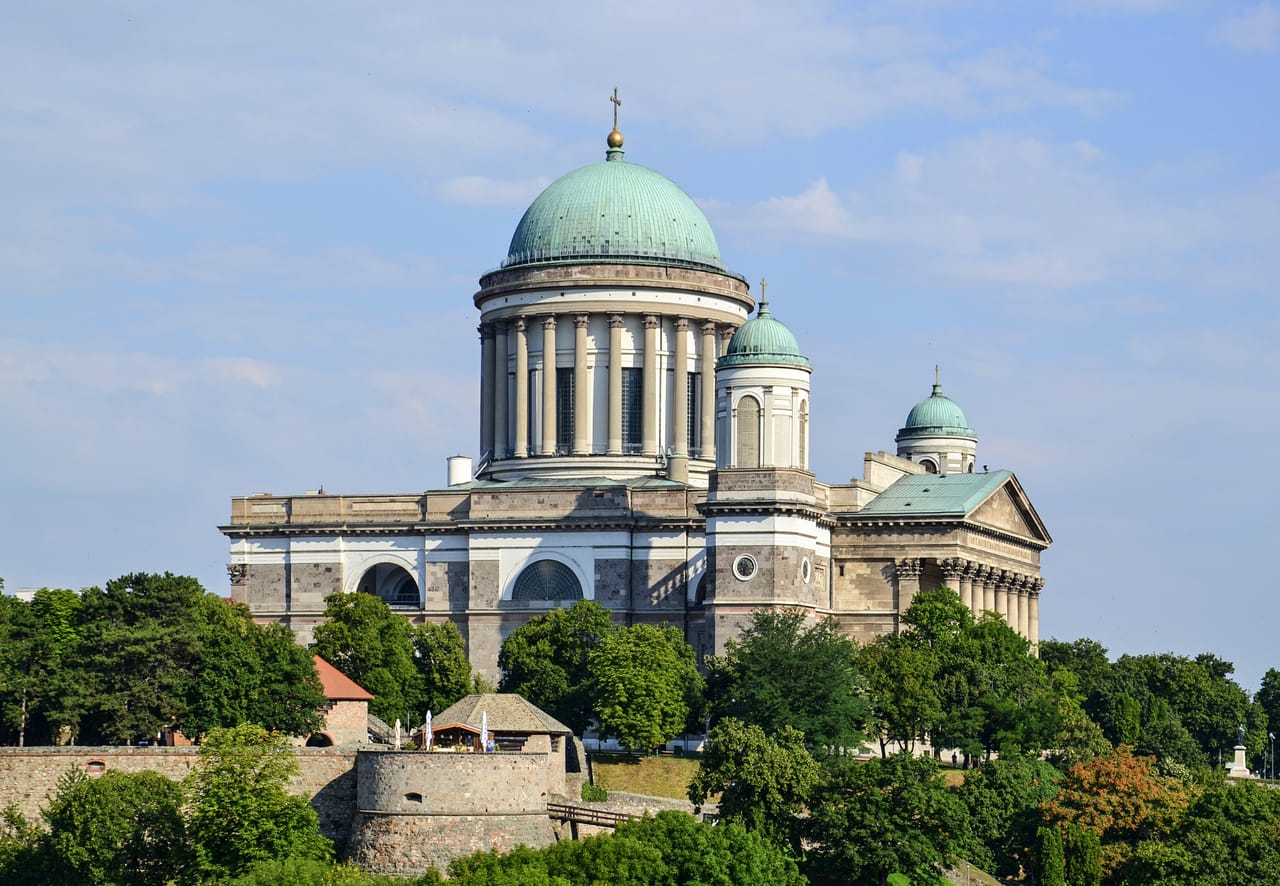
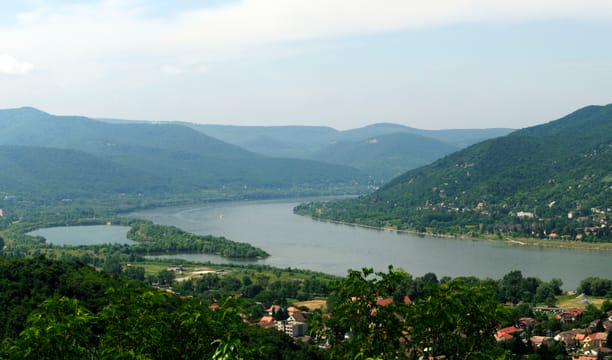
The trip starts north of Budapest and follows the Danube. After Szentendre, the road runs along the right bank to Visegrád. There the river passes between wooded hills and turns south: this is the Danube Bend. Further on, the dome of Esztergom Basilica towers over the town. You cross the Mária Valéria Bridge to Štúrovo, in Slovakia, where you see the basilica across the water.
To the north-east, in the hills, lies Hollókő, a village of white houses with wooden gables. The road through the Mátra Mountains climbs under beech trees to Kékestető, at 1,014 metres the highest point in Hungary. Eger is a baroque town at the foot of the Bükk. Further north, at Szilvásvárad, you walk up the Szalajka Valley to a waterfall. Further north still, at Aggtelek, the Baradla Cave is a UNESCO World Heritage Site.
The trip ends in the Tokaj region. Winemaking villages line the foot of volcanic hills covered in vines, above the Bodrog. In autumn, the damp from the rivers encourages noble rot, which gives Tokaj its sweet wines.
The Hungary of the kings
In the Middle Ages, the Danube Bend was the heart of the kingdom. Visegrád became a royal residence in the 1320s, under Charles Robert. In 1335, the kings of Hungary, Bohemia and Poland met there for several weeks. The citadel, on the hill, held the Holy Crown. In 1440, Helene Kottanner, in the queen’s service, stole it on her orders and carried it off hidden in a cushion.
Esztergom, a little further upstream, is older still. According to tradition, Saint Stephen, the first king of Hungary, was born there, then crowned there around the year 1000.
Its basilica, the largest church in the country, was consecrated in 1856, with a mass written for the occasion by Franz Liszt. A staircase climbs to the dome, which looks out over the Danube and Slovakia.
The siege lasted more than a month, and the Ottomans withdrew.
Eger, a frontier town facing the Ottomans
In the 16th century, the Ottomans occupied central Hungary, and the north became a frontier. In 1552, István Dobó defended Eger Castle with about 2,000 people against an army of 35,000 to 40,000 men. The siege lasted more than a month, and the Ottomans withdrew. Legend has it that the besiegers saw the defenders’ beards stained with red wine and thought they were drinking bull’s blood. Eger’s wine takes its name from this: Egri Bikavér, “Bull’s Blood”. Géza Gárdonyi’s novel, “Eclipse of the Crescent Moon”, turned it into a national story, read at school.
Yet the town fell in 1596 and stayed Ottoman for 91 years. A 40-metre minaret dates from this time. It is one of the northernmost Ottoman minarets in Europe.
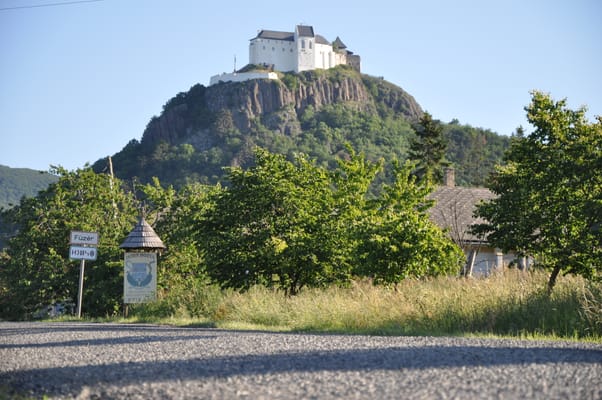
Füzér Castle
A white castle perched on an old volcanic plug, near the Slovak border. Restored, it reopened in 2016. After the Battle of Mohács, in 1526, the Holy Crown was hidden here for at least a year.
Practical notes
- When to go
- May to October; September and October for the grape harvest. In winter, snow and ice are possible in the Mátra and the Bükk.
- Getting there
- Budapest has an international airport. Tokaj is about two and a half hours from Budapest on the M3 motorway.
- Access
- Everything is tarmac. The road up to Visegrád’s citadel is narrow: in a large motorhome, walk up. Between Eger and Miskolc, the Bükk road through Lillafüred is narrow and winding; large vehicles take the M3 motorway.
- Sleeping in a van
- Campsites on the Danube around Visegrád, in Eger and in Tokaj, on the banks of the Tisza. Wild camping is not allowed.
- Worth knowing
- An electronic vignette (e-matrica) is required on motorways; main roads are free. Over 3.5 tonnes, a per-kilometre toll (HU-GO) applies, on many main roads too. Bring ID for Slovakia.
- Allow
- Six days from Budapest to Tokaj, plus half a day for Füzér Castle.
What not to miss
- 1Visegrád CitadelFrom the ramparts, the Danube turns south between the wooded hills.
- 2SzentendreOrthodox churches built by Serbs who arrived in 1690, and an artists’ colony.
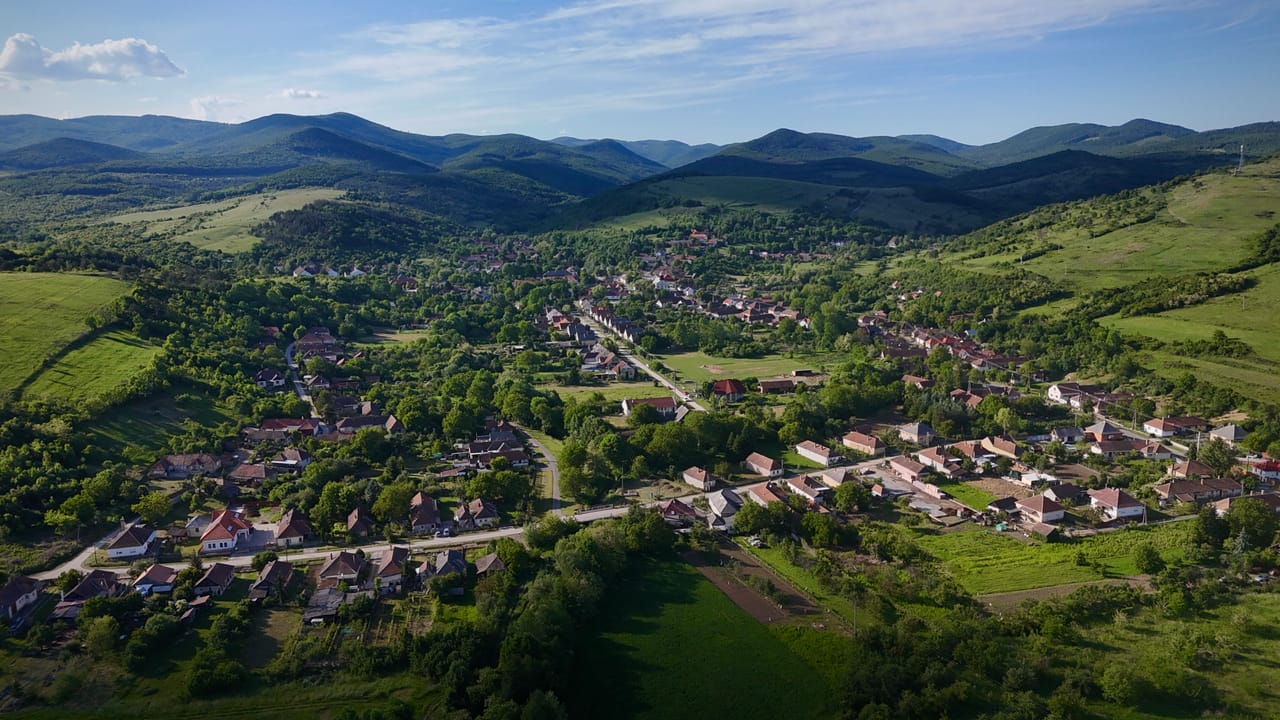
- 3HollókőA Palóc village on the UNESCO list since 1987, with its castle a quarter of an hour’s walk away.
- 4The Valley of the Beautiful WomenIn Eger, a little valley lined with cellars where you taste the wine with the grower.
- 5The Szalajka ValleyClosed to cars, it is walked or ridden on a small forest railway up to the Fátyol waterfall.
- 6Sárospatak CastleThe Wesselényi conspirators are said to have met here, in a small room with a carved rose.
Northern Hungary in pictures
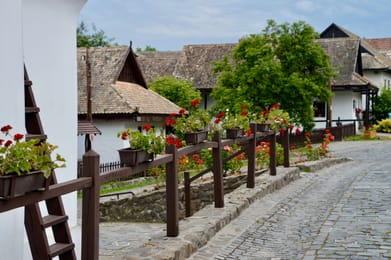
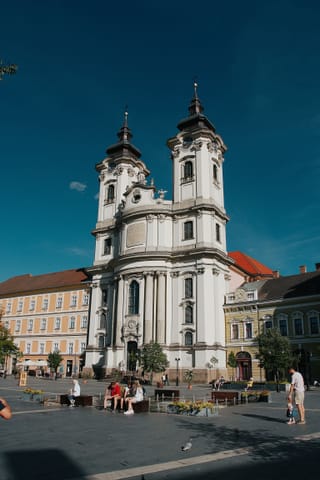
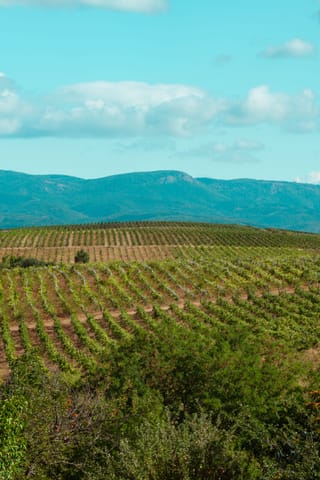
The cobbled street of Hollókő’s old village, its white houses and geraniums.
The food of Northern Hungary
This is paprika cooking: gulyás, a beef soup, and pörkölt, a stew. By the roadside, you eat lángos, fried dough with sour cream and cheese. At Szilvásvárad, they serve trout from the Szalajka Valley.
Eger makes Egri Bikavér, a red blend. In the Tokaj region, you taste furmint, dry or sweet, and aszú, made from grapes touched by noble rot. The cellars have walls covered in black mould. Louis XIV is credited with the phrase “wine of kings, king of wines”.
Budapest → Tokaj


 +18stops
- 1Aquincum · Szentendre · Visegrád vára · Esztergomi bazilika
- 2Nagyboldogasszony-székesegyház · Hollókő · Hollókői vár
- 3Kékes · Siroki vár · Szépasszony-völgy
Free, no account needed — start from its places and make it yours.
Also worth reading
Wide open spaces
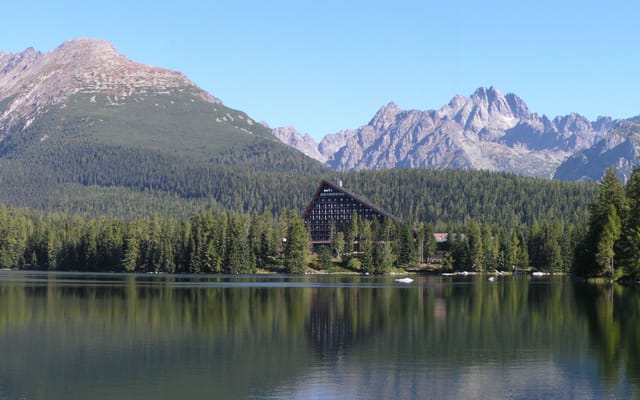
The High Tatras, from Štrbské Pleso to the Dunajec
The highest range in the Carpathians rises above Poprad, with its glacial lakes, its cable cars and its wooden villages. This trip follows its foot for four days, as far as the rafts of the Dunajec.
Wide open spaces
Yellowstone, Grand Teton and Glacier: the great Rockies road trip
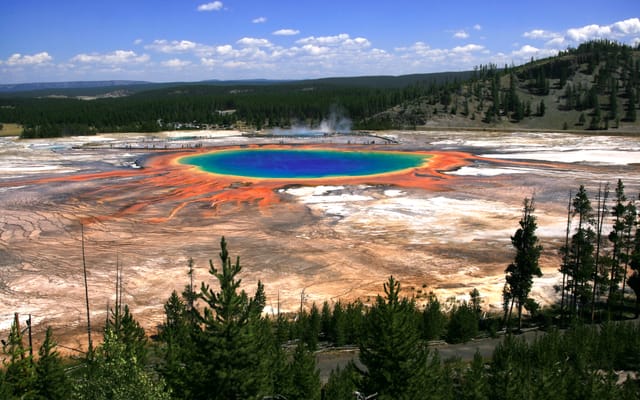
Three national parks on one road, from the Tetons to the glaciers of Montana, by way of the geysers of Yellowstone. Twelve days from Jackson to Kalispell, with bison by the roadside and two great mountain roads.
Wide open spaces
California’s national parks, from Joshua Tree to Yosemite
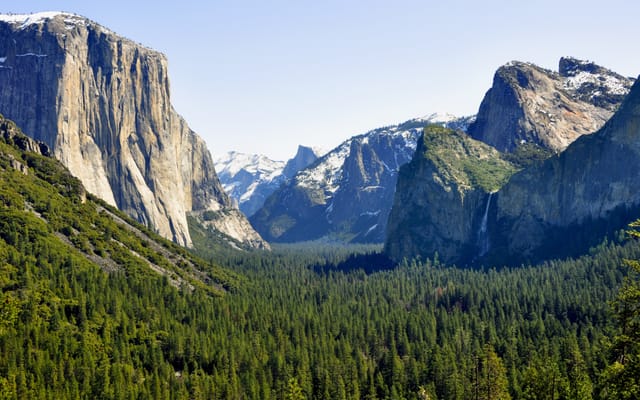
Five national parks, from the lowest point in North America to the giant sequoias. A two-week loop from Los Angeles, through the Mojave Desert, Death Valley, the Sierra Nevada and Yosemite.
A starting point, a few wishes — ViaLooma builds the trip day by day, map, stops and roadbook included.