The west coast of Jutland, from Ribe to Skagen
Dunes, lighthouses and endless beaches, all along the North Sea. Six days one way, from Ribe, the oldest town in Denmark, to the tip of Grenen.
A road along the North Sea
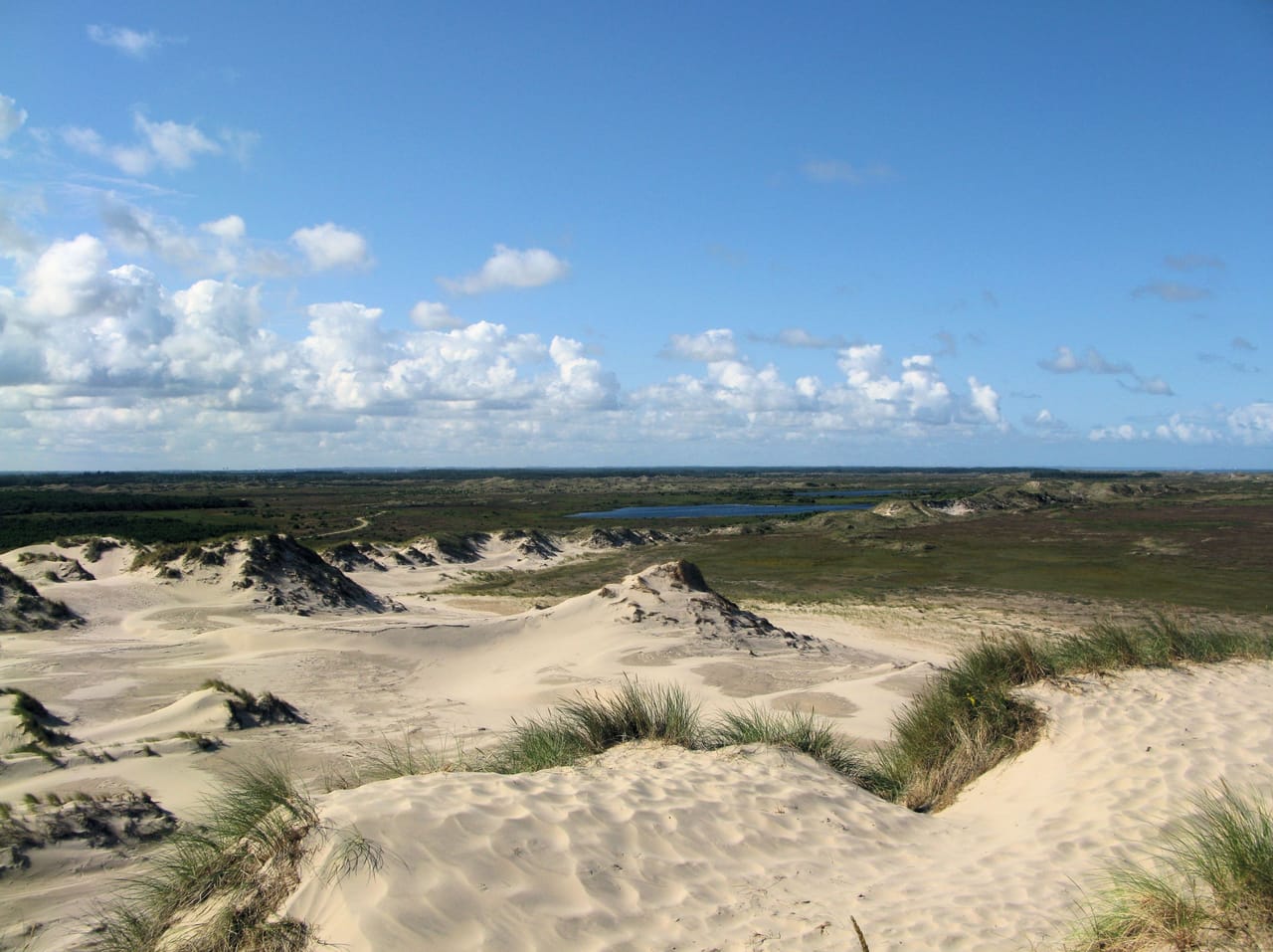
The west coast of Jutland is one almost unbroken beach. From Ribe to Skagen, the road runs past dunes covered in marram grass, pines planted to hold the sand and summer houses with thatched roofs. The land is flat; often you only see the sea when you climb a dune.
South-west of Ribe, the island of Rømø is linked to the mainland by a causeway 9.2 kilometres long. On the west side of the island, Lakolk beach is so wide that you park at the water’s edge. Further north, the Holmsland Klit road follows a strip of dunes between the sea and Ringkøbing Fjord.
In Thy National Park, at Nørre Vorupør, the fishing boats are still hauled up onto the beach, and Klitmøller, nicknamed “Cold Hawaii”, draws surfers. Lighthouses mark the way up to Grenen, a spit of sand north of Skagen, where the Skagerrak and the Kattegat meet.
Ribe and the Wadden Sea
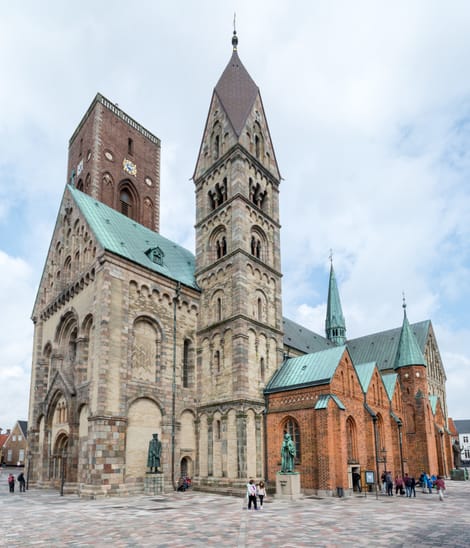
Ribe is the oldest town in Denmark. In the early 8th century, it was already a market by the river, where coins may have been struck around 720. Around 860, the missionary Ansgar got leave from King Horik II to build one of the first churches in Scandinavia there. The present cathedral was begun around 1150. In the town, a pillar marks the height of the great storm floods; the highest was in 1634.
South of the town, the Ribe VikingeCenter recreates a Viking village, open from spring to autumn.
Ribe lies near the Wadden Sea, which UNESCO calls the largest unbroken system of tidal flats in the world. The Danish part has been a national park since 2010 and a World Heritage Site since 2014. In spring and autumn, hundreds of thousands of starlings fly together over the marshes: this is the sort sol, the “black sun”.
On the coast, it is now the sea that is moving in.
A coast of sand and shipwrecks
This coast has almost no harbour of refuge. On Christmas Eve 1811, two British ships of the line, the St. George and the Defence, ran aground near Thorsminde: more than 1,300 sailors drowned. During the Second World War, the Germans covered the coast with bunkers. At Hanstholm, 38 cm guns guarded the Skagerrak; the bunker museum stands next to the lighthouse. At Blåvand, the Tirpitz museum is dug into the dune.
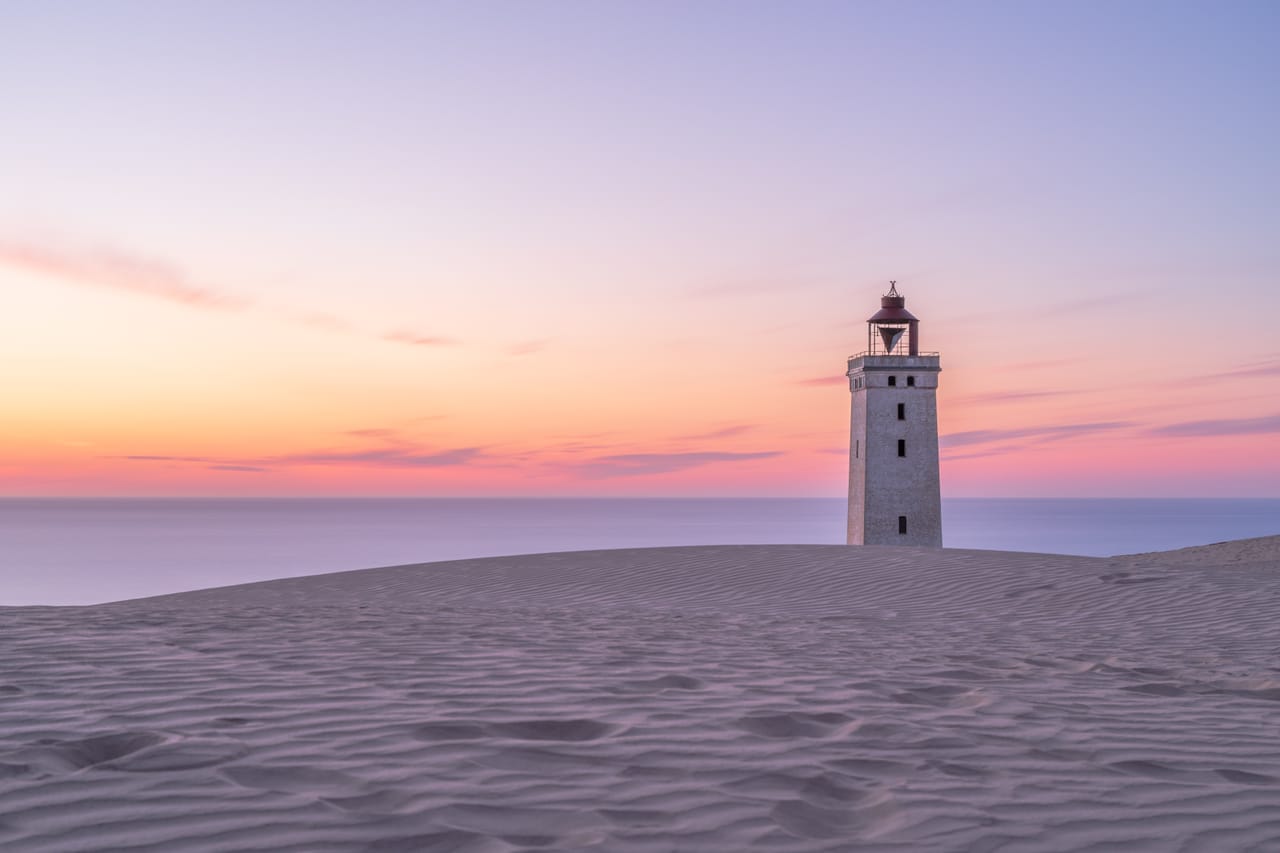
The other danger was sand. In the 17th and 18th centuries, the wind drove it over farms and churches. Near Skagen, the buried church was abandoned in 1795; only its tower is still standing. The Råbjerg Mile, 40 metres at its highest, still moves about 15 metres a year. On the coast, it is now the sea that is moving in. The Rubjerg Knude lighthouse was moved 70 metres on rails in 2019 so that it would not fall off the cliff. Mårup church, close by, was taken down stone by stone.
Lindholm Høje
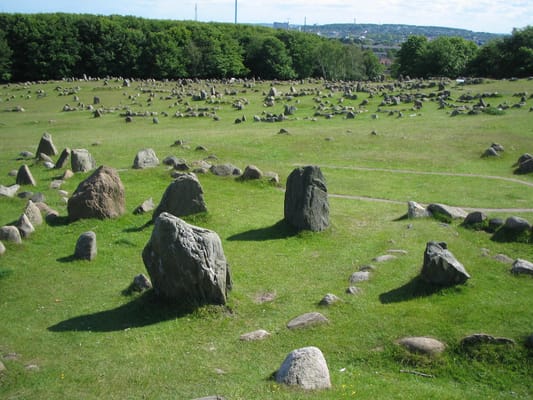
About 700 graves from the Iron Age and the Viking Age, on a hill above the Limfjord, often ringed by standing stones in the shape of a ship. Sand covered the site and protected it. There is a museum next to it.
Practical notes
- When to go
- June to August for the beach; the tower of the buried church is only open in summer.
- Getting there
- Ribe is less than an hour from the German border and from Billund airport. The drive back from Skagen to the border: about 4 hours on the E45.
- Access
- Tarmac roads, no tolls. A small ferry links Thyborøn and Agger in ten minutes; otherwise, a detour by the Oddesund bridge. Soft sand at Lakolk: take care in a heavy motorhome.
- Sleeping in a van
- Camping is only allowed on a campsite or a motorhome aire. Sleeping in your vehicle is tolerated in a car park with no ban, as long as you set nothing up outside. Many beach car parks forbid it (“Ingen overnatning”).
- Worth knowing
- Part of the Hanstholm reserve closes from 1 April to 15 July. No swimming at Grenen. Aalborg has a low-emission zone: check its boundaries before heading to Lindholm Høje.
- Allow
- Six days, plus half a day for Lindholm Høje.
What not to miss
- 1The Rubjerg Knude lighthouseA tower on the dune, a quarter of an hour’s walk through the sand.
- 2GrenenThe northern tip of Denmark, 1.5 kilometres from the car park.
- 3The Skagens MuseumThe paintings of Krøyer and the Anchers, painters of the blue evening light.
- 4Mennesket ved HavetFour white men, 9 metres tall, sitting and facing the sea, in Esbjerg.
- 5Lakolk beachOn Rømø, a beach where you drive and park on the sand.
- 6Thy National ParkThe first national park in Denmark outside Greenland, opened in 2008.
The west coast of Jutland in pictures
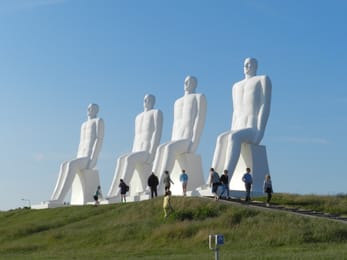
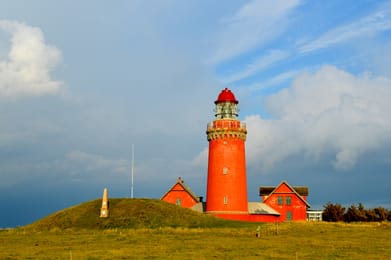
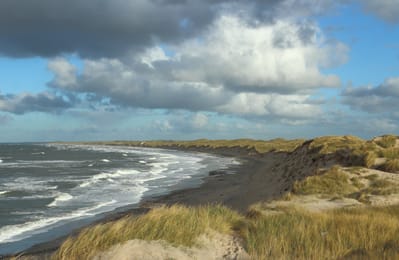
Mennesket ved Havet, the four white men of Esbjerg facing the sea.
The west coast table
On the coast, you eat fish: fried plaice, fish cakes (fiskefrikadeller), pickled herring and smørrebrød, open sandwiches on rye bread. In Skagen, you peel prawns down at the harbour.
In winter, you gather wild oysters at low tide in the Wadden Sea, with a guide. Beach kiosks sell pølser, the Danish sausages, and flødeboller, soft meringues coated in chocolate. Near Ringkøbing Fjord, the Stauning distillery makes whisky.
Ribe → Skagen


 +21stops
- 1Ribe Domkirke · Ribe Vikingecenter · Vadehavscentret · Rømø
- 2Mennesket ved Havet · Tirpitz Museet · Blåvand Fyr · Hvide Sande
- 3Lyngvig Fyr · Ringkøbing · Strandingsmuseum St. George · Bovbjerg Fyr
Free, no account needed — start from its places and make it yours.
Also worth reading
Wide open spaces
The Pacific Northwest, from the Olympic Peninsula to the Cascade volcanoes
Rainforests, a coast of headlands and lighthouses, redwoods and two active volcanoes. A two-week loop from Seattle, by way of the Olympic Peninsula, the Oregon coast and Mount Rainier.
Wide open spaces
Vancouver Island, from Victoria to the beaches of Tofino
An island of giant forests, beaches pounded by the Pacific and small harbours where boats leave to see orcas. Nine days on a loop from Victoria, from Port Renfrew to Tofino and up to Telegraph Cove.
Wide open spaces
Yellowstone, Grand Teton and Glacier: the great Rockies road trip
Three national parks on one road, from the Tetons to the glaciers of Montana, by way of the geysers of Yellowstone. Twelve days from Jackson to Kalispell, with bison by the roadside and two great mountain roads.
A starting point, a few wishes — ViaLooma builds the trip day by day, map, stops and roadbook included.