Rila and Pirin, from Rila Monastery to Melnik
South of Sofia, Bulgaria’s two highest mountain ranges, with Rila Monastery, Bansko, villages with stone roofs and the sand cliffs of Melnik. Six days on a loop from Sofia, on mountain roads that are often slow.
The road between Rila and Pirin
South of Sofia, the road links two mountain ranges, Rila and Pirin. You leave the city through Boyana, skirt Vitosha and stop at Tsari Mali Grad, a restored Roman fortress above Belchin. In Sapareva Banya, a geyser fountain shoots up in the middle of town from a borehole drilled in 1957.
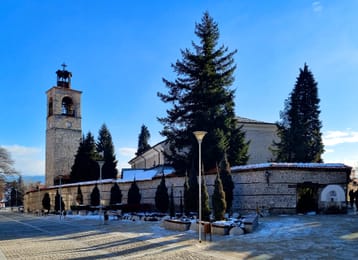
Further south, the village of Stob is a 40-minute walk from its pyramids: earth spires 6 to 10 metres high. Legend has it that they are the guests at a wedding, turned to stone. After the Predela pass, you reach Bansko, known for skiing. Its old stone town can be explored on foot, from the Holy Trinity Church (1835) to the Velyanov House.
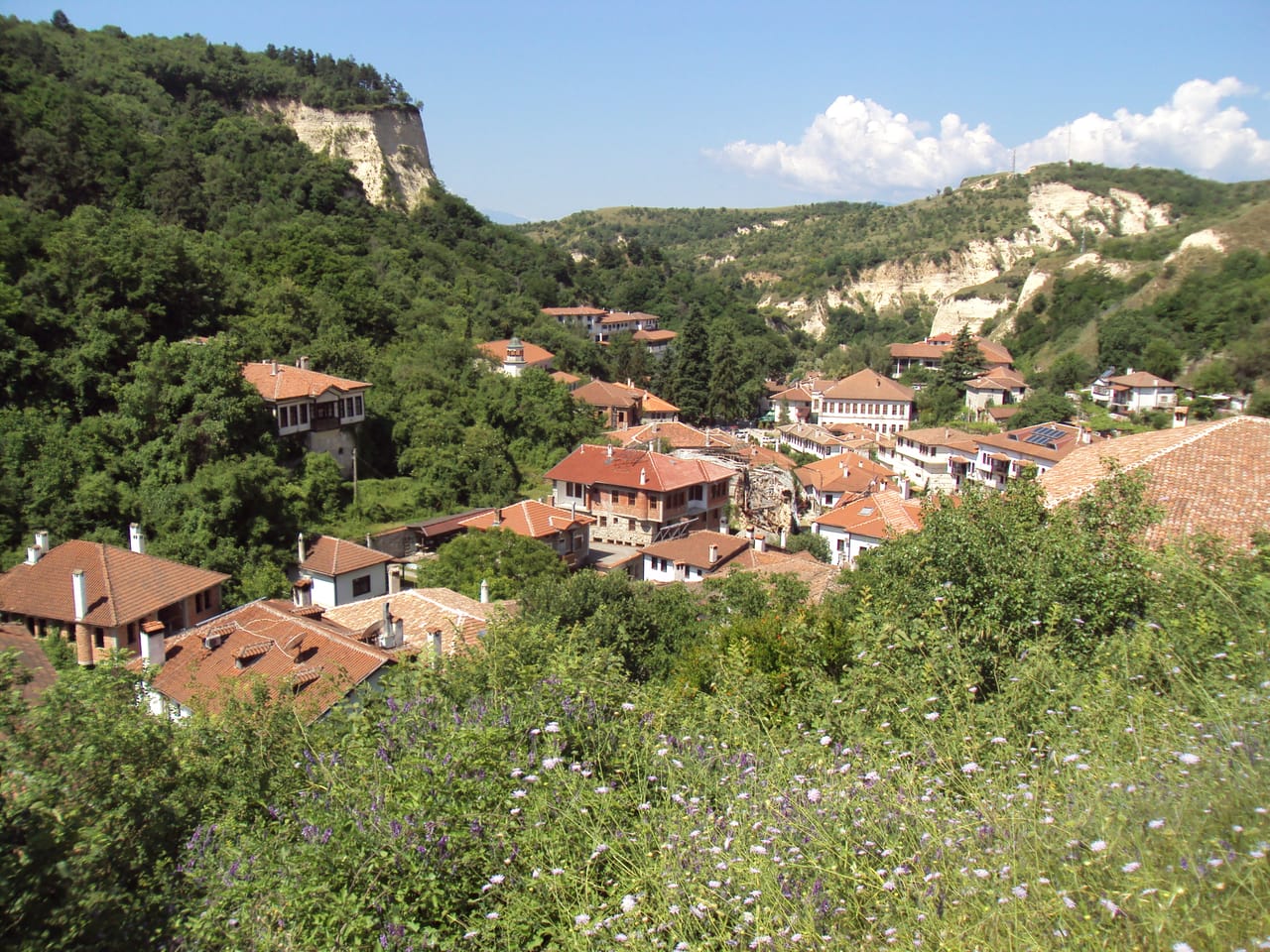
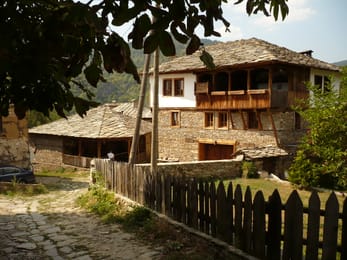
The road then goes down to the villages of the Rhodopes, with their roofs of stone slabs. Kovachevitsa had 1,740 inhabitants in 1905 and has fewer than 40 today; Leshten has fewer than 10. After the Popovi Livadi pass, the forest gives way to the sand cliffs of Melnik, which is said to be the smallest town in Bulgaria. The way back follows the Struma and the Kresna Gorge.
The Seven Lakes and the peaks without roads
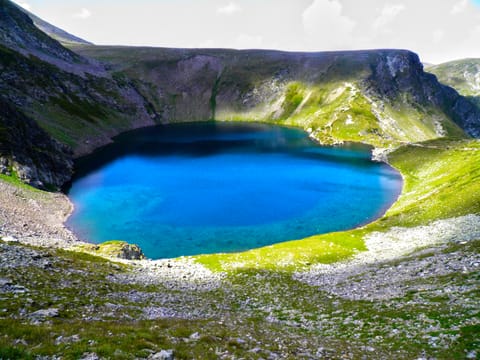
The Seven Rila Lakes are glacial lakes, stepped between 2,095 and 2,535 metres. You park at the Pionerska hut, above Panichishte, and a chairlift goes up towards the lakes. Without it, allow about 2 more hours on foot. The lakes’ names describe how they look: Salzata, “the Tear”, Babreka, “the Kidney”, Okoto, “the Eye”. At 37.5 metres, Okoto is the deepest cirque lake in Bulgaria.
Every 19 August, Peter Deunov’s White Brotherhood celebrates its New Year and dances the paneurhythmy near Lake Babreka.
No road goes up to the Seven Lakes, Musala or Vihren. Musala, at 2,925 metres, is the highest peak in the Balkans. You take the gondola from Borovets to Yastrebets, closed on some days, then it is at least 3 hours’ walk on the way there. Vihren, at 2,914 metres, is the second-highest peak in Bulgaria. In summer, from the Vihren hut, at the end of a road that is sometimes closed, allow 3 to 4 hours of steep climbing.
No road goes up to the Seven Lakes, Musala or Vihren.
Rila Monastery
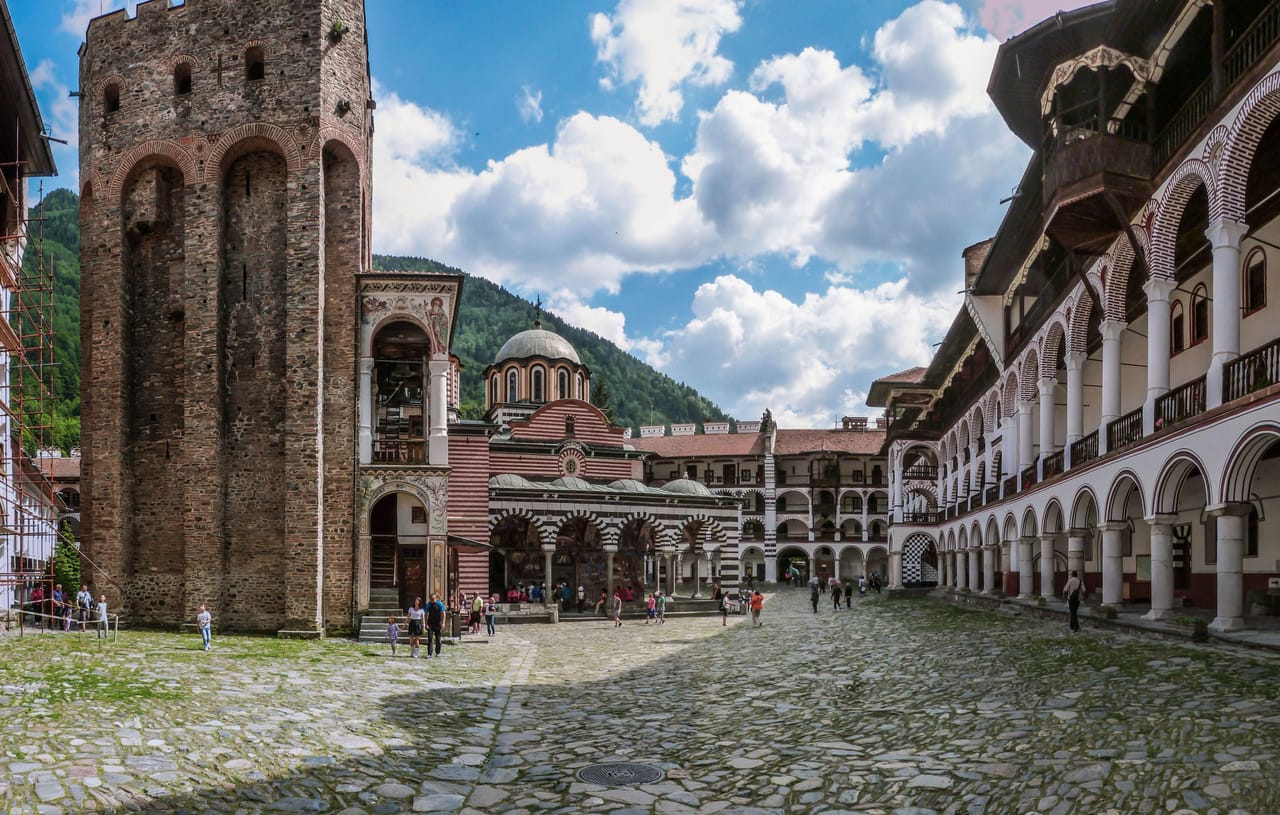
Tradition has it that Rila Monastery goes back to the hermit John of Rila (876–946). In the 14th century, the lord Hrelyo had it rebuilt; his tower, from 1334–1335, is the oldest part. After the fire of 1833, the rebuilding lasted from 1834 to 1862. The site has been on the Unesco list since 1983.
It lies 117 kilometres from Sofia, at the end of a dead-end valley. According to one guidebook, there are fewer people after 4 pm, but the museum, which holds Raphael’s Cross (1802), may close as early as 4.30 pm. Wear clothes that cover you up for the church.
Dobarsko
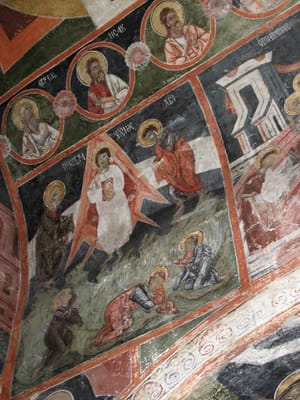
A village at 1,070 metres, on the southern slope of Rila. Its small church, painted in the 17th century, has a fresco that some read as Christ in a rocket. Check that it is open.
Practical notes
- When to go
- Late June to September: snow can stay at the lakes until June. In winter, the road to Leshten is difficult.
- Getting there
- A loop from Sofia and its airport. An electronic vignette is compulsory on the national road network.
- Access
- If you are in a van, ask locally about the road over the Popovi Livadi pass (about 1,425 metres): its condition and width are uncertain. The detour via Simitli adds about 1 hour 15 minutes. At the Kresna Gorge, the motorway gives way to an old two-lane road.
- Sleeping in a van
- Campsites in Sapareva Banya, Bansko and Razlog; to be checked for Leshten and Melnik. In the Rila and Pirin parks, camping is limited to marked sites: ask the park offices.
- Worth knowing
- The lakes chairlift has been under maintenance since 5 October 2026: check with the operator about reopening. On Mondays, it opens at 12.30 pm, except the last one of the month. On the day of the lakes and the monastery, allow 117 kilometres and about 3 hours of driving, including the detour to the chairlift. Cobbled lanes in Melnik and the villages: park at the entrance.
- Allow
- Six days for the loop, one more for Musala or Vihren.
What not to miss
- 1Boyana ChurchOn the edge of Sofia, on the Unesco list for its frescoes from 1259.
- 2Baikushev’s PineA Bosnian pine about 1,300 years old, near the Banderitsa hut.
- 3Dolen45 minutes from Leshten, off the loop, about 350 houses from the 19th century.
- 4The Melnik PyramidsFormations of sand and clay up to 100 metres high, to be seen on foot from the town.
- 5Rozhen MonasteryThe largest in the Pirin, with a church painted from the late 16th century.
- 6Rupite and Heraclea SinticaThe Saint Petka church of the seer Vanga and, close by, a city founded by Philip II of Macedon.
Rila and Pirin in pictures
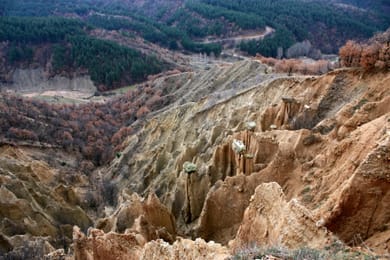
The Stob Pyramids, spires of ochre earth in their ravine.
The Pirin and Melnik table
Bansko’s dish is kapama: rice, sauerkraut and meats in layers in a clay pot, cooked for four to five hours. In the Rhodopes, people eat patatnik, grated potatoes cooked slowly with onions and a mild mint.
Melnik has been known for its wine since at least 1346, and for its local grape variety, shiroka melnishka. Churchill is said to have liked this wine, though there is no proof.
Loop from Sofia
 +15stops
- 1Боянска църква · Цари Мали град (Белчин) · Сапарева баня
- 2Свети Лука (Рилски манастир) · Рилски манастир „Свети Йоан Рилски“
- 3Стобски пирамиди · Банско · Велянова къща
You start from this trip’s places and make it your own.
Also worth reading
Wide open spaces
The Rhodopes, from Plovdiv to Perperikon
A mountain range covered in forest, with marble gorges and sanctuaries carved into the rock, in the south of Bulgaria. A week on a loop from Plovdiv, from the caves of Trigrad to Perperikon.
Mountains and passes
The Balkan Mountains and the Rose Valley
In the middle of Bulgaria, the road runs along the Balkan Mountains, passes through the rose fields and crosses the range at the Shipka Pass. A week from Sofia to Veliko Tarnovo, among timber villages and Thracian tombs.
Heritage and culture
Classic Bulgaria, from Sofia to Veliko Tarnovo
Mountain monasteries, Thracian tombs, a Roman theatre and the capital of the tsars. Eight days on a loop from Sofia, crossing the Balkan Mountains twice.
A starting point, a few wishes — ViaLooma builds the trip day by day, map, stops and roadbook included.