The Rhodopes, from Plovdiv to Perperikon
A mountain range covered in forest, with marble gorges and sanctuaries carved into the rock, in the south of Bulgaria. A week on a loop from Plovdiv, from the caves of Trigrad to Perperikon.
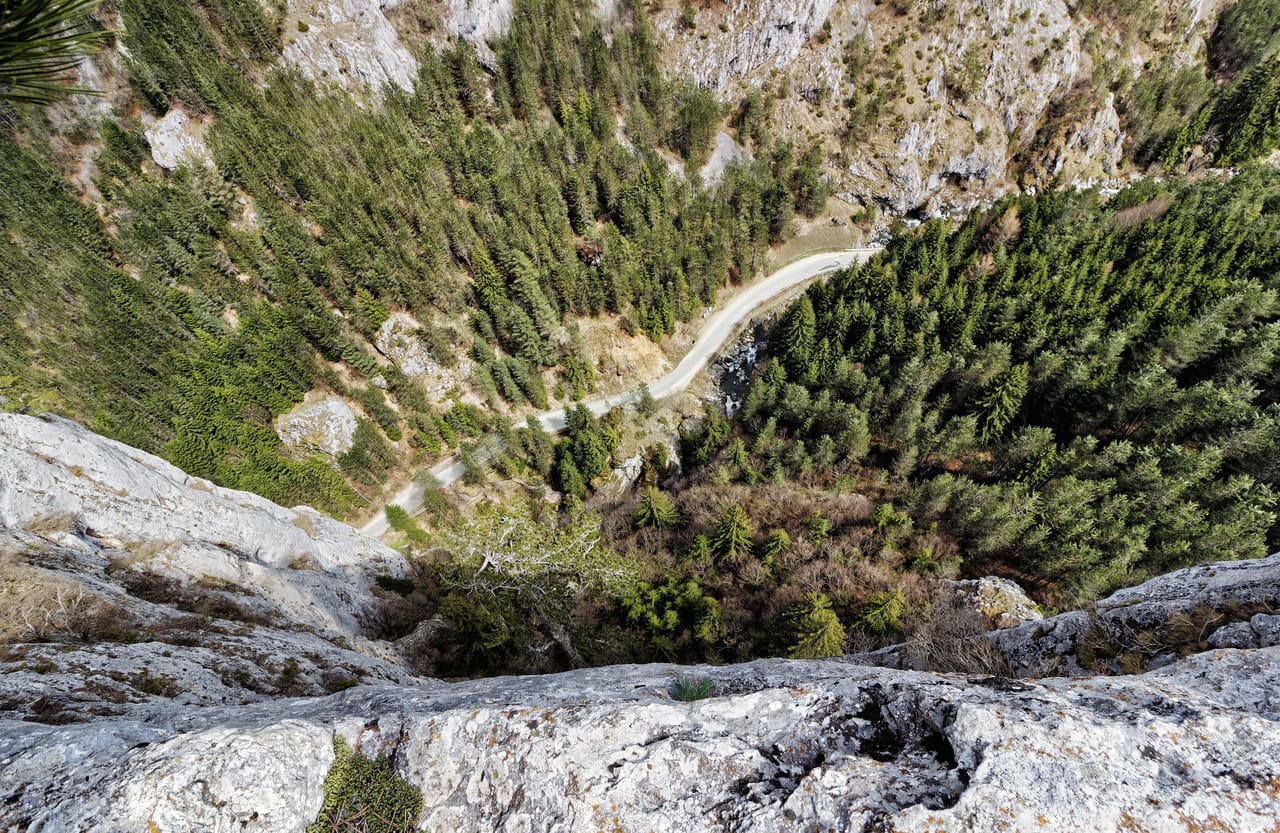
From high forests to the eastern hills
The Rhodopes are a mountain range in southern Bulgaria that continues into Greece. The road leaves the Plovdiv plain and climbs the Chepelarska valley. Within an hour, fields give way to cliffs, then to fir forests. Higher up, Shiroka Laka has white houses with overhanging upper floors and a folk music school. A song from the Rhodopes, sung by Valya Balkanska, is on board the Voyager probes, launched in 1977.
The high point of the trip is the road through the Trigrad Gorge. It runs between marble walls about 300 metres high, as far as the place where the river disappears underground.
Towards the east, the fir trees disappear and the mountains drop down into hills. Around Kardzhali, mosques appear in the villages: the province has the highest proportion of Turks in the country. The Kardzhali reservoir, on the Arda, can be seen from the heights of Dazhdovnitsa.
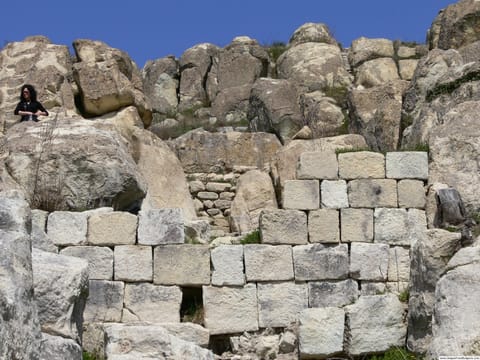
The Thracian sanctuaries
In ancient times, the Thracians lived in these mountains. They left few texts, but many carved rocks. Perperikon, 15 kilometres from Kardzhali, is a rocky hill at about 470 metres, covered in walls set on the rock. Traces of human activity there go back to about 5000 BC, and the site was abandoned in the 14th century. The archaeologist Nikolay Ovcharov has been excavating it since 2000. A temple of Dionysus is thought to have stood there, but this remains a hypothesis.
At Tatul, the top of a rock was carved into a truncated pyramid, with a tomb cut into the summit. The archaeologist Ivan Venedikov saw it as the tomb of Orpheus. Nothing proves it.
Belintash, south-east of Bachkovo, is not on the loop. This rocky plateau is pierced by about 300 round holes. It is sometimes linked to the god Sabazios, without proof. The last few kilometres are a very rough track, to be avoided in a van and after rain: it is better to park where the tarmac ends and walk.
The Trigrad River disappears into the rock and comes out again 530 metres further on.
The caves and the legend of Orpheus
The Trigrad River disappears into the rock and comes out again 530 metres further on. It goes underground in Devil’s Throat Cave, where it drops 42 metres. A staircase of 301 steps runs alongside the waterfall, and visits are with a guide. According to legend, Orpheus went down through this chasm to find Eurydice.
In the next valley, Yagodina Cave is the longest in the Rhodopes. It stays between 6 and 8°C all year round, and a settlement from the 4th millennium BC was found there. Further north, at about 1,450 metres, the Wonderful Bridges are the remains of a collapsed marble cave. The large bridge is 96 metres long, and its highest arch is 45 metres high.
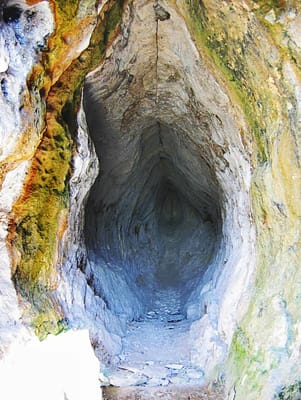
Utroba Cave
A 22-metre-long cleft in the rock, with an altar carved at the far end. Around midday, a ray of sunlight comes in through a crack in the roof. Some see it as a Thracian sanctuary, without decisive proof. The road is in very poor condition and should be avoided in a van.
Practical notes
- When to go
- May–June and September–October. From 15 November to 1 March, winter tyres or at least 4 millimetres of tread are compulsory.
- Getting there
- Plovdiv is about two hours from Sofia by motorway. An electronic vignette is compulsory: buy it on the official BGTOLL website.
- Access
- Slow roads, narrow at Trigrad. Since May 2026, a landslide has cut the direct Pamporovo–Smolyan road: go via Stoykite or the Rozhen pass, and check the condition of these roads before you set off.
- Sleeping in a van
- Campsites are scarce: plan in advance where you will sleep. Wild camping is banned in national and nature parks; the rules are unclear elsewhere.
- Worth knowing
- The euro has been the currency since January 2026. Cave opening times vary between sources: arrive before 4 pm. The history museums in Smolyan and Kardzhali close on Mondays, and the one in Kardzhali also on Sundays in winter.
- Allow
- A week for the loop, an extra half-day for Utroba.
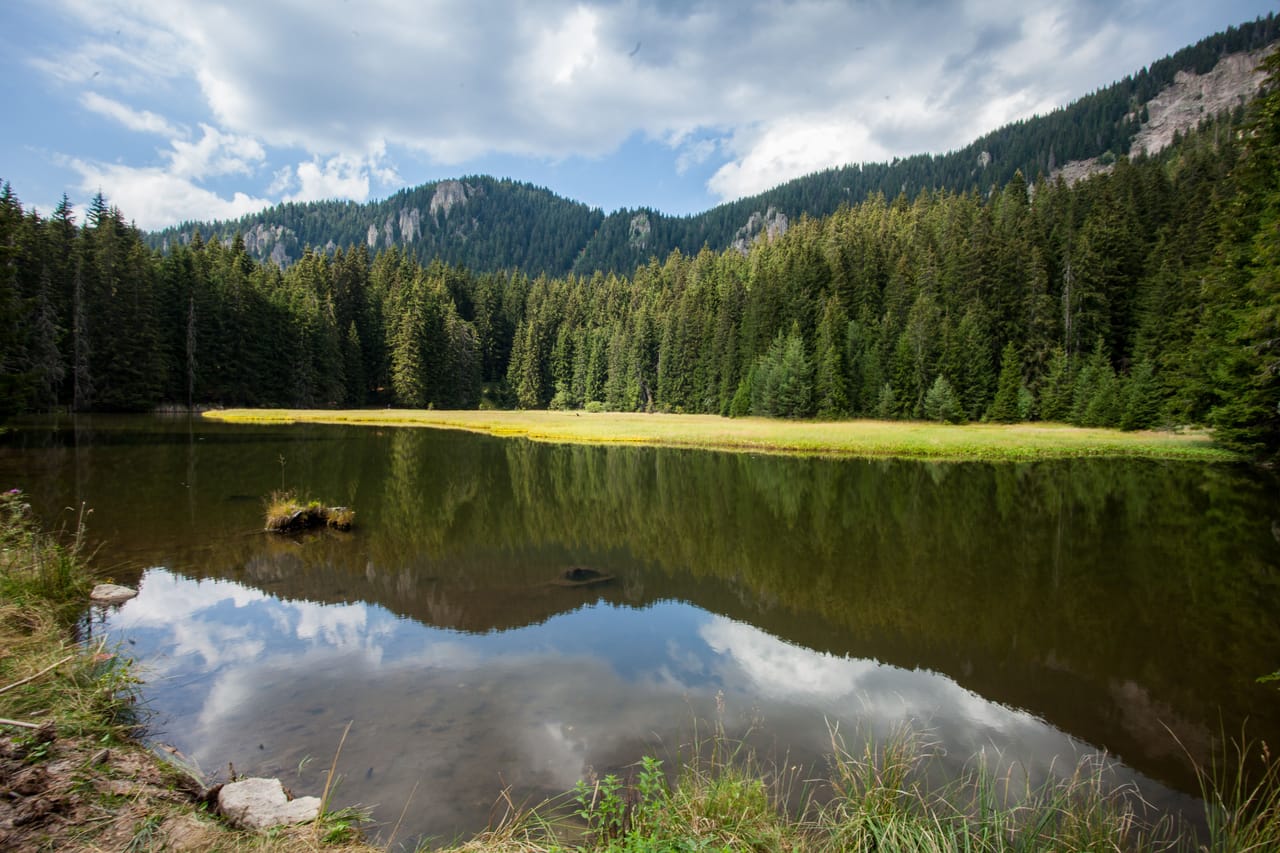
What not to miss
- 1Bachkovo MonasteryFounded in 1083 by a Byzantine military leader, it still has its original ossuary and an icon from 1310.
- 2Asen’s FortressStrengthened in 1231 by Tsar Ivan Asen II, it still has a church from the 12th–13th centuries.
- 3The Smolyan LakesEight remain, often very small: people mostly come to walk in the forest.
- 4The Devil’s BridgeThree arches over the Arda; they say the devil’s face appears in the water between 11 am and noon.
- 5The Stone MushroomsNear Beli Plast, volcanic rocks 2.5 to 3 metres high, shaped by erosion.
- 6Old PlovdivCobbled streets and a Roman theatre that still hosts concerts and shows.
The Rhodopes in pictures
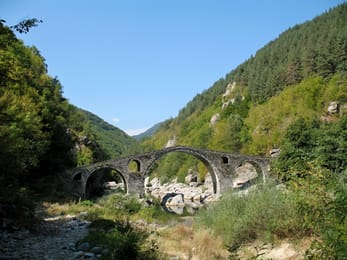
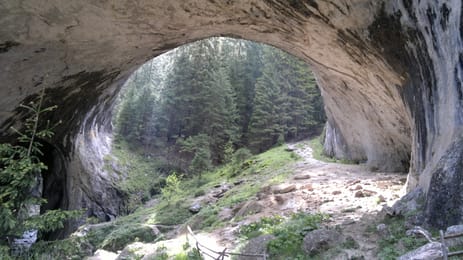
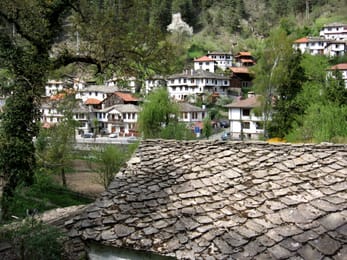
The three arches of the Devil’s Bridge over the Arda.
The Rhodope table
This is mountain food. Patatnik is a dish of grated potato and onion, sometimes with cheese, cooked over a low heat. Kachamak, a maize-flour porridge, is served with cheese or pork scratchings. Smilyan beans go into soups and salads.
For festive occasions, people make cheverme, a lamb roasted on a spit for hours. Around Asenovgrad, the mavrud grape makes a dry, tannic red wine.
Loop from Plovdiv
 +14stops
- 1Асенова крепост · Бачковски манастир
- 2Чудните мостове · Широка лъка
- 3Триградско ждрело · Дяволското гърло · Ягодинска пещера
You start from this trip’s places and make it your own.
Also worth reading
Mountains and passes
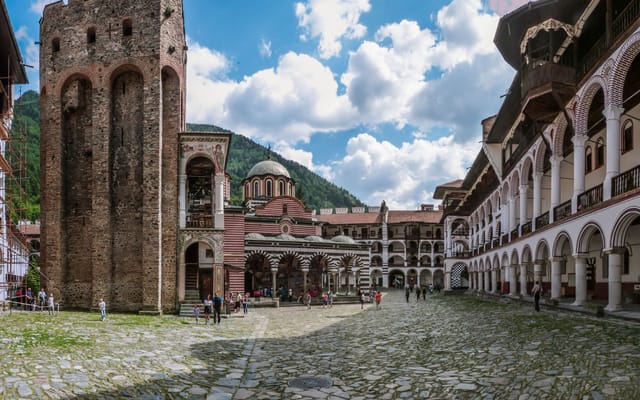
Rila and Pirin, from Rila Monastery to Melnik
South of Sofia, Bulgaria’s two highest mountain ranges, with Rila Monastery, Bansko, villages with stone roofs and the sand cliffs of Melnik. Six days on a loop from Sofia, on mountain roads that are often slow.
Heritage and culture
Classic Bulgaria, from Sofia to Veliko Tarnovo
Mountain monasteries, Thracian tombs, a Roman theatre and the capital of the tsars. Eight days on a loop from Sofia, crossing the Balkan Mountains twice.
Coast and islands
The Bulgarian Black Sea coast, from Varna to Sinemorets
Red cliffs in the north, two Greek cities in the centre, forests and the Turkish border in the south. Six days along the Bulgarian coast: you start from Varna and leave from Burgas.
A starting point, a few wishes — ViaLooma builds the trip day by day, map, stops and roadbook included.