The Bulgarian Black Sea coast, from Varna to Sinemorets
Red cliffs in the north, two Greek cities in the centre, forests and the Turkish border in the south. Six days along the Bulgarian coast: you start from Varna and leave from Burgas.
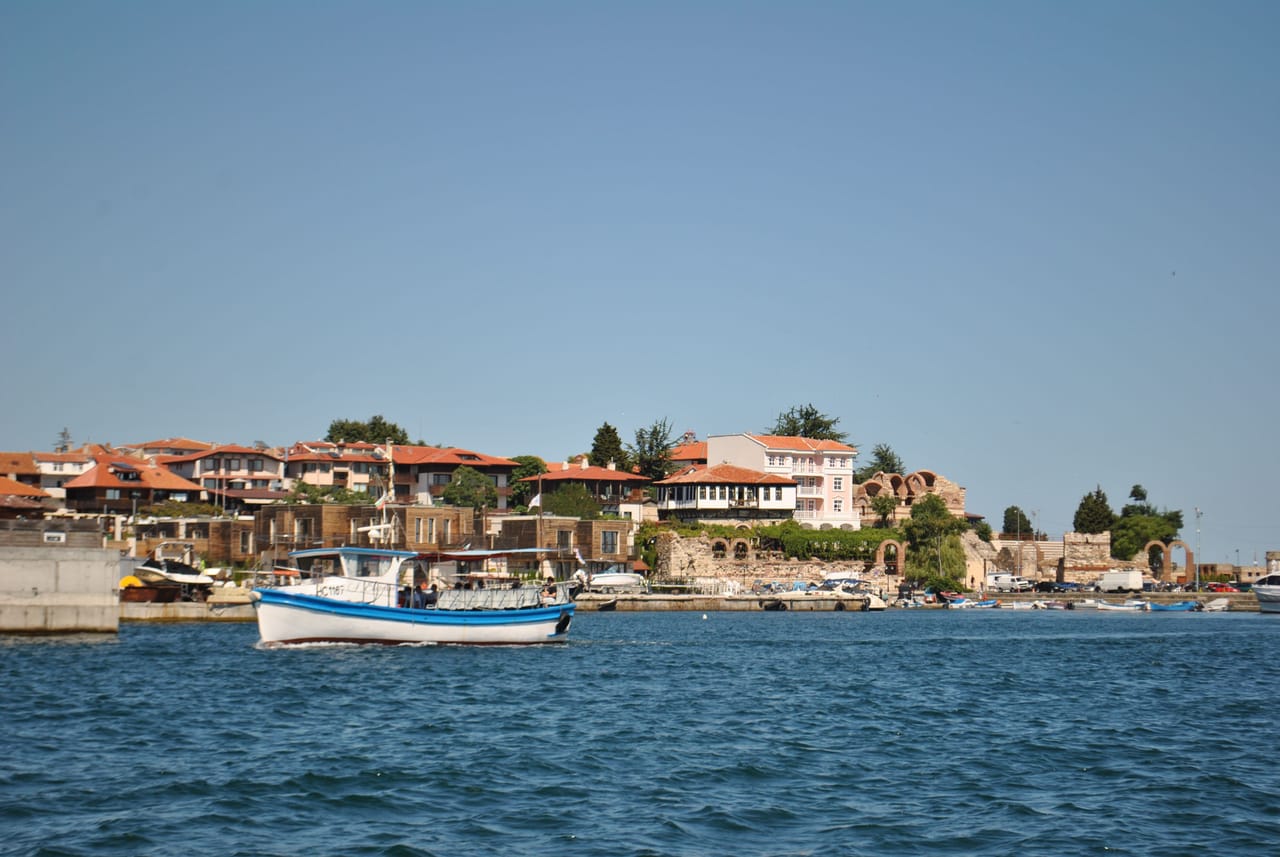
The coast, from north to south
North of Varna, the road crosses a plateau of fields and wind turbines, Dobruja. You don’t see the sea until you reach it. The plateau ends suddenly in red cliffs, 70 metres high at Cape Kaliakra. In Balchik, Marie of Romania had her residence with a minaret built, when the coast was Romanian.
South of Varna, you follow the floodplain forest of the Kamchia, then the first slopes of the Balkan Mountains. Next come the buildings of Sunny Beach, a resort built by the state from 1958, just before Nessebar.
After Sozopol, the road crosses the Ropotamo, a river with white water lilies, then enters Strandzha Nature Park, the largest protected area in Bulgaria. At Sinemorets, the Veleka meets the sea below the village. The road ends at Rezovo, near the river that forms the border with Turkey. The way back leaves the sea and goes through the forest via Balgari.
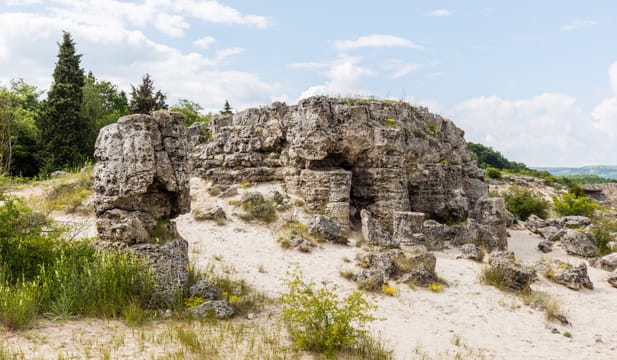
Around Varna, stones and gold
West of Varna, Pobiti Kamani is a group of rock columns standing on pale sand. It is about 8 kilometres long and 3 wide. Their origin is still debated. Corals were the first idea, but research has found none. Others talk of concretions of sand and limestone, or of ancient reefs formed by rising gas.
In October 1972, a digger driver came across a necropolis in Varna’s industrial zone: 294 graves, dated from 4569 to 4340 BC, and about 3,000 gold objects. This gold is more than six thousand years old. Its title as the oldest gold treasure in the world rests mainly on its size and variety: other Bulgarian finds are just as old, perhaps older.
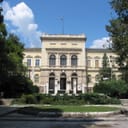
This treasure predates the Thracians by several millennia. The site of the find is not open to visitors: you can see the gold at Varna’s Archaeological Museum.
This gold is more than six thousand years old.
Nessebar and Sozopol, two Greek cities
Nessebar became a Greek colony in the 6th century BC. The town once had about forty churches. Some of them survive, including St Sophia and Christ Pantocrator. The town has been on the UNESCO list since 1983. This status is being watched: in 2025, UNESCO raised concerns about the port and the marina, and asked for a report.
Sozopol, founded in the 7th century BC by settlers from Miletus, was once called Apollonia. Its statue of Apollo, about 13 metres high, was carried off to Rome in 72 BC. In 2010, excavations on the island of Sveti Ivan turned up bones attributed to John the Baptist. In Oxford, one bone was dated to the 1st century. That doesn’t prove they are his.
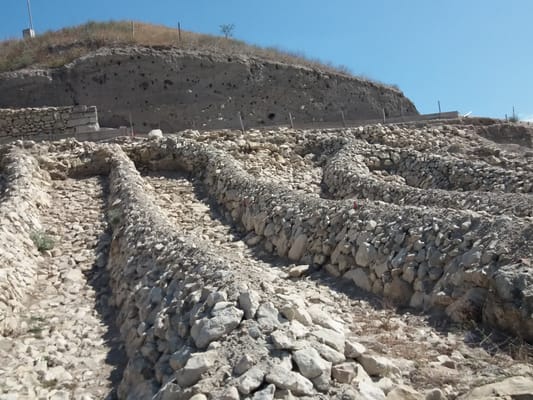
Provadia-Solnitsata
Archaeologists present this site as the oldest urban centre and salt-production centre in Europe. Salt may partly explain the wealth of the Varna graves, but that remains a hypothesis. Guided tours in April–May and August–September, Tuesday to Saturday; the rest of the year, call the Provadia museum first.
Practical notes
- When to go
- June to September for swimming. June and September are quieter than July–August.
- Getting there
- Varna and Burgas each have an airport: you arrive at one and leave from the other.
- Access
- Nessebar’s old town is closed off by a barrier: park before the isthmus. A dirt track to Silistar beach, forest roads to Beglik Tash and Balgari: ask before taking a large van on them. The Rezovo road was cut by floods in 2017 and 2023: check it after heavy rain.
- Sleeping in a van
- On a campsite or on authorised land. The law bans motorhomes and tents on the dunes and the shore. Several beaches were checked in 2026, and fines were handed out.
- Worth knowing
- E-vignette required up to 3.5 tonnes, from bgtoll.bg; above that, a toll per kilometre. In Rezovo, keep your papers on you and stay away from the border river.
- Allow
- Six days from Varna to Burgas, half a day more for Provadia-Solnitsata.
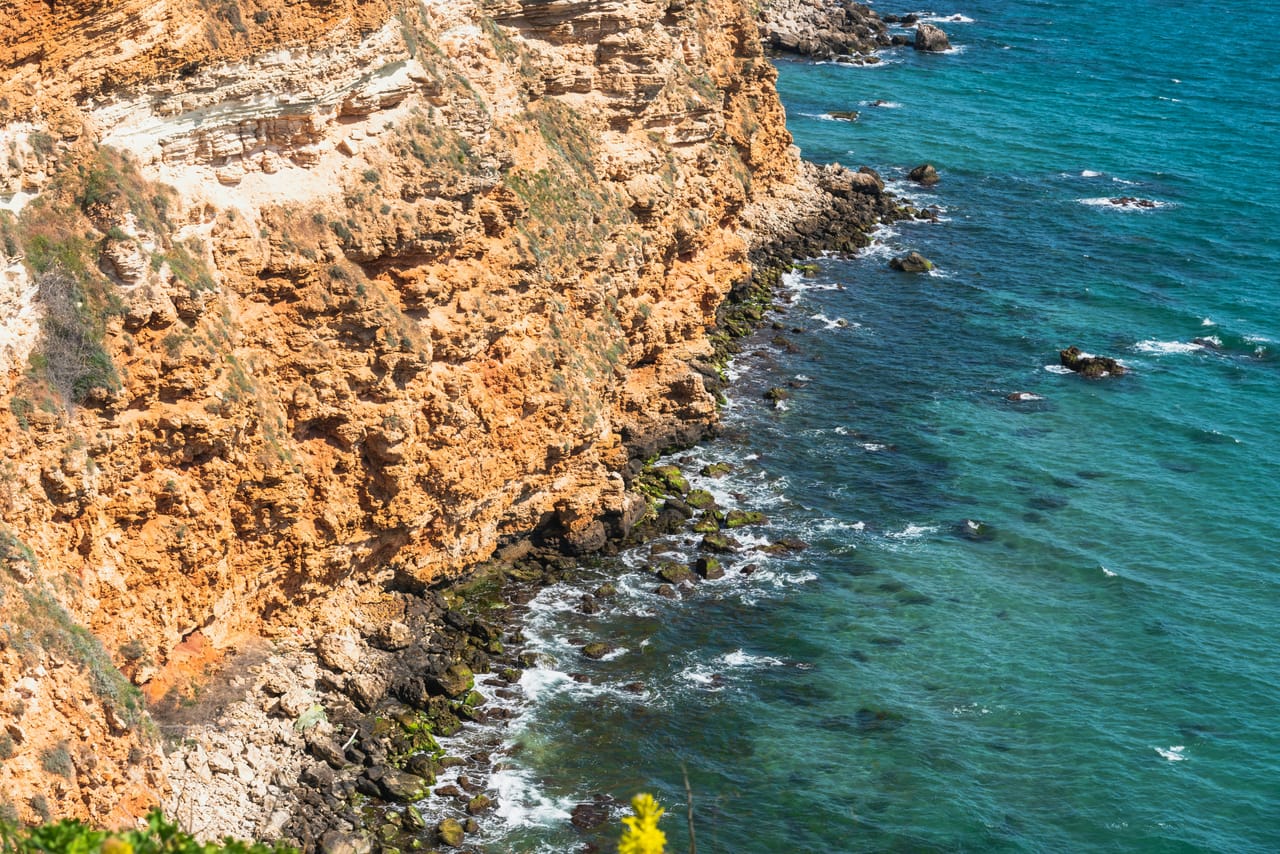
What not to miss
- 1Cape KaliakraAccording to legend, 40 young women, their hair tied together, threw themselves into the sea here to escape the Ottomans.
- 2Aladzha MonasteryA monastery cut on several levels into a 25-metre cliff, near Varna.
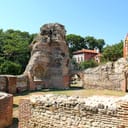
- 3The Roman baths of VarnaBuilt in the 2nd century, they are described as the fourth largest surviving in Europe.
- 4The salt museum in PomorieA museum about salt made by evaporating seawater, next to working salt pans.
- 5Beglik TashA rock sanctuary used by the Thracians, with a boulder said to weigh 150 tonnes and to rest on two points.
- 6BalgariOn 3 and 4 June, the nestinari of this village dance on embers, a rite listed by UNESCO.
The Bulgarian Black Sea coast in pictures
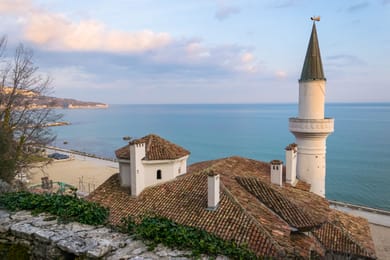
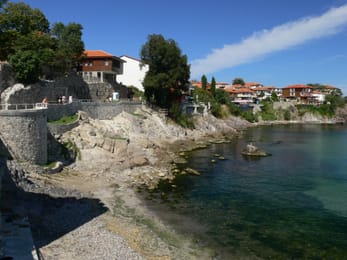
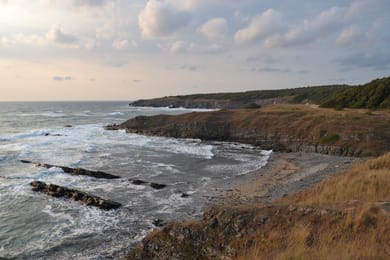
Balchik Palace, with its tiled roofs and its minaret by the sea.
The Black Sea table
You come here for the fish: tsatsa, a small fried sprat, safrid (horse mackerel) and turbot. In Sozopol, try the fish soup, ribena chorba. The Greeks of Sozopol and Pomorie left behind a sweet speciality, green fig jam.
The Black Sea region has about 30% of Bulgaria’s vineyards. People drink dimyat, a local white, along with traminer and riesling.
Varna → Burgas
 +18stops
- 1Побити камъни · Варненски археологически музей · Римски терми · Морска градина
- 2Аладжа манастир · Болата · Калиакра · Балчишки дворец
- 3Камчия · Обзор · Несебър
You start from this trip’s places and make it your own.
Also worth reading
Mountains and passes
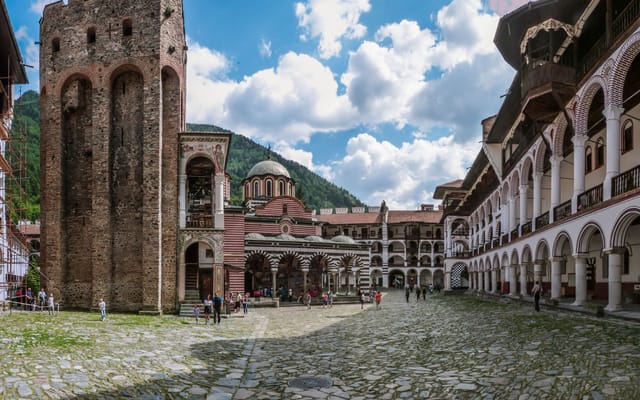
Rila and Pirin, from Rila Monastery to Melnik
South of Sofia, Bulgaria’s two highest mountain ranges, with Rila Monastery, Bansko, villages with stone roofs and the sand cliffs of Melnik. Six days on a loop from Sofia, on mountain roads that are often slow.
Wide open spaces
The Rhodopes, from Plovdiv to Perperikon
A mountain range covered in forest, with marble gorges and sanctuaries carved into the rock, in the south of Bulgaria. A week on a loop from Plovdiv, from the caves of Trigrad to Perperikon.
Heritage and culture
Classic Bulgaria, from Sofia to Veliko Tarnovo
Mountain monasteries, Thracian tombs, a Roman theatre and the capital of the tsars. Eight days on a loop from Sofia, crossing the Balkan Mountains twice.
A starting point, a few wishes — ViaLooma builds the trip day by day, map, stops and roadbook included.