Lake Constance, a tour of three countries
Lake Constance is shared between Germany, Austria and Switzerland. This trip goes all the way round it in five days from Konstanz, from the islands of Reichenau and Mainau to the Rhine Falls.
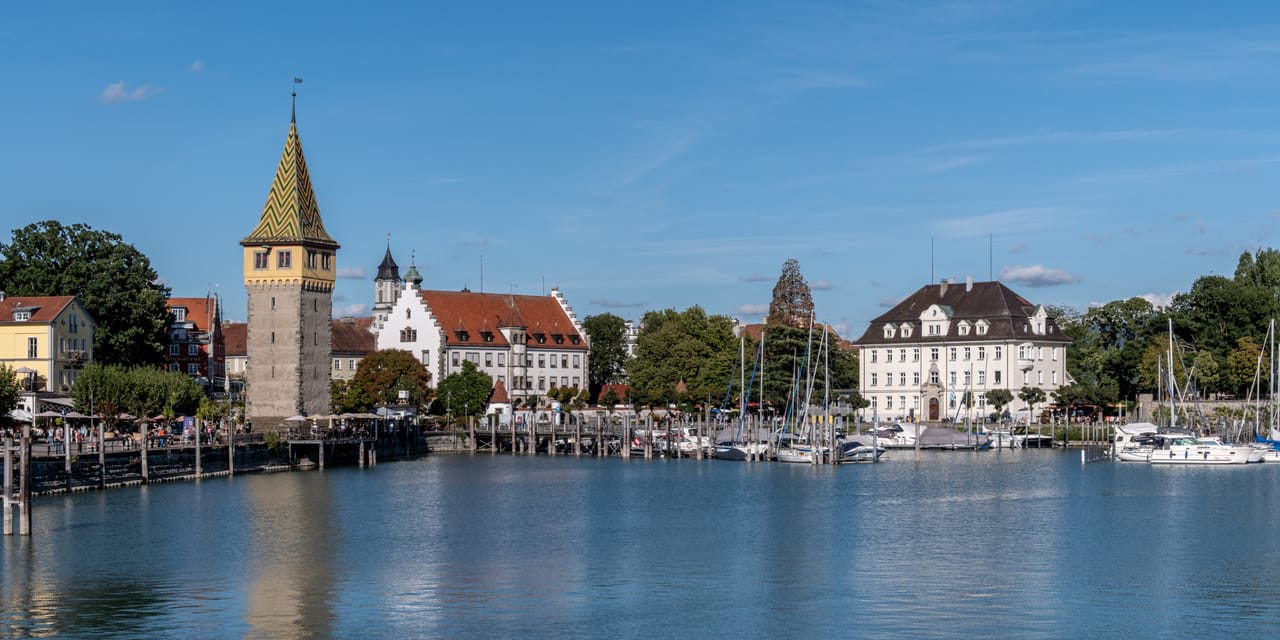
Round the lake
Lake Constance is 63 kilometres long. Three countries border it: Germany to the north, Austria to the east, Switzerland to the south. Over most of the lake, no border has ever been agreed.
From Konstanz, a car ferry takes vehicles across to Meersburg. During the crossing, the castle and the terraced town come closer. The north shore is a land of orchards and vineyards. On a clear day, the Alps and the Säntis, at 2,502 metres, appear across the water.
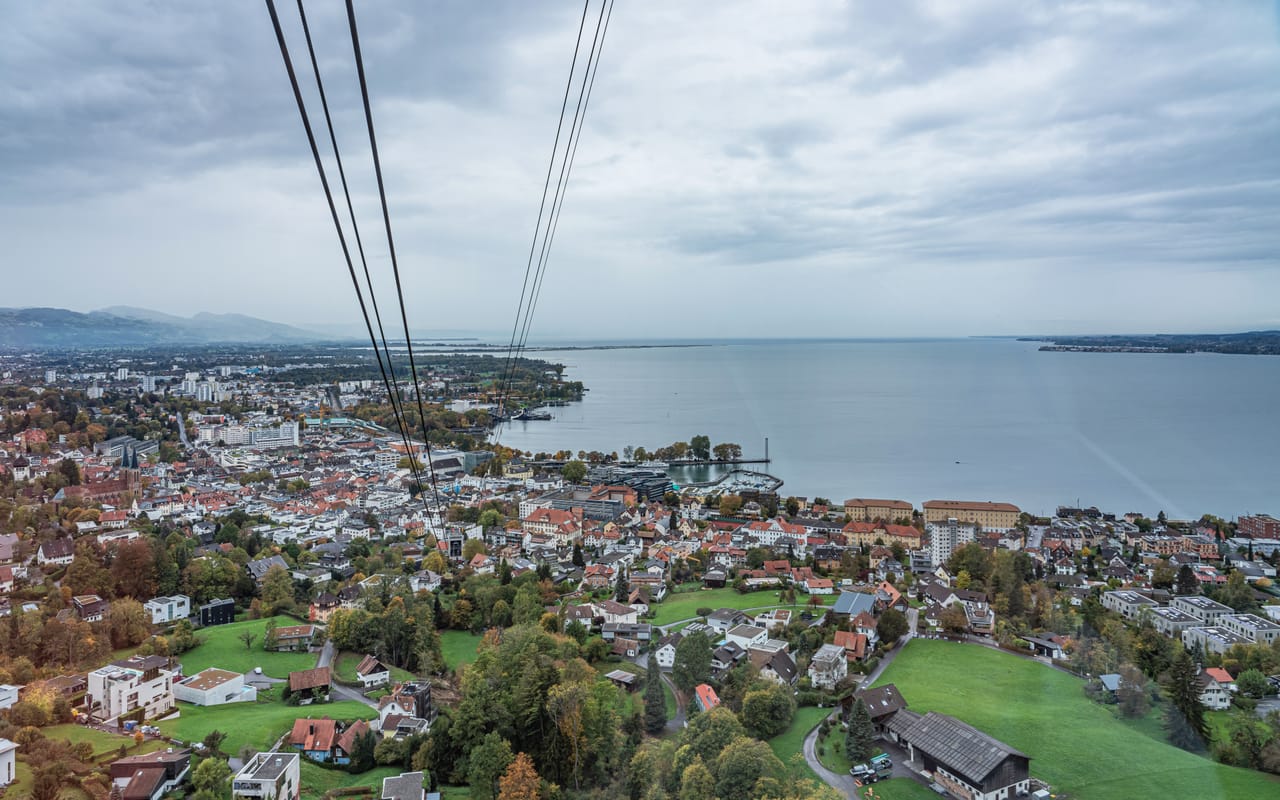
To the east, Lindau sits on an island linked to the mainland by a bridge and a causeway. In Bregenz, a cable car climbs the Pfänder, at 1,064 metres, where you can see almost the whole lake. To the west, the lake narrows and becomes the Rhine, with Stein am Rhein, Schaffhausen and the Rhine Falls.
The pile dwellings and the island of Reichenau
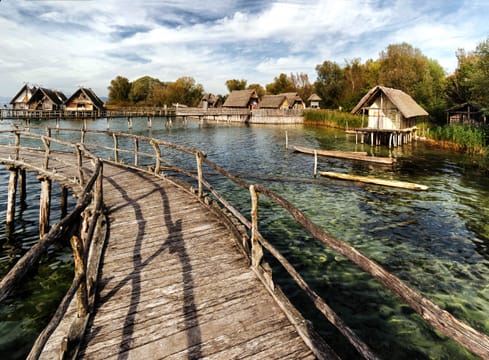
Several thousand years ago, in the Neolithic and then the Bronze Age, villages on stilts lined the lake. In 2011, 111 of these sites, spread across six countries around the Alps, became a Unesco World Heritage Site. The remains lie under water or under mud. To see what these villages looked like, go to Unteruhldingen: opened in 1922, its open-air museum has rebuilt 23 houses on stilts, linked by wooden walkways.
The lake’s other Unesco site is the island of Reichenau, listed in 2000. According to tradition, Saint Pirmin founded a monastery there in 724. In the 10th and 11th centuries, its monks painted some of the finest manuscripts in Europe, now on the Memory of the World Register.
You reach it along a causeway lined with poplars. The island still has three Romanesque churches. In Oberzell, the church of St George keeps wall paintings from around the year 1000. The rest of the island is covered with vegetable fields and greenhouses.
It is the only papal election ever held on German soil.
Konstanz, the town of the Council
From 1414 to 1418, Konstanz hosted a council. At the time, three popes were fighting over the Church. Two were deposed and the third abdicated. On 11 November 1417, the council had Martin V elected. The vote took place in the Konzil, a large warehouse built from 1388 to 1391 that still stands on the harbour. It is the only papal election ever held on German soil. The same council had the Czech reformer Jan Hus burnt at the stake in 1415.
At the harbour entrance, Imperia mocks the council. Peter Lenk’s statue, put up in 1993, is nine metres tall and slowly turns on itself. Inspired by a tale by Balzac, she holds two small naked men in her hands, one wearing a crown, the other a papal tiara.
The Abbey of St Gall
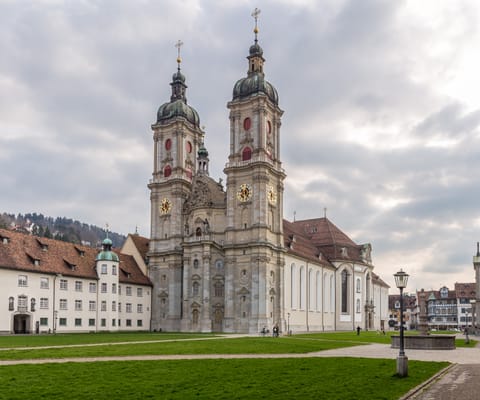
The former abbey has been a World Heritage Site since 1983. Next to the Baroque cathedral, the library holds about 2,100 manuscripts, among them the Plan of St Gall, drawn in the 9th century: the oldest surviving architectural plan of the Middle Ages.
Practical notes
- When to go
- May to September. April and May for the tulips on Mainau; July and August are the busiest months.
- Getting there
- Konstanz is about an hour from Zurich and three hours from Strasbourg. Airports at Zurich and Friedrichshafen.
- Access
- Everything is tarmac. The Konstanz–Meersburg ferry also takes motorhomes. A vignette is required on Swiss and Austrian motorways, except on the A14 between Hörbranz and Hohenems. Above 3.5 tonnes, the vignette is replaced by a heavy vehicle charge in Switzerland and a per-kilometre toll in Austria.
- Sleeping in a van
- Plenty of campsites on all three shores; book ahead in summer. In Lindau, Meersburg and Stein am Rhein, park outside the old town.
- Worth knowing
- Switzerland is outside the EU customs union: checks are possible, and there are limits on meat and alcohol. Seats for the Bregenz Festival are booked months ahead.
- Allow
- Five days for the loop, a week with St Gallen and a full day on Mainau.
What not to miss
- 1The island of MainauA 45-hectare garden around a Baroque palace, in flower from spring to autumn.
- 2MeersburgIts castle claims to be the oldest in Germany still inhabited; the poet Annette von Droste-Hülshoff died there in 1848.
- 3Birnau basilicaA Baroque church among the vineyards, with its little angel licking honey.
- 4The Zeppelin MuseumIn Friedrichshafen, where the first Zeppelin took off in 1900; a section of the Hindenburg has been reconstructed there.
- 5The Bregenz SeebühneThe largest stage on water in the world; the festival performs La traviata there in summer 2027.
- 6Stein am RheinA small town on the Rhine, with its painted façades, some of them from the 16th century.
Lake Constance in pictures
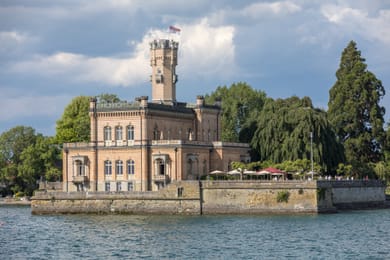
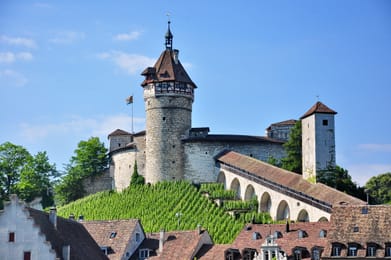
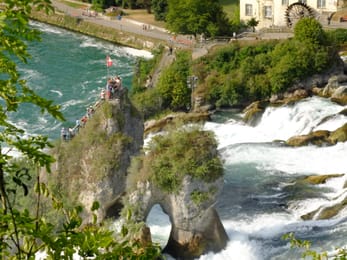
Montfort Castle in Langenargen, on the water’s edge.
The Lake Constance table
The lake’s fish is the Felchen, a kind of whitefish, served fried or smoked. Fishing for it has been banned since 2024 on most of the lake; it will partly reopen from 2027, from May to August. On the German side, people eat Seelen, spelt rolls sprinkled with salt and caraway. On the Austrian side, Käsknöpfle, cheese noodles with fried onions.
The vineyards of the north shore mostly produce Müller-Thurgau and Pinot Noir, to taste in Meersburg. Across the lake, Thurgau is cider country. It is jokingly nicknamed ‘Mostindien’.
Loop from Konstanz


 +15stops
- 1Konstanzer Münster · Imperia · Reichenau · Mainau
- 2Burg Meersburg · Pfahlbaumuseum Unteruhldingen · Wallfahrtskirche Birnau · Überlingen
- 3Zeppelin Museum · Schloss Montfort · Lindau
Free, no account needed — start from its places and make it yours.
Also worth reading
Mountains and passes
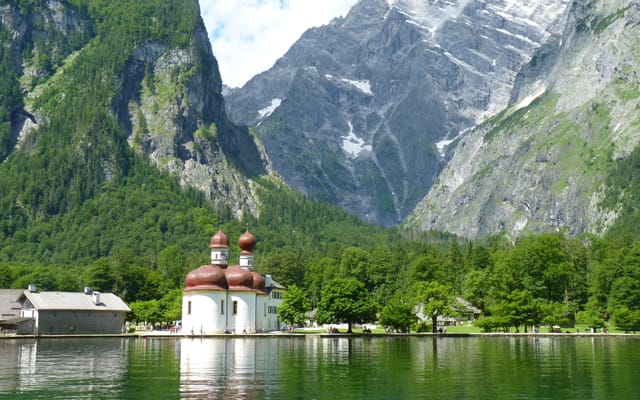
The Bavarian Alps, from the Zugspitze to the Königssee
The castles of Ludwig II, about ten lakes and the highest peak in Germany. A nine-day loop from Munich, from Neuschwanstein to the Königssee, with two short stretches through Tyrol.
Experiences
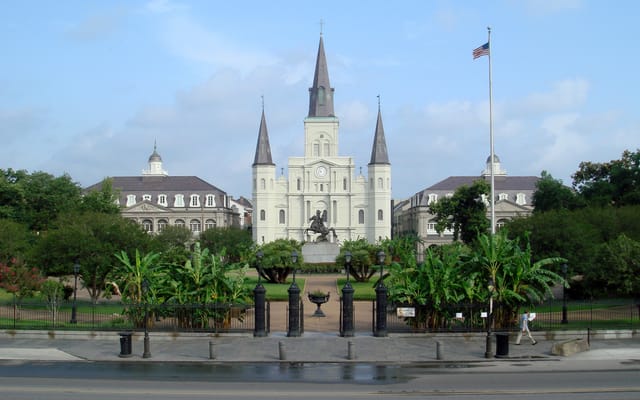
The American South, from Nashville to New Orleans
From Nashville to New Orleans, this trip follows American music, from country to jazz by way of the blues and rock’n’roll. Eleven days along the Natchez Trace, Highway 61 and the Mississippi, down to the bayous of Louisiana.
Experiences
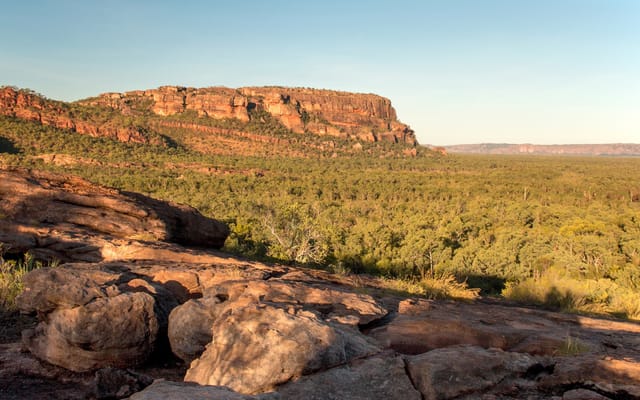
The Top End: Darwin, Kakadu, Katherine and Litchfield
Floodplains full of birds, rock shelters painted over thousands of years, gorges and waterfalls where you can swim. Eight days on a loop from Darwin, through Australia’s tropical north.
A starting point, a few wishes — ViaLooma builds the trip day by day, map, stops and roadbook included.